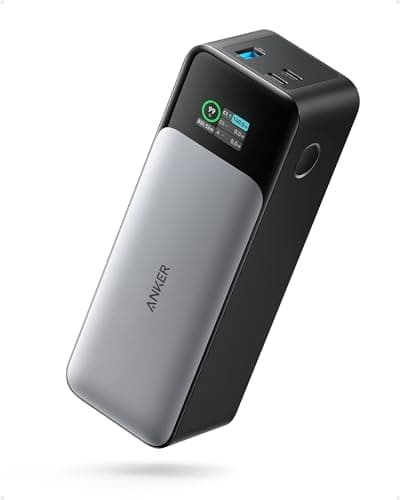
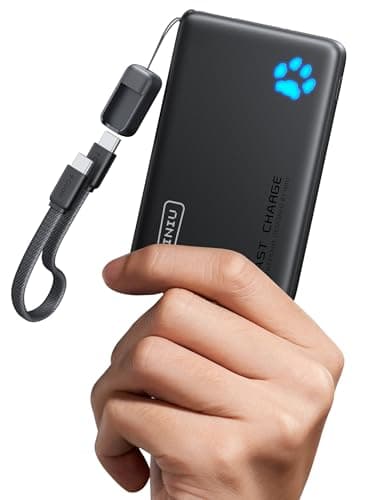
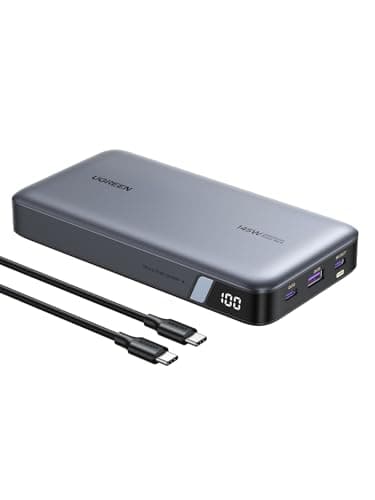
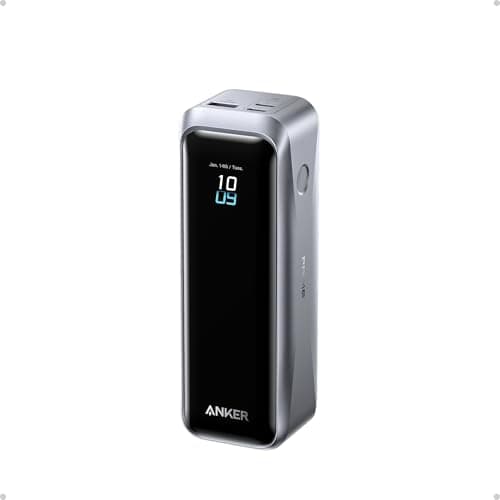
The answer depends on both the power bank's capacity and your phone's battery size, but a reliable rule of thumb accounts for the 30-35% energy lost during voltage conversion. A 10,000mAh power bank delivers roughly 6,500-7,000mAh of usable power, which translates to about 1.7-1.8 charges for an iPhone 16 Pro (3,582mAh) or 1.3-1.4 charges for a Samsung Galaxy S25 Ultra (5,000mAh). A 20,000mAh bank roughly doubles those numbers. In our testing, the INIU 10,000mAh delivered exactly 1.8 iPhone charges, while the Anker Prime 20,000mAh managed 3.5 charges — both closely matching the conversion math. If a manufacturer claims their 10,000mAh bank provides 3+ phone charges, be skeptical — the physics of voltage conversion simply do not allow it.
Yes, but with important restrictions. The FAA allows lithium-ion batteries up to 100 watt-hours (Wh) in carry-on luggage without special approval. Every power bank in our roundup falls within this limit — our largest, the Ugreen 25,000mAh at approximately 92.5Wh, still clears the threshold. Power banks between 100-160Wh require airline approval (usually obtainable at the gate), and anything over 160Wh is banned. Critical detail: power banks must go in your carry-on bag, never checked luggage — this is a universal airline requirement due to fire safety concerns. Most international airlines follow similar rules, though some Asian carriers enforce a stricter 32,000mAh limit. Always check your specific airline's policy before traveling, and make sure your power bank clearly displays its capacity rating, as unlabeled banks may be confiscated at security.
Modern power banks with proper battery management systems (BMS) are safe for overnight charging, but there are nuances worth understanding. Every reputable power bank includes overcharge protection that cuts power once your phone reaches 100%, so your device will not be damaged. However, the power bank itself will remain in a trickle-charge state, topping off the phone every time it drops to 99%, which can generate mild heat and slightly accelerates battery wear over months of nightly use. During our testing, surface temperatures during overnight charging peaked at 32 degrees Celsius for well-designed models — barely warm to the touch. Our recommendation: overnight charging is fine occasionally, but for daily overnight use, a wall charger is preferable since it removes the power bank's battery from the equation entirely. Avoid charging under pillows, blankets, or in enclosed spaces where heat cannot dissipate.
These are competing fast-charging protocols, and understanding them prevents buying a power bank that cannot fast-charge your specific phone. USB-C Power Delivery (PD) is the universal standard supported by Apple, Google, and most laptop manufacturers — it negotiates voltage and current between charger and device, delivering up to 240W in theory and commonly 20-140W in power banks. Qualcomm Quick Charge (QC) is primarily used by older Android phones and works over both USB-A and USB-C — QC 3.0 delivers up to 18W, while QC 5.0 reaches 100W+. PPS (Programmable Power Supply) is a newer addition to the PD standard that Samsung Galaxy phones specifically require for maximum charging speed — without PPS, a Galaxy S25 Ultra caps at 15W instead of 45W. In our testing, the best power banks supported all three protocols. If you use a Samsung Galaxy phone, check for PPS support specifically, as many power banks that advertise fast charging still lack it.
Recharge time depends on both the power bank's capacity and its maximum input wattage. In our testing, a 10,000mAh bank with 18W input took approximately 2.5 hours to fully recharge, while a 20,000mAh bank with 65W input completed the job in about 2 hours. The key specification to check is maximum input wattage — a 20,000mAh bank that only accepts 18W input will take 5-6 hours to recharge, which is frustratingly slow for a high-capacity unit. The Baseus 65W model impressed us by accepting its full 65W for input, going from 0-100% in just 2 hours despite its 20,000mAh capacity. Also note that the wall adapter matters: using a 20W charger on a bank that supports 65W input will bottleneck the recharge speed. We recommend pairing your power bank with a wall adapter that matches or exceeds its maximum input wattage for the fastest possible recharge.
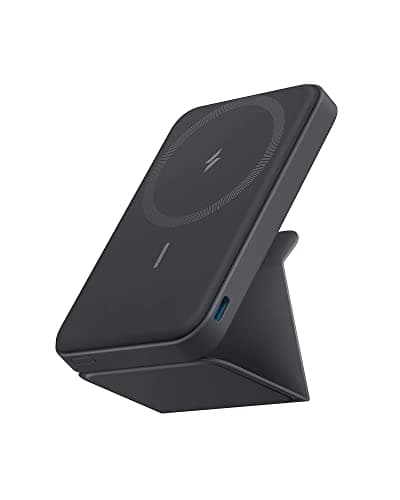
MagSafe power banks trade charging speed and capacity for unmatched convenience, and the right choice depends on your priorities. In our testing, MagSafe banks delivered 7.5-15W wirelessly versus 20-27W wired from similarly-sized traditional banks — roughly 40-50% slower to reach a full charge. They also tend to have smaller capacities (5,000-10,000mAh versus 10,000-25,000mAh for traditional banks) because the magnetic alignment hardware and wireless charging coil consume internal space. Where MagSafe banks genuinely shine is effortless, cable-free use: snap it on, charge, forget about it. During our commuter testing, the ability to attach a MagSafe bank without fumbling for cables in a crowded subway car was a legitimate daily convenience advantage. Our recommendation: if you primarily need emergency top-offs and value grab-and-go convenience, a MagSafe bank like the Anker 622 MagGo or Zolo 10K is excellent. If you need maximum power, laptop charging, or the fastest possible speeds, stick with wired — the performance gap is still substantial.

 1/5
1/5