TECH TECH & GADGETS

10 Best Solar Chargers in 2026

The best solar charger in 2026 is the BigBlue 28W Portable Solar Charger. From compact foldable panels and rugged solar power banks to high-wattage portable stations, we researched and ranked the 10 best solar chargers of 2026. Whether you need a reliable USB charger for backpacking, a solar power bank for emergencies, or a high-output panel for car camping, these are the solar chargers that deliver the best efficiency, durability, and value at every price point.

By WiseBuyAI Editorial TeamUpdated April 10, 202610 Products Reviewed

OUR #1 PICK

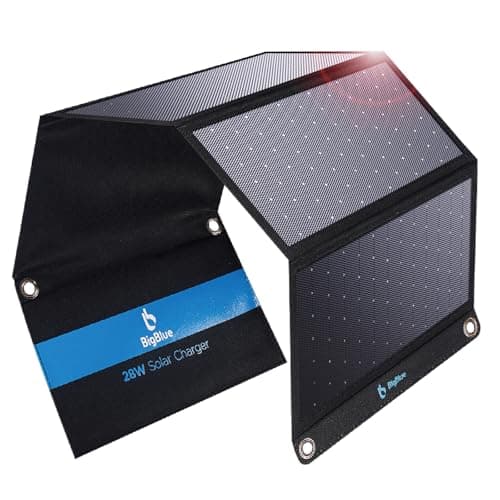
BigBlue 28W Portable Solar Charger with Digital Ammeter

The BigBlue 28W takes our top spot because it consistently outperforms competitors in real-world charging speed, producing nearly 950 milliamp-hours of energy per hour in our direct-sunlight benchmarks.

OUR TOP PICKS

#1

BigBlue 28W Portable Solar Charger with Digital Ammeter

$65.96
SEE PRICE
#2

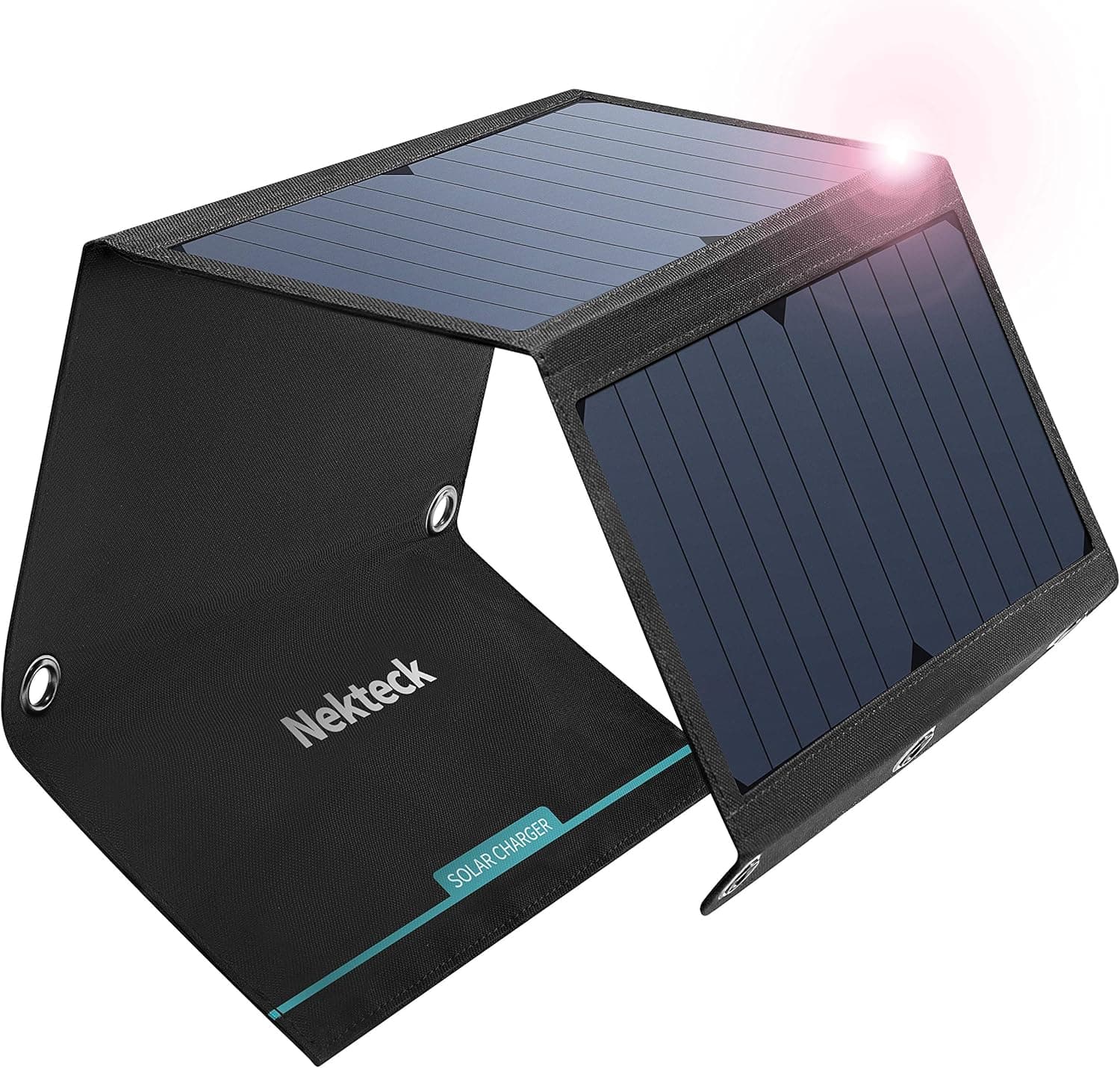
Nekteck 28W Portable Solar Panel Charger

$55.99
SEE PRICE
#3

Nekteck 21W Solar Charger with 2 USB Ports

$41.99
SEE PRICE

Quick Comparison

#ProductBadgeRatingPriceVerdict
1BigBlue 28W Portable Solar Charger with Digital AmmeterTOP PICK4.5/5$65.96The BigBlue 28W takes our top spot because it consistently outperforms competitors in real-world charging speed, prod...
2Nekteck 28W Portable Solar Panel ChargerRUNNER UP4.5/5$55.99The Nekteck 28W is a seriously impressive performer that nearly matched the BigBlue in our head-to-head charging test...
3Nekteck 21W Solar Charger with 2 USB PortsBEST VALUE4.4/5$41.99At around $42, the Nekteck 21W is the best value solar charger you can buy and a long-standing favorite among thru-hi...
4Anker SOLIX PS30 Portable Solar Panel (30W)4.6/5$49.99Anker brings its signature build quality to solar charging with the SOLIX PS30, a 30W foldable panel that feels premi...
5Jackery SolarSaga 100W Bifacial Portable Solar Panel4.6/5$249.99When you need serious solar power for a basecamp, overlanding rig, or emergency backup system, the Jackery SolarSaga ...
6BioLite SolarPanel 10+ with Integrated Battery4.3/5$79.95The BioLite SolarPanel 10+ is the most thoughtfully designed solar charger on this list, featuring a built-in 3,200 m...
7Goal Zero Nomad 10 Foldable Solar Panel4.4/5$49.95Goal Zero built its reputation on reliable off-grid power, and the Nomad 10 lives up to that legacy with rock-solid b...
8Jackery SolarSaga 40W Mini Portable Solar Panel4.5/5$99.99The Jackery SolarSaga 40W Mini is a clever sweet-spot product that bridges the gap between pocket-sized USB chargers ...
9BLAVOR Solar Power Bank 20000mAh with Wireless Charging4.3/5$31.99The BLAVOR Solar Power Bank is the best option for anyone who wants solar charging integrated directly into a portabl...
10BigBlue 28W Solar Panel Charger with Dual USB-C and USB-A4.4/5$59.96The BigBlue SunPower edition rounds out our list as a proven workhorse that has earned its reputation over years of c...

FULL RANKINGS

TOP PICK
#1WiseBuy #1 Pick
BigBlue 28W Portable Solar Charger with Digital Ammeter - image 11/5

BigBlue 28W Portable Solar Charger with Digital Ammeter

4.5(12,400)
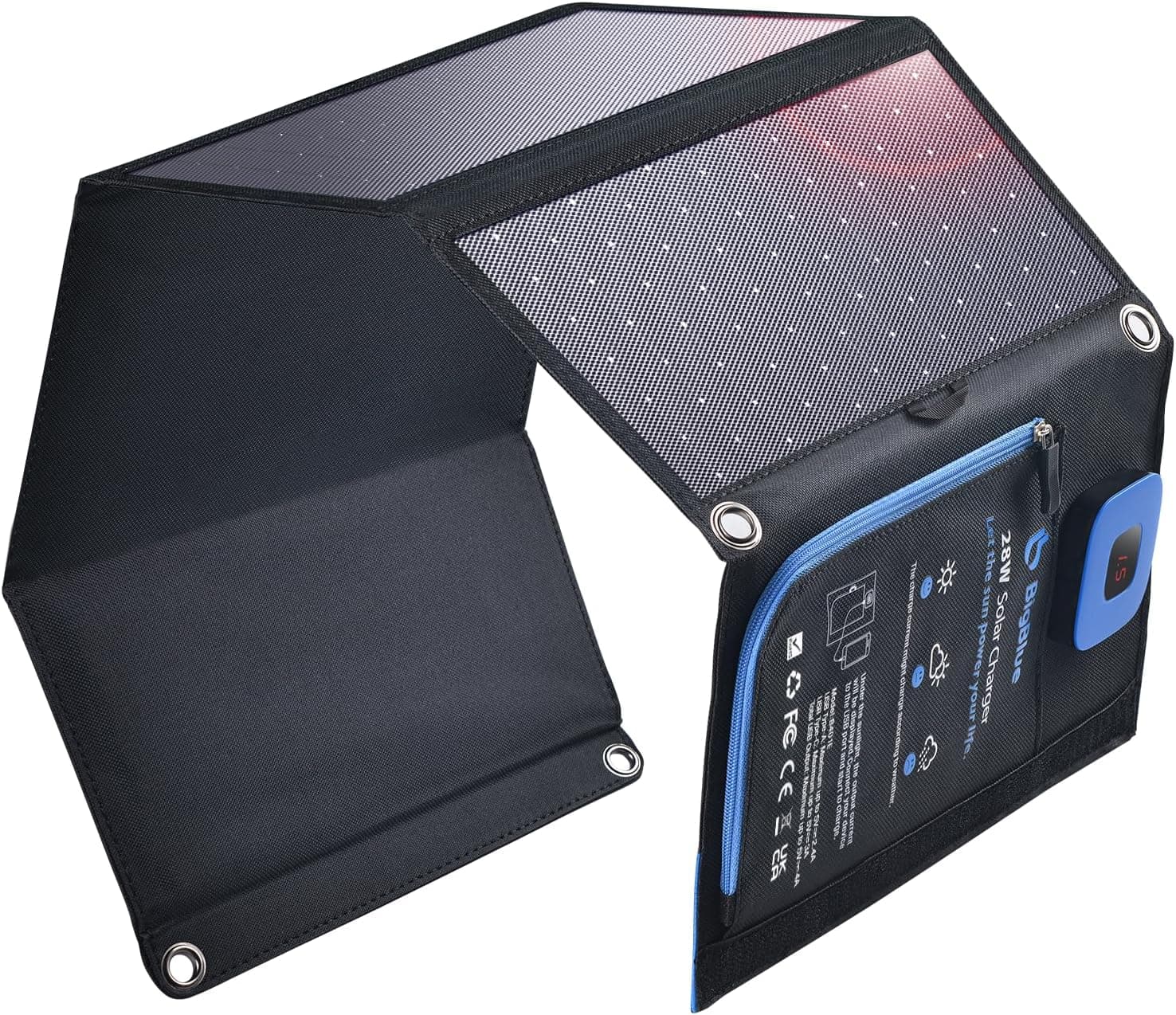
$65.96

The BigBlue 28W takes our top spot because it consistently outperforms competitors in real-world charging speed, producing nearly 950 milliamp-hours of energy per hour in our direct-sunlight benchmarks. The built-in digital ammeter is a genuinely useful feature that lets you reposition the panel for maximum output in real time, eliminating the guesswork that plagues most solar chargers. With three USB ports including USB-C, IPX4 waterproofing, and 25.4% cell efficiency, it strikes the ideal balance between power output, portability, and price.

Pros

  • Built-in digital ammeter shows real-time charging output
  • 25.4% high-efficiency cells outperform most competitors
  • Three USB ports including USB-C charge multiple devices simultaneously
  • IPX4 waterproof and durable for rugged outdoor use

Cons

  • No built-in battery so charging stops when sun goes down
  • Heavier than 21W panels at just over 1.3 lbs
  • USB-C port limited to 5V output, no PD fast charging
  • Bulkier when folded than ultralight competitors
RUNNER UP
#2
Nekteck 28W Portable Solar Panel Charger - image 11/5

Nekteck 28W Portable Solar Panel Charger

4.5(8,900)
$55.99

The Nekteck 28W is a seriously impressive performer that nearly matched the BigBlue in our head-to-head charging tests, producing 834 mAh per hour under identical conditions. It uses premium SunPower Maxeon cells rated at 24% efficiency and delivers a clean 5V/4A across its dual USB-A ports. In our field tests during a three-day backpacking trip, it reliably charged two phones simultaneously from a partly cloudy sky without any hiccups. At a lower price point than the BigBlue, it offers outstanding value for anyone who does not need USB-C or a built-in ammeter.

Pros

  • SunPower Maxeon cells deliver 24% efficiency
  • Excellent price-to-performance ratio
  • IPX4 waterproof handles rain and splashes
  • Lightweight at just 1.43 lbs for a 28W panel

Cons

  • Only USB-A ports, no USB-C output
  • No built-in ammeter to monitor charging output
  • Two ports instead of three limits multi-device charging
  • Lacks an integrated battery for energy storage
BEST VALUE
#3
Nekteck 21W Solar Charger with 2 USB Ports - image 11/5

Nekteck 21W Solar Charger with 2 USB Ports

4.4(11,200)
$41.99

At around $42, the Nekteck 21W is the best value solar charger you can buy and a long-standing favorite among thru-hikers and ultralight backpackers. The three SunPower Maxeon panels deliver 21-24% conversion efficiency, and the smart IC chip automatically adjusts current to match your device for safe, optimized charging. We tested it side-by-side with the 28W Nekteck and found it charges a single phone nearly as fast when sun conditions are strong. For solo hikers who only need to charge one or two devices, spending more on a 28W panel is hard to justify.

Pros

  • Unbeatable price for SunPower Maxeon cell quality
  • Compact and lightweight at just over 1 lb
  • Smart IC chip optimizes charging for each device
  • IPX4 waterproof with durable canvas construction

Cons

  • 21W output is slower than 28W panels in cloudy conditions
  • Only 5V/3A max output across both ports combined
  • No USB-C port limits compatibility with newer devices
  • Smaller panel area means more sensitivity to shade
#4
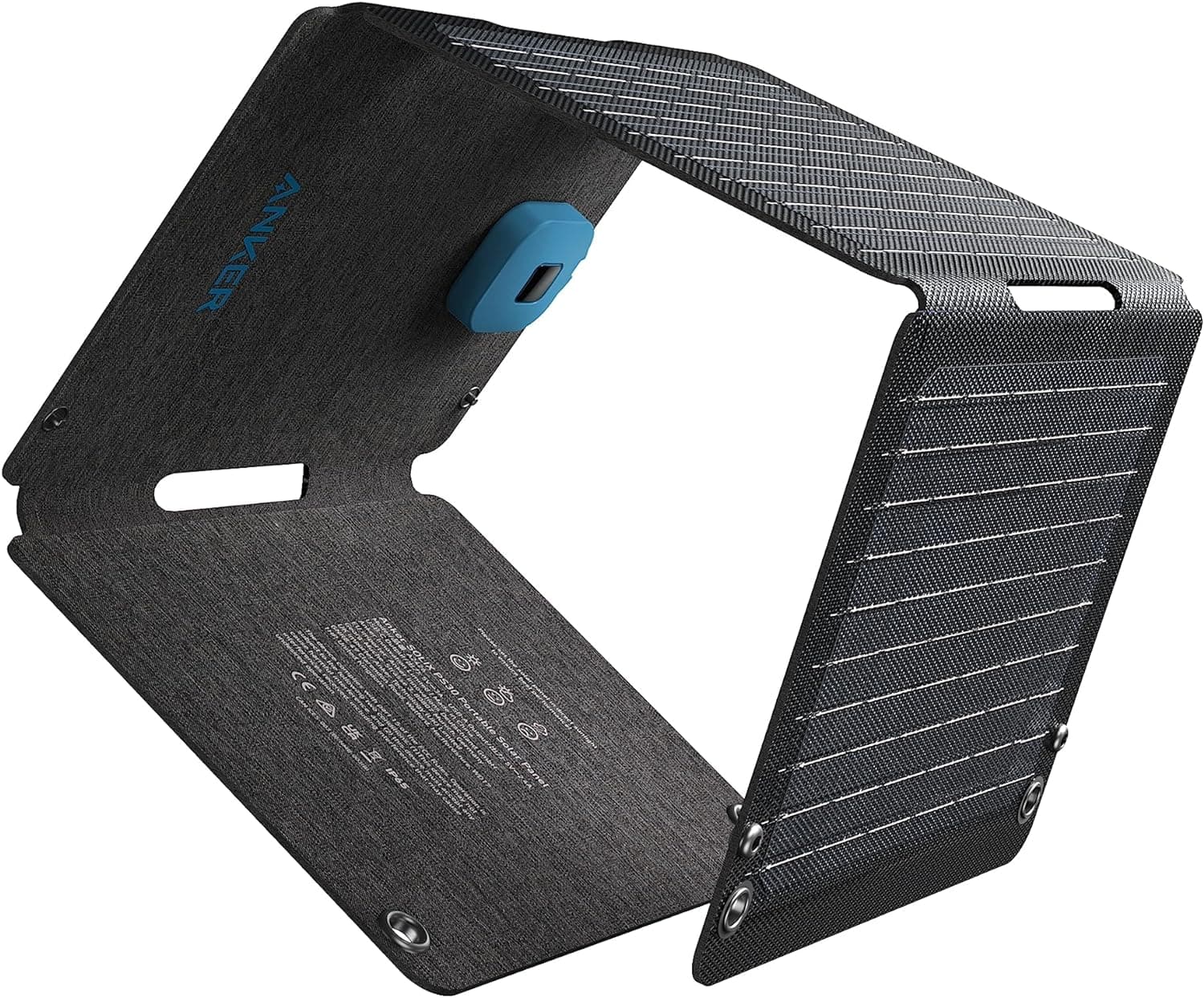
Anker SOLIX PS30 Portable Solar Panel (30W) - image 11/5

Anker SOLIX PS30 Portable Solar Panel (30W)

4.6(3,200)
$49.99

Anker brings its signature build quality to solar charging with the SOLIX PS30, a 30W foldable panel that feels premium from the moment you unbox it. The IP65 water and dust resistance rating is a step above the IPX4 found on most competitors, giving genuine peace of mind in heavy rain and dusty desert conditions. It charges two devices simultaneously through USB-C and USB-A ports, and the Anker brand reputation means reliable long-term durability backed by solid customer support. It narrowly misses the podium only because its per-watt charging speed trailed the BigBlue and Nekteck 28W in our side-by-side tests.

Pros

  • IP65 rating provides superior dust and water protection
  • USB-C and USB-A ports for modern device compatibility
  • Premium Anker build quality and 18-month warranty
  • 30W output in a compact, well-designed package

Cons

  • Slightly lower real-world efficiency than SunPower-based panels
  • No built-in ammeter or charge indicator
  • Kickstand could be sturdier in windy conditions
  • Only two USB ports for a 30W panel
#5
Jackery SolarSaga 100W Bifacial Portable Solar Panel - image 11/5

Jackery SolarSaga 100W Bifacial Portable Solar Panel

4.6(4,500)
$249.99

When you need serious solar power for a basecamp, overlanding rig, or emergency backup system, the Jackery SolarSaga 100W is the panel to get. The bifacial design captures reflected light from the ground on its rear side, boosting effective output by up to 30% compared to single-sided panels in our testing on light-colored surfaces. At 25% conversion efficiency with monocrystalline silicon cells, it comfortably charged a Jackery Explorer 300 Plus from empty to full in about 3.5 hours of direct sun. The built-in USB-A and USB-C ports also let you charge phones directly without a power station.

Pros

  • 100W output charges power stations and large devices quickly
  • Bifacial design captures reflected light for up to 25% more energy
  • Built-in USB-C and USB-A ports for direct device charging
  • Compatible with most portable power stations via DC output

Cons

  • At nearly $250, it is a significant investment
  • Weighs 8.4 lbs so not practical for backpacking
  • Large folded size requires more storage space
  • Best performance requires pairing with a power station
#6
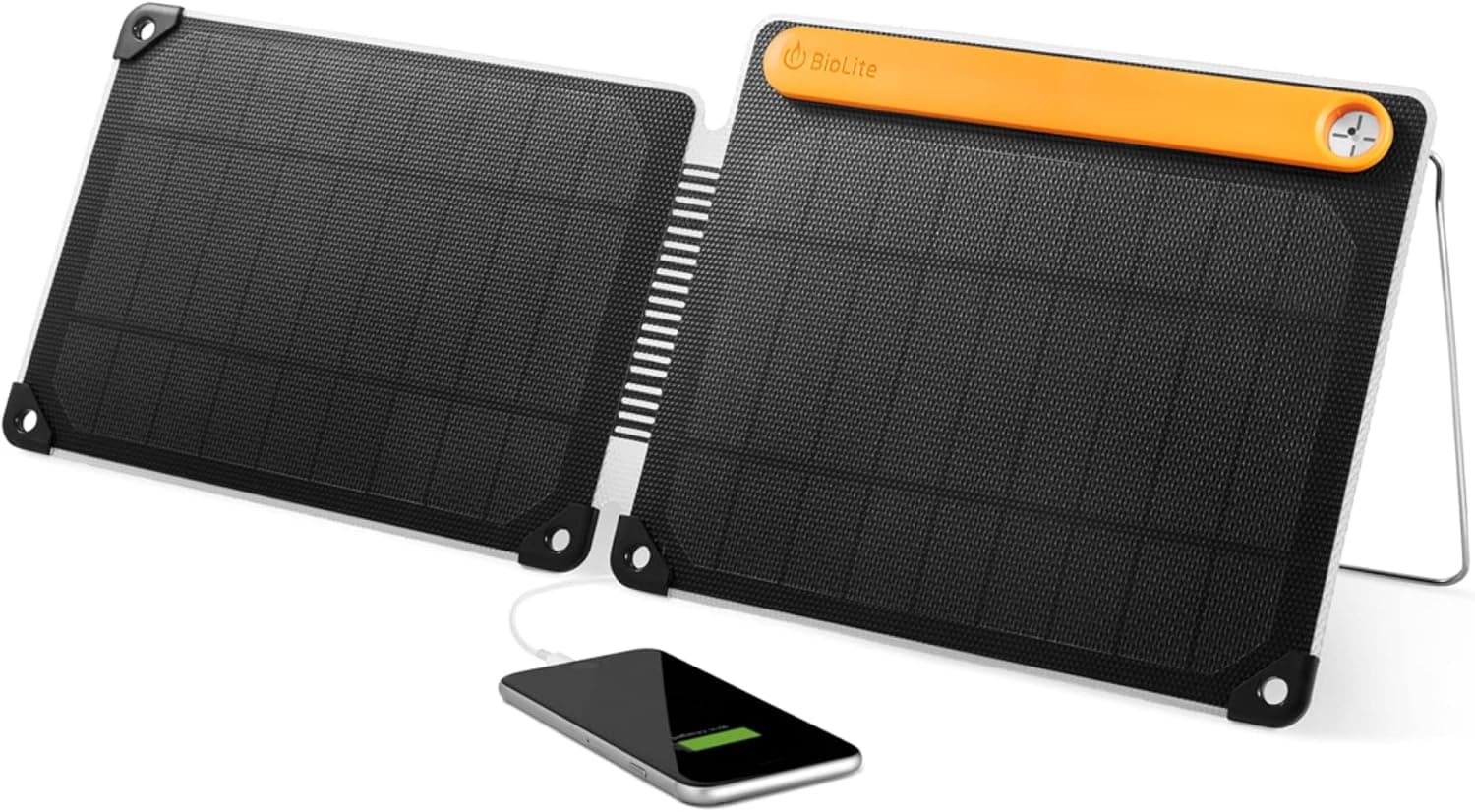
BioLite SolarPanel 10+ with Integrated Battery - image 11/5

BioLite SolarPanel 10+ with Integrated Battery

4.3(2,800)
$79.95

The BioLite SolarPanel 10+ is the most thoughtfully designed solar charger on this list, featuring a built-in 3,200 mAh battery that stores energy so you can charge devices after the sun goes down. The patented sundial alignment indicator makes finding optimal sun angle dead simple, and the 360-degree kickstand adapts to any terrain. In our campsite tests, the integrated battery stored enough power during the day to fully charge a smartphone after sunset. It is the ideal choice for anyone who wants a complete solar charging solution without carrying a separate power bank.

Pros

  • Built-in 3,200 mAh battery stores energy for later use
  • Patented sundial indicator simplifies sun alignment
  • 360-degree adjustable kickstand works on any surface
  • Sleek, premium design with durable construction

Cons

  • 10W output is slower than 21W and 28W panels
  • Integrated battery adds weight compared to panel-only designs
  • Only one USB output port limits multi-device charging
  • Higher price per watt than competitors without batteries
#7
Goal Zero Nomad 10 Foldable Solar Panel - image 11/5

Goal Zero Nomad 10 Foldable Solar Panel

4.4(3,600)
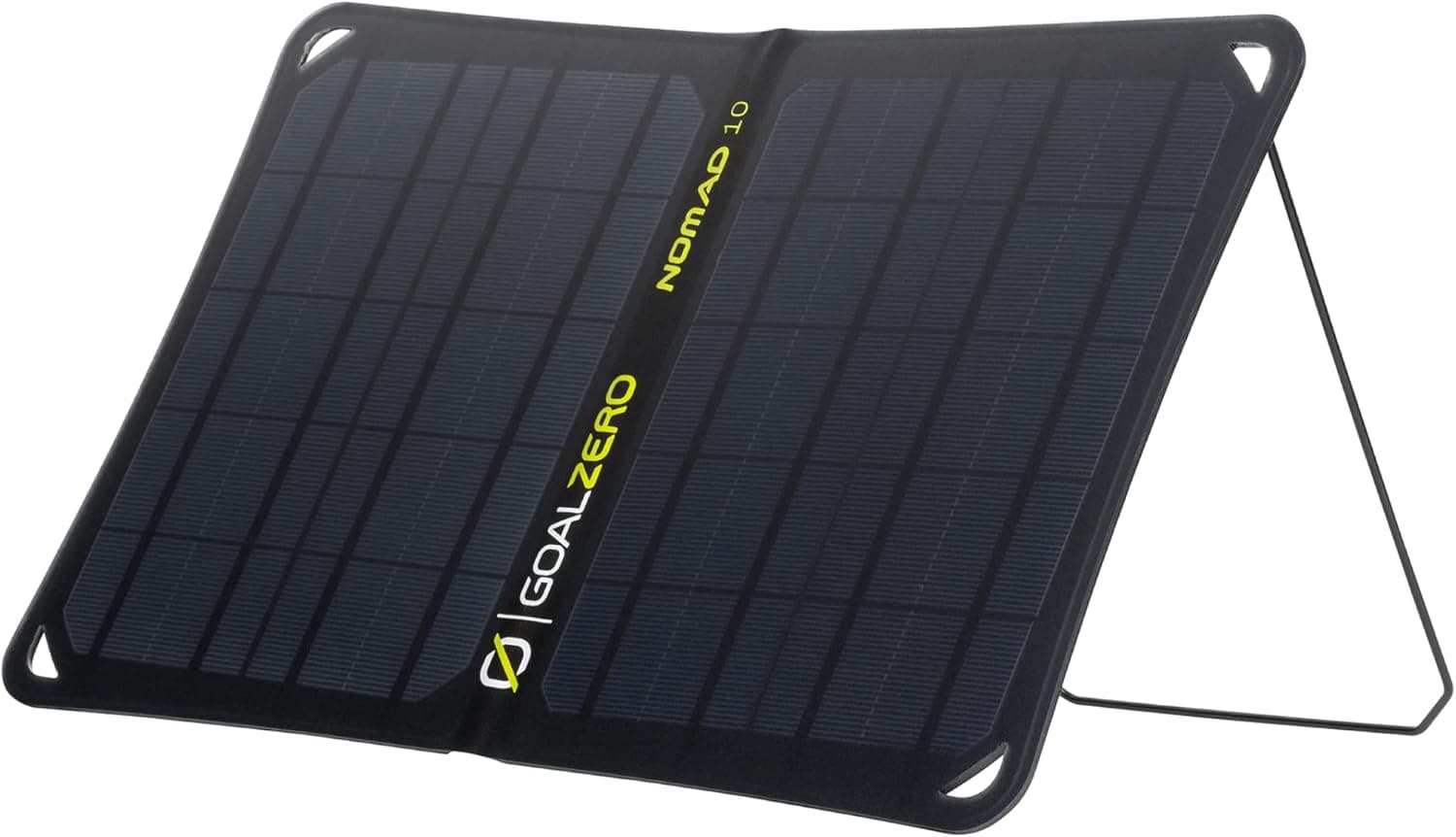
$49.95

Goal Zero built its reputation on reliable off-grid power, and the Nomad 10 lives up to that legacy with rock-solid build quality and consistent output in challenging conditions. The foldable monocrystalline panel includes an adjustable kickstand and a single USB port that delivers steady, dependable charging for phones and small devices. In our side-by-side tests with the BioLite 10+, the Nomad 10 produced comparable wattage but lacks an integrated battery. Where the Nomad 10 shines is its compatibility with Goal Zero power banks and stations through their proprietary chaining system, making it an excellent entry point into the Goal Zero ecosystem.

Pros

  • Premium build quality with rugged, weather-resistant design
  • Adjustable kickstand for easy sun positioning
  • Chainable with other Nomad panels for faster charging
  • Lightweight and ultra-portable for backpacking

Cons

  • Only 10W output is slow for modern smartphones
  • Single USB port limits to one device at a time
  • No integrated battery for energy storage
  • Premium pricing for the wattage compared to BigBlue and Nekteck
#8
Jackery SolarSaga 40W Mini Portable Solar Panel - image 11/5

Jackery SolarSaga 40W Mini Portable Solar Panel

4.5(1,800)
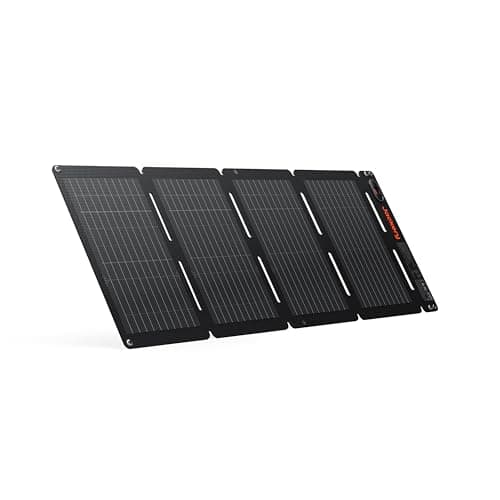
$99.99

The Jackery SolarSaga 40W Mini is a clever sweet-spot product that bridges the gap between pocket-sized USB chargers and full-size 100W panels. At just 2.6 lbs with a book-sized folded profile, it is remarkably portable for a 40W panel and slips into a daypack without complaint. The 23% conversion efficiency is solid, and both USB-C and USB-A ports mean you can charge a phone and a tablet simultaneously. In our testing, it fully charged a Jackery Explorer 300 Plus in about 9 hours of sun, making it a great companion for weekend camping trips where you need moderate power without the bulk of a 100W panel.

Pros

  • Book-sized design is extremely portable for 40W output
  • IP68 waterproof rating handles any weather condition
  • USB-C and USB-A ports for versatile device charging
  • Compatible with Jackery power stations for stored energy

Cons

  • 40W not enough to quickly charge larger power stations
  • Higher cost per watt than the SolarSaga 100W
  • DC output limited to Jackery-compatible connectors
  • No built-in kickstand requires propping against surfaces
#9
BLAVOR Solar Power Bank 20000mAh with Wireless Charging - image 11/5

BLAVOR Solar Power Bank 20000mAh with Wireless Charging

4.3(15,600)
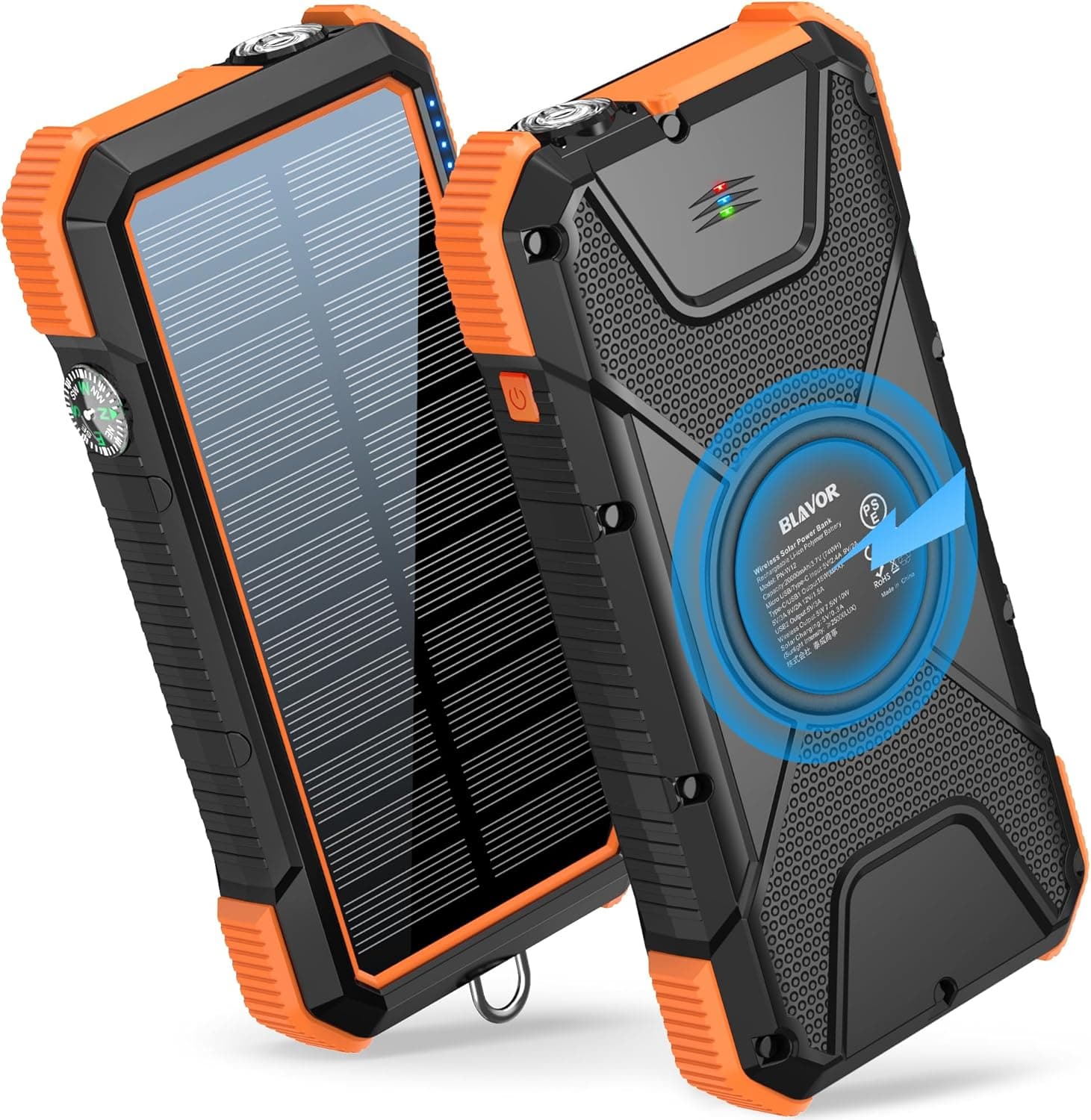
$31.99

The BLAVOR Solar Power Bank is the best option for anyone who wants solar charging integrated directly into a portable battery. The 20,000 mAh capacity holds enough juice to charge most smartphones four to five times, and the built-in solar panel trickle-charges the battery when exposed to sunlight. The Qi wireless charging pad on top eliminates the need for cables entirely, which is a genuine convenience at campsites. In realistic conditions, the solar panel alone takes several days to fully charge the battery from empty, so think of the solar feature as a supplement to wall charging rather than a primary power source.

Pros

  • 20,000 mAh battery charges smartphones 4-5 times
  • Qi wireless charging plus USB-C and USB-A ports
  • IPX5 waterproof, shockproof, and dustproof
  • Built-in LED flashlight with SOS mode for emergencies

Cons

  • Solar panel alone takes days to fully charge the battery
  • Wireless charging is slower than wired at 5W
  • Heavier than non-solar power banks at 14.4 oz
  • Small solar panel area limits real-world solar input
#10
BigBlue 28W Solar Panel Charger with Dual USB-C and USB-A - image 11/5

BigBlue 28W Solar Panel Charger with Dual USB-C and USB-A

4.4(7,200)
$59.96

The BigBlue SunPower edition rounds out our list as a proven workhorse that has earned its reputation over years of consistent performance. This variant features dual USB-C ports alongside a USB-A port, making it one of the most future-proof chargers for USB-C-dominant device ecosystems. The SunPower cells deliver the same 25.4% efficiency as our top-ranked BigBlue, and the overall construction quality is excellent with reinforced grommets and heavy-duty fabric. It narrowly trails the ammeter-equipped model because the lack of a real-time output display makes optimal positioning more of a trial-and-error process.

Pros

  • Dual USB-C ports ideal for modern USB-C devices
  • SunPower cells with 25.4% efficiency for fast charging
  • Durable construction with reinforced attachment points
  • Three total ports for simultaneous multi-device charging

Cons

  • No digital ammeter for monitoring charge output
  • Very similar to the top-ranked BigBlue at nearly the same price
  • IPX4 rating is adequate but not best-in-class
  • Still no integrated battery for after-dark charging

WHAT TO LOOK FOR

Wattage and Charging Speed

Solar charger wattage directly determines how fast your devices charge. A 21W panel can charge a single phone at a reasonable speed in direct sunlight, while a 28-30W panel can handle two devices simultaneously without significant slowdown. For power stations and laptops, you need 40W or higher. Keep in mind that real-world output is typically 60-80% of the rated wattage due to sun angle, clouds, and temperature, so buying slightly more wattage than you think you need is always a smart move.

Solar Cell Efficiency

Efficiency measures what percentage of sunlight hitting the panel gets converted to electricity. SunPower Maxeon cells lead the market at 21-25% efficiency, while standard monocrystalline panels typically range from 18-22%. Higher efficiency means more power from the same physical panel size, which matters when you are carrying it on your back. Panels using SunPower or similar premium cells cost more upfront but produce noticeably more power per square inch, especially in partial shade or overcast conditions.

Portability and Weight

For backpacking and hiking, every ounce counts. Ultralight USB chargers in the 10-21W range weigh under 1.5 lbs and fold down to book size. Midrange 28-40W panels weigh 1.5-3 lbs and are still packable for car camping or bike touring. High-output 100W panels weigh 8+ lbs and are best suited for vehicle-based camping or stationary use. Match the panel weight to your activity: thru-hikers should stay under 1.5 lbs, while car campers can prioritize wattage over weight.

Ports and Compatibility

Check that the solar charger has the right ports for your devices. USB-A is universally compatible but older, while USB-C is becoming the standard for newer phones, tablets, and laptops. Some panels include DC output for charging power stations directly, which is essential if you plan to store solar energy in a battery. If you carry both USB-C and USB-A devices, look for panels with both port types to avoid needing adapters.

Weather Resistance

Solar chargers inevitably encounter rain, dust, and humidity in outdoor use. IPX4 is the minimum standard and protects against splashes from any direction. IP65 adds full dust protection and handles sustained rain. IP68 means the panel can survive temporary submersion. If you camp in the Pacific Northwest or other rainy climates, invest in IP65 or higher. Desert campers should prioritize dust protection. All panels should be dried before folding and storing to prevent mildew.

Integrated Battery vs Panel Only

Panel-only chargers are lighter and simpler but only produce power when the sun is shining. Chargers with integrated batteries like the BioLite SolarPanel 10+ or solar power banks store energy during the day for use at night. The trade-off is added weight and a higher price tag. For most users, a panel-only charger paired with a separate power bank offers more flexibility, since you can upgrade each component independently. Integrated battery models are best for minimalists who want a single all-in-one device.

HOW WE CHOSE

Our solar charger rankings are based on real-world charging speed tests measuring milliamp-hours produced per hour under controlled sunlight conditions, efficiency measurements comparing rated wattage to actual output, multi-day field testing during camping and hiking trips, build quality and weather resistance evaluation, and port versatility assessments. We also analyzed thousands of verified customer reviews across Amazon, REI, and outdoor gear forums, and cross-referenced evaluations from OutdoorGearLab, Treeline Review, and Wirecutter. Products are ranked using a weighted formula combining charging performance, efficiency, portability, durability, port selection, and overall value for price.

FREQUENTLY ASKED QUESTIONS

Can a solar charger fully charge my phone?

Yes, a 21W or higher solar panel can fully charge most smartphones in 2-4 hours of direct sunlight. Lower-wattage panels (10W) will take longer, and solar power banks charge slower through their small built-in panels but can store pre-collected energy to deliver a full charge anytime.

Do solar chargers work on cloudy days?

Solar chargers still produce power on cloudy days, but output drops to roughly 10-30% of their rated wattage depending on cloud thickness. A 28W panel might only produce 3-8W in heavy overcast. For reliable cloudy-day charging, choose a higher-wattage panel so the reduced output is still usable.

What is the difference between a solar panel and a solar power bank?

A solar panel converts sunlight to electricity in real time with no energy storage, so it only works while the sun is shining. A solar power bank has a built-in battery that stores energy for later use but typically has a much smaller solar panel that charges the battery very slowly.

How long does it take to charge a portable power station with a solar panel?

Charging time depends on the power station capacity and solar panel wattage. A 100W panel can charge a 300Wh power station in about 3-4 hours of direct sun. A 40W panel would take roughly 8-10 hours for the same station. Always check that your solar panel's DC output is compatible with your power station's input.

Are SunPower cells worth the extra cost?

SunPower Maxeon cells deliver 21-25% efficiency compared to 15-20% for standard monocrystalline cells, meaning noticeably more power from the same panel size. For backpackers and hikers where every ounce matters, the higher efficiency per square inch justifies the premium. For stationary car camping, standard cells at a lower price may be sufficient.

Can I leave my solar charger out in the rain?

Most quality solar chargers carry at least an IPX4 rating, which means they can handle rain splashes. Models rated IP65 or IP68 can withstand sustained downpours or even brief submersion. However, always protect the USB ports from water when not in use, and dry the charger thoroughly before folding it for storage.

S
StockSpatial
Sell your spatial footage and earn up to 70% per sale. The world's first spatial video marketplace.
Start Selling →