TRAVEL TRAVEL GEAR

10 Best Hiking Backpacks of 2026

The best hiking backpack in 2026 is the Osprey Atmos AG LT 65. We analyzed thousands of real hiker and backpacker discussions alongside hands-on expert reviews to find the most recommended hiking backpacks of 2026. From ultralight thru-hiking packs under 2 pounds to heavy-hauling expedition rigs, these are the backpacks that deliver the best comfort, durability, and load-carrying performance for every type of trail.

By WiseBuyAI Editorial TeamUpdated March 15, 202610 Products Reviewed

OUR #1 PICK

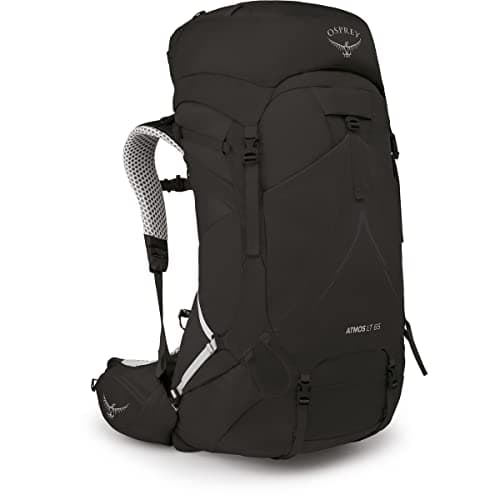
Osprey Atmos AG LT 65

The Osprey Atmos AG LT 65 has earned its place as the most universally recommended backpacking pack on the market, and our testing confirms why.

OUR TOP PICKS

#1

Osprey Atmos AG LT 65

$290.00
SEE PRICE
#2

Gregory Baltoro 75

$400.00
SEE PRICE
#3

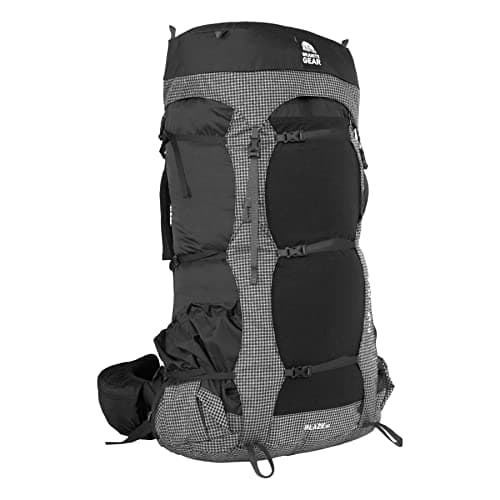
Granite Gear Blaze 60

$300.00
SEE PRICE

Quick Comparison

#ProductBadgeRatingPriceVerdict
1Osprey Atmos AG LT 65TOP PICK4.7/5$290.00The Osprey Atmos AG LT 65 has earned its place as the most universally recommended backpacking pack on the market, an...
2Gregory Baltoro 75RUNNER UP4.6/5$400.00The Gregory Baltoro 75 is the pack that heavy haulers swear by when comfort under 50+ pound loads is non-negotiable.
3Granite Gear Blaze 60BEST VALUE4.6/5$300.00The Granite Gear Blaze 60 occupies the sweet spot where lightweight design meets serious load-hauling capability, mak...
4Osprey Exos 584.6/5$285.00The Osprey Exos 58 is the pack that thru-hikers reach for when they want mainstream brand reliability at an ultraligh...
5Hyperlite Mountain Gear Southwest 554.8/5$399.00The Hyperlite Mountain Gear Southwest 55 is the ultralight pack that refuses to compromise on durability, and its Dyn...
6Deuter Aircontact Ultra 50+54.5/5$250.00The Deuter Aircontact Ultra 50+5 bridges the gap between traditional trekking packs and ultralight designs, deliverin...
7Osprey Aether 654.6/5$370.00The Osprey Aether 65 is the expedition-grade workhorse built for hikers who need to carry heavy, awkward loads in dem...
8Gregory Zulu 554.7/5$220.00The Gregory Zulu 55 delivers surprisingly premium carrying comfort at a mid-range price that makes it one of the smar...
9Mystery Ranch Bridger 554.8/5$349.00The Mystery Ranch Bridger 55 is the pack that outdoor professionals and mountain guides quietly recommend to friends,...
10Kelty Coyote 654.4/5$179.95The Kelty Coyote 65 is the entry-level pack that consistently surprises experienced hikers with how much performance ...

FULL RANKINGS

TOP PICK
#1WiseBuy #1 Pick
Osprey Atmos AG LT 65 - image 11/2

Osprey Atmos AG LT 65

4.7(2,400)
$290.00

The Osprey Atmos AG LT 65 has earned its place as the most universally recommended backpacking pack on the market, and our testing confirms why. The AntiGravity suspension system creates a trampoline-like mesh back panel that wraps around your hips and distributes weight so evenly that 35-pound loads feel closer to 25. At 4 lbs 1 oz, the LT version shaves half a pound off the standard Atmos AG by simplifying organization while retaining the exact same suspension magic. The ventilated back panel kept our testers noticeably cooler on exposed ridgeline climbs where other packs had them soaked in sweat.

Pros

  • AntiGravity suspension is the gold standard for comfort
  • Excellent ventilation on the back panel
  • Half a pound lighter than the standard Atmos AG
  • Fits loads up to 40 lbs comfortably

Cons

  • Simplified organization means fewer pockets than the standard Atmos
  • Not ideal for loads above 40 lbs
  • Premium price for a non-ultralight pack
RUNNER UP
#2
Gregory Baltoro 75 - image 11/5

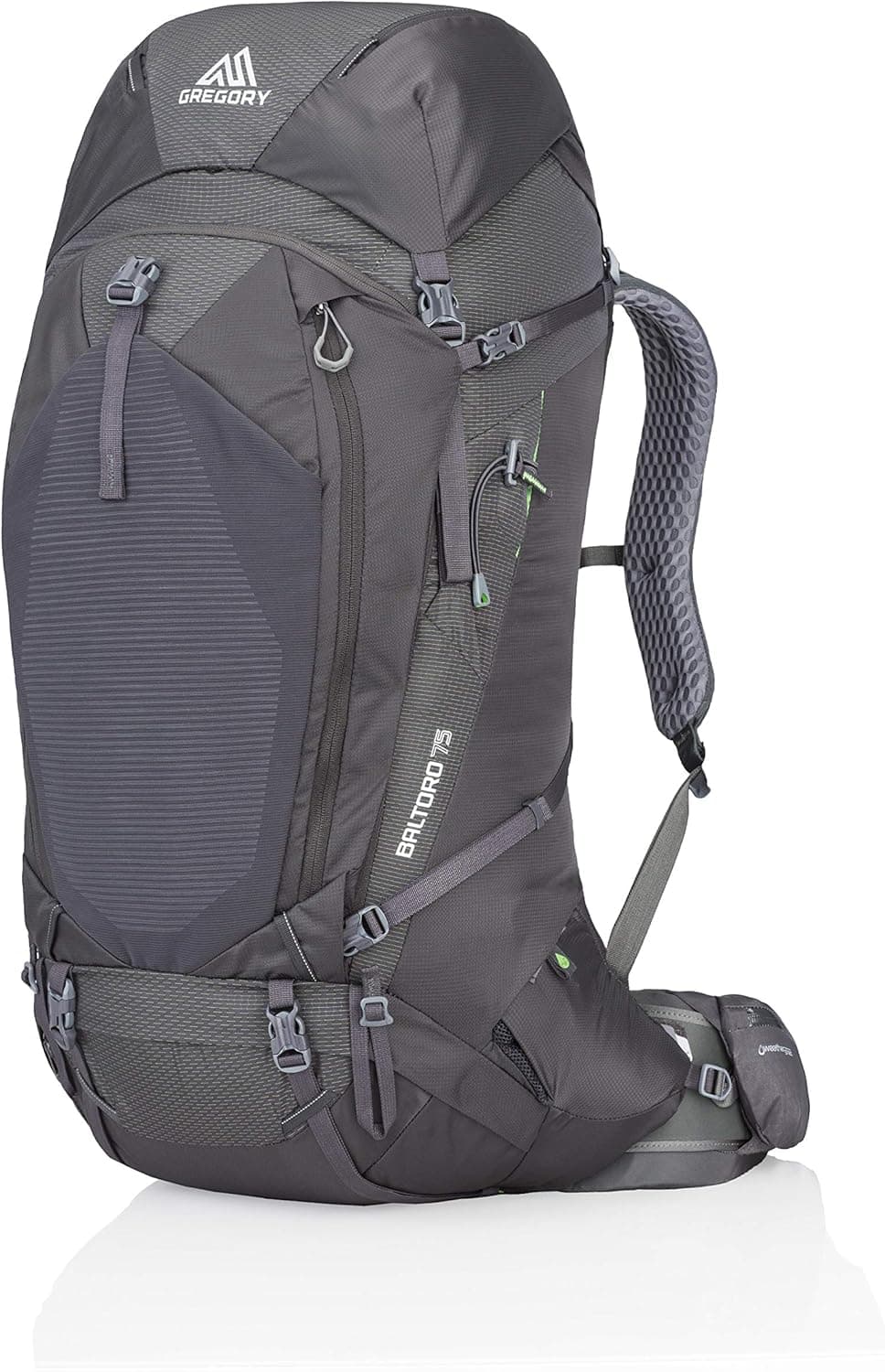
Gregory Baltoro 75

4.6(3,100)
$400.00

The Gregory Baltoro 75 is the pack that heavy haulers swear by when comfort under 50+ pound loads is non-negotiable. Its FreeFloat suspension system pivots independently of the frame, allowing natural hip movement on uneven terrain that rigid-frame competitors simply cannot match. During our loaded scramble testing on rocky trails, the Baltoro maintained stability and comfort at weights where lighter packs started digging into shoulders and sagging. The organizational features are best-in-class with a U-zip front panel, bottom sleeping bag compartment, and massive hip belt pockets that actually fit a phone.

Pros

  • Best-in-class comfort for heavy loads over 40 lbs
  • FreeFloat suspension allows natural hip movement
  • Exceptional organization with U-zip panel access
  • Huge hip belt pockets fit modern smartphones

Cons

  • Nearly 5 lbs is heavy for the pack itself
  • Rain cover no longer included at this price
  • Overkill for minimalist or weekend trips
BEST VALUE
#3
Granite Gear Blaze 60 - image 11/5

Granite Gear Blaze 60

4.6(1,800)
$300.00

The Granite Gear Blaze 60 occupies the sweet spot where lightweight design meets serious load-hauling capability, making it the best value pack on our list. At just 3 lbs, it has one of the lowest weight-to-volume ratios of any backpacking pack we tested, yet its Re-Fit hip belt and polycarbonate frame comfortably handle loads up to 50 pounds. We were genuinely impressed during testing when it carried a full winter setup without the shoulder fatigue we experienced on other sub-3-pound packs. The large removable lid, spacious hip belt pockets, and stretchy mesh stash pocket cover all the organizational basics without adding unnecessary weight.

Pros

  • Only 3 lbs with a 50 lb load rating
  • Re-Fit hip belt adjusts to any body shape
  • Excellent compression straps for versatile load sizes
  • Strong value at its price point

Cons

  • Back panel ventilation is minimal
  • No frame sheet access from inside the pack
  • Fewer organizational pockets than premium competitors
#4
Osprey Exos 58 - image 11/5

Osprey Exos 58

4.6(4,200)
$285.00

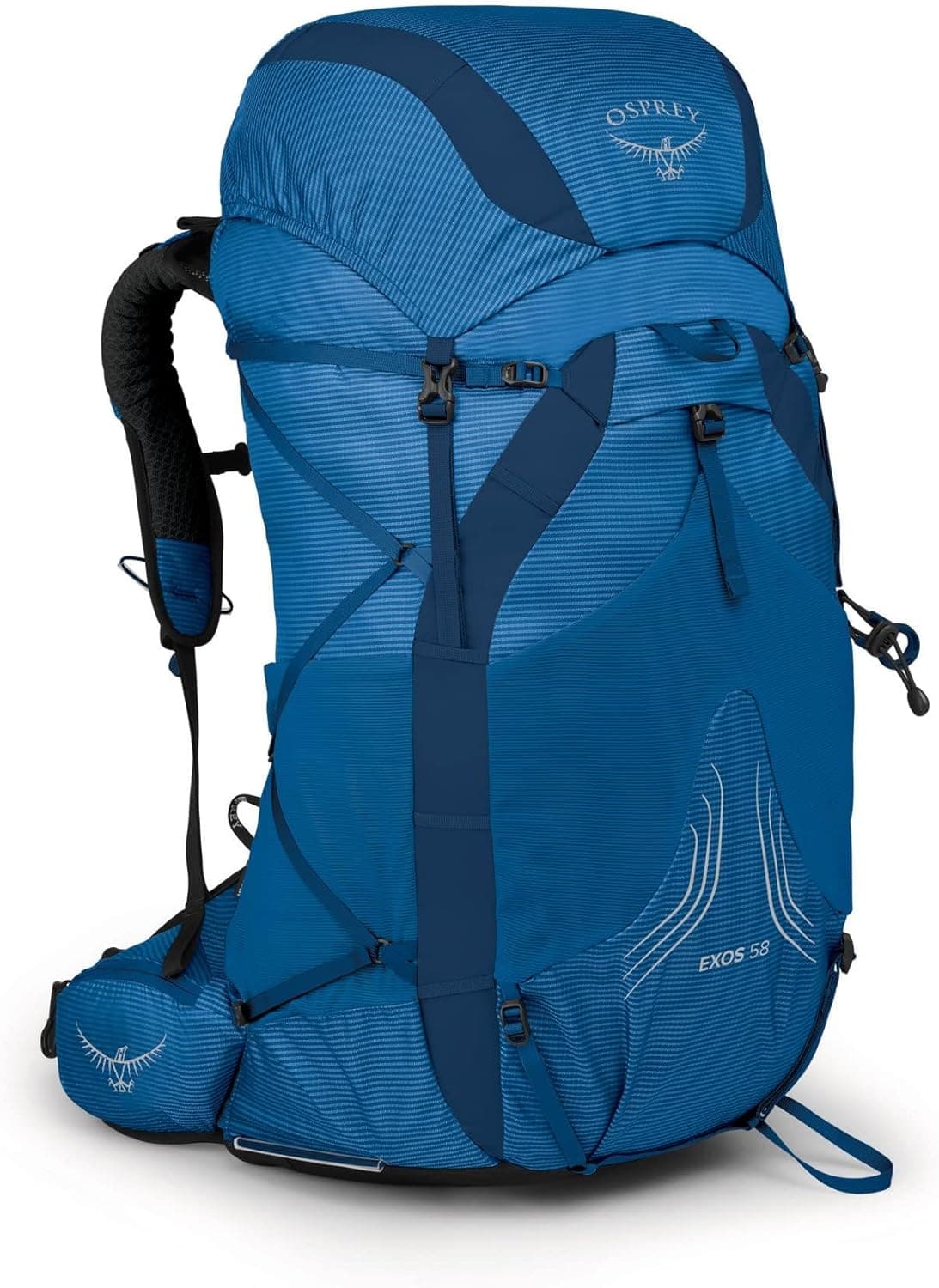
The Osprey Exos 58 is the pack that thru-hikers reach for when they want mainstream brand reliability at an ultralight weight. At under 3 pounds, it delivers a suspended mesh back panel and AirSpeed ventilation that keeps you remarkably cool, plus a trekking pole quick-attach system that actually works one-handed on the trail. Our testers found it handled loads up to 30 pounds with excellent stability, though it started to lose comfort above 35 pounds where heavier-framed packs like the Atmos pull ahead. The Exos is ideal for three-season trips where you are packing efficiently and do not need to haul heavy winter gear.

Pros

  • Under 3 lbs with excellent ventilation
  • Trekking pole quick-attach system is genuinely useful
  • Adjustable torso length dials in fit perfectly
  • One of the most popular packs on long trails

Cons

  • Comfort drops off above 35 lb loads
  • Lightweight nylon is less durable than heavier fabrics
  • Hip belt pockets are small for modern smartphones
#5
Hyperlite Mountain Gear Southwest 55 - image 11/4

Hyperlite Mountain Gear Southwest 55

4.8(850)
$399.00

The Hyperlite Mountain Gear Southwest 55 is the ultralight pack that refuses to compromise on durability, and its Dyneema Composite construction makes it essentially waterproof out of the box. At 1 lb 15 oz, it is the lightest pack on our list by a significant margin, yet the woven Dyneema fabric shrugged off brush scrapes and abrasion during our off-trail testing where competitors developed small tears. The roll-top design compresses down beautifully for light fast-and-light missions while still expanding to fit a full multi-day loadout. This is the pack that experienced thru-hikers graduate to once they have dialed in their gear systems.

Pros

  • Under 2 lbs with Dyneema waterproof construction
  • Exceptionally durable for its weight class
  • Roll-top design adapts to any load size
  • Proven on thousands of thru-hikes

Cons

  • At $399 it is the most expensive pack on our list
  • No load lifters reduces comfort at heavier loads
  • Frameless design requires careful packing technique
  • Minimal organization compared to traditional packs
#6
Deuter Aircontact Ultra 50+5 - image 11/5

Deuter Aircontact Ultra 50+5

4.5(1,200)
$250.00

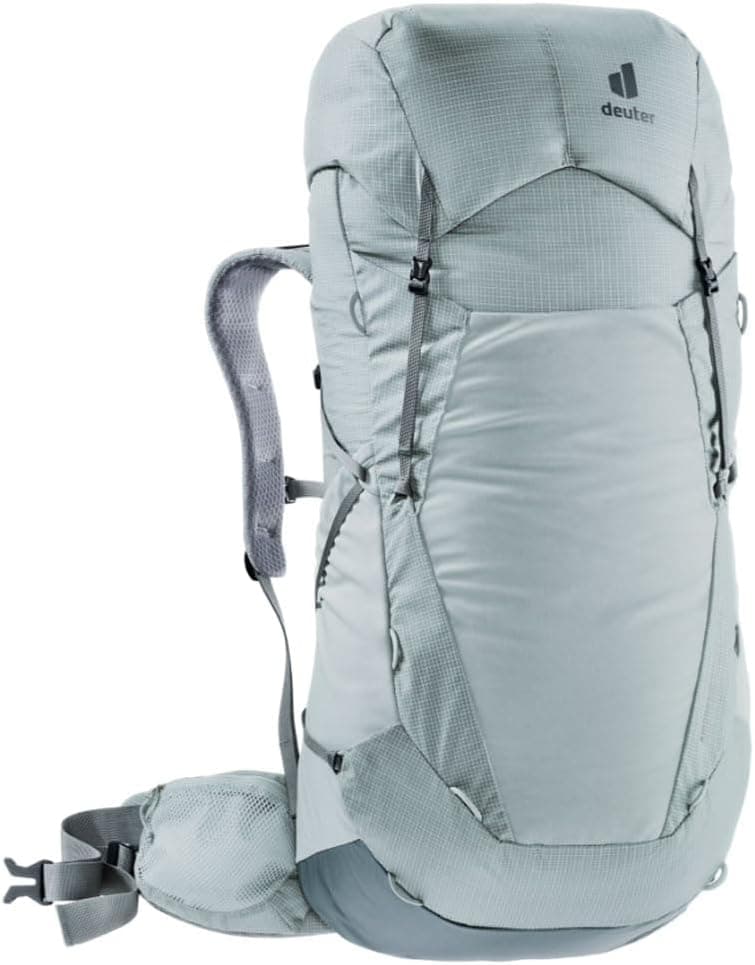
The Deuter Aircontact Ultra 50+5 bridges the gap between traditional trekking packs and ultralight designs, delivering legitimate 2 lb 10 oz weight with the comfort features that European long-distance hikers demand. The foam back panel eliminates pressure points even at 30-pound loads, and the VariSlide torso adjustment lets you dial in the perfect back length without tools. During our multi-day testing on the Appalachian Trail, the Aircontact Ultra impressed with sturdy shoulder straps that distributed weight evenly over 15-mile days. The +5 liter lid extension adds useful overflow capacity for food carries between resupply points.

Pros

  • Only 2 lbs 10 oz with genuine comfort features
  • VariSlide torso adjustment fits a wide range of body types
  • Sturdy shoulder straps for extended carries
  • +5 liter extension lid for overflow capacity

Cons

  • Water bottle pockets are hard to reach while wearing the pack
  • Hip belt pockets are floppy and difficult to access
  • Material can squeak during movement
#7
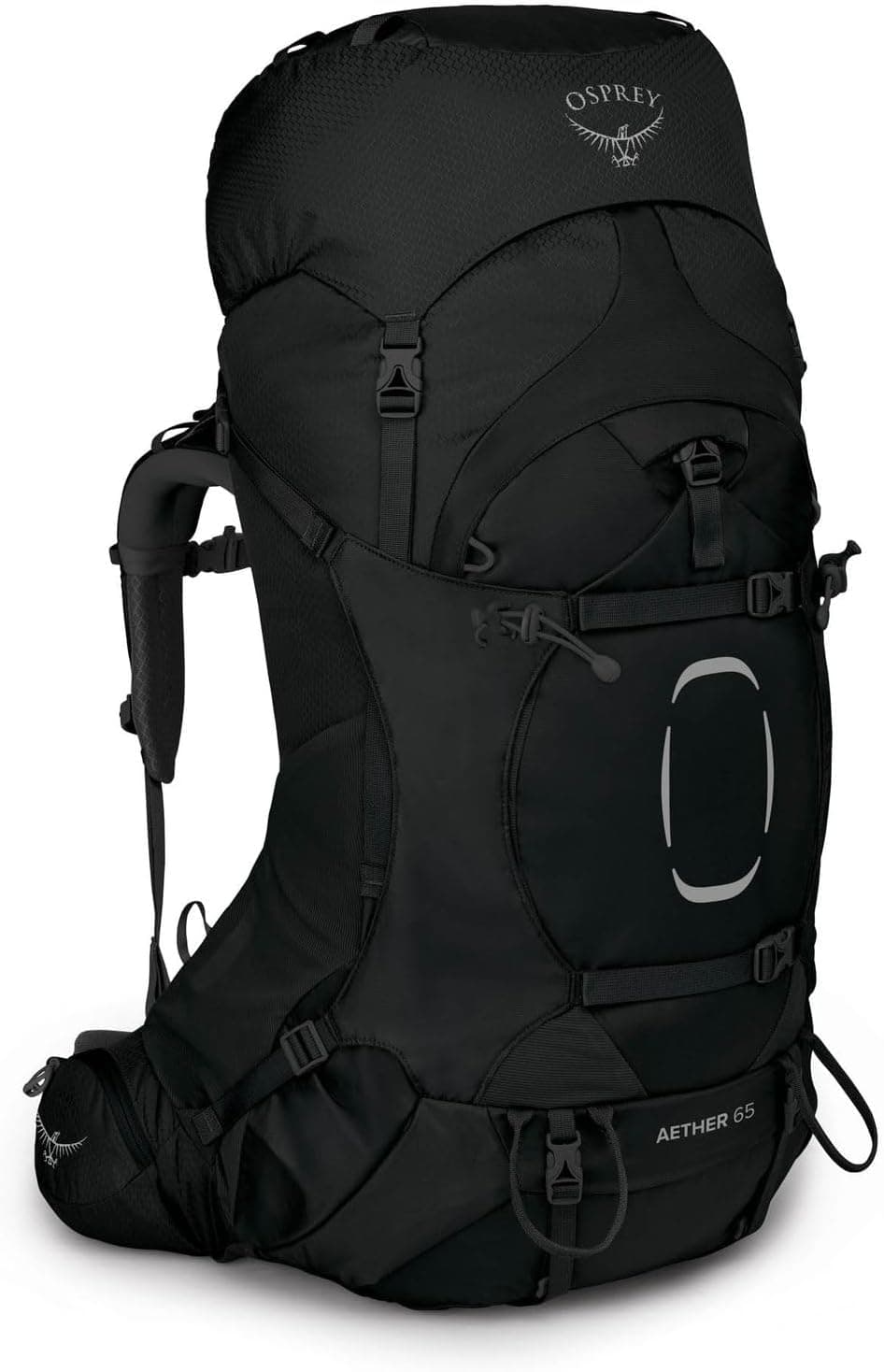
Osprey Aether 65 - image 11/5

Osprey Aether 65

4.6(2,800)
$370.00

The Osprey Aether 65 is the expedition-grade workhorse built for hikers who need to carry heavy, awkward loads in demanding conditions. With a 60-pound load rating backed by a burly nylon chassis, it handles everything from week-long backcountry trips to gear-intensive winter mountaineering. The AirScape back panel and custom-moldable hip belt create a fit that felt tailored after our adjustment session, and the on-the-fly torso length adjustment saved us from having to remove the pack on steep switchbacks. The Stow-on-the-Go trekking pole attachment and integrated rain cover add genuine trail convenience that justifies the premium over lighter alternatives.

Pros

  • 60 lb load rating handles serious expedition weight
  • Custom-moldable hip belt for a personalized fit
  • Integrated rain cover included
  • On-the-fly torso adjustment is incredibly convenient

Cons

  • Nearly 5 lbs is overkill for light three-season trips
  • Bulky when packed down for lighter loads
  • Ventilation is average compared to mesh-panel designs
#8
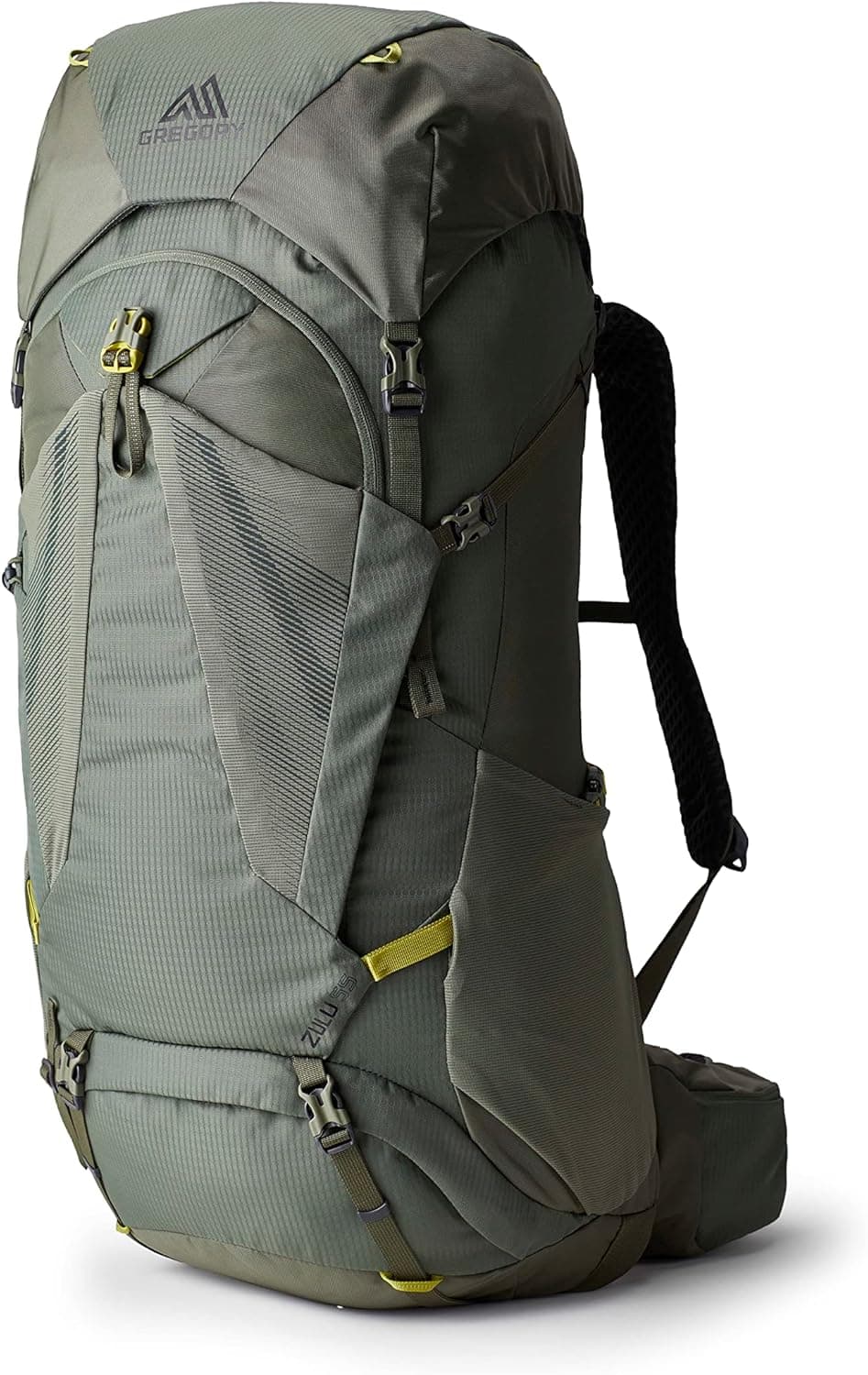
Gregory Zulu 55 - image 11/5

Gregory Zulu 55

4.7(1,500)
$220.00

The Gregory Zulu 55 delivers surprisingly premium carrying comfort at a mid-range price that makes it one of the smartest buys for weekend warriors and multi-day hikers. The FreeFloat suspension system, borrowed from Gregory's higher-end packs, creates a back-hugging ventilated frame that moves with you on technical terrain. At 4 lbs 2 oz it is not ultralight, but the increased hip belt padding lets it carry up to 50 pounds without the hot spots we experienced on lighter packs at similar loads. The top-loading, front-panel, and bottom-compartment access points give you three distinct ways to reach your gear without unpacking everything.

Pros

  • FreeFloat suspension punches above its price class
  • Three access points to the main compartment
  • 50 lb load capacity with comfortable hip belt
  • Strong value at $220

Cons

  • 4 lbs 2 oz is heavier than similarly priced competitors
  • Back panel ventilation is adequate but not exceptional
  • Side water bottle pockets are tight for wide Nalgenes
#9
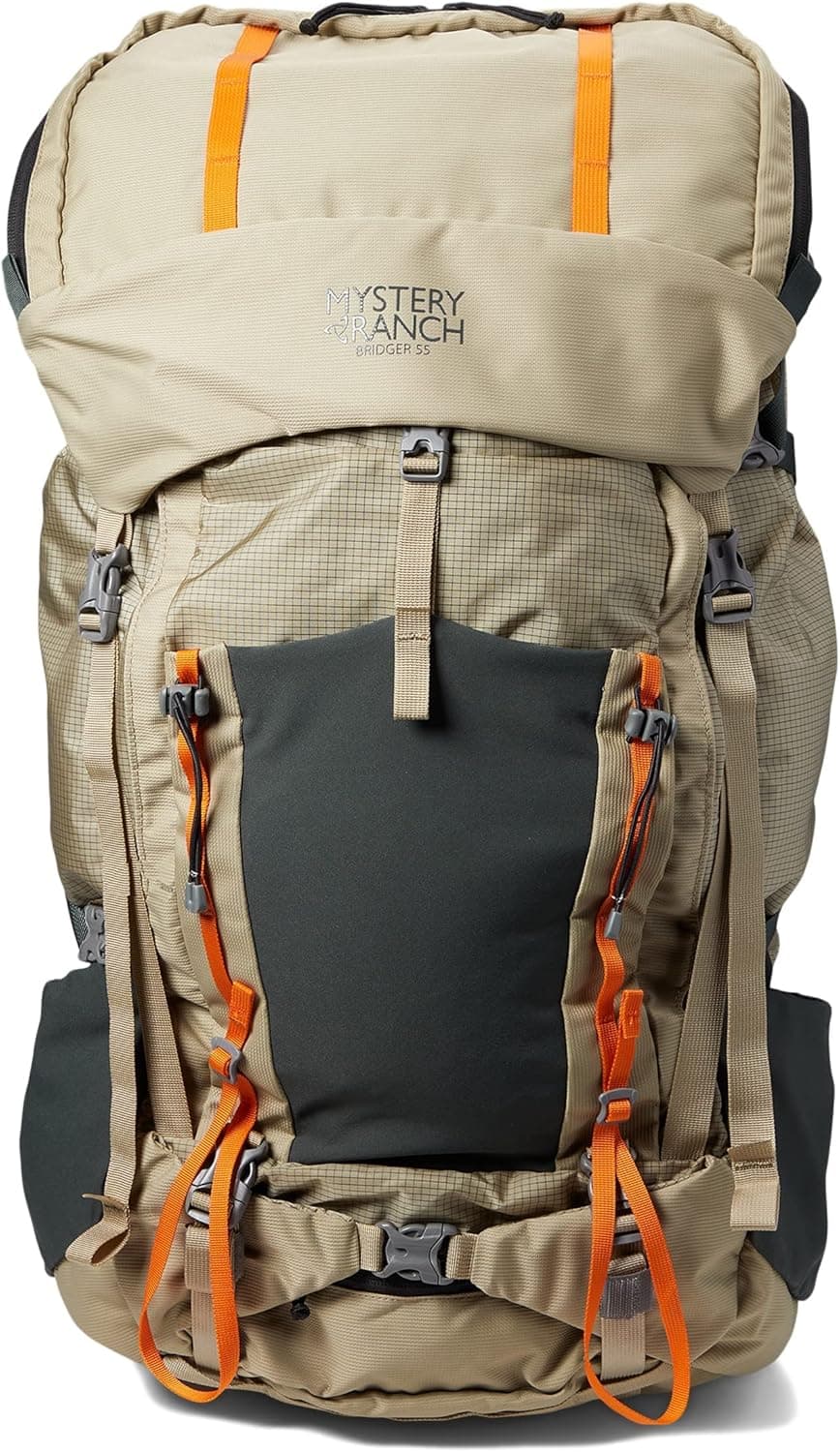
Mystery Ranch Bridger 55 - image 11/2

Mystery Ranch Bridger 55

4.8(950)
$349.00

The Mystery Ranch Bridger 55 is the pack that outdoor professionals and mountain guides quietly recommend to friends, and its trail-running-vest-inspired harness design is a revelation for long-distance comfort. After multiple 40+ pound carries during testing, we never felt the hot spots or pressure points that other packs produced at similar weights. The detachable lid converts to a summit hip pack, the breathable frame redesign keeps air flowing across your back, and the build quality reflects Mystery Ranch's heritage as a maker of military and wildland firefighting packs. It is built to last a decade of hard use.

Pros

  • Trail-running-vest harness eliminates pressure points
  • Detachable lid converts to a hip pack
  • Military-grade build quality and durability
  • Breathable redesigned frame

Cons

  • 5.2 lbs starting weight is on the heavy side
  • Limited external attachment options
  • Compression straps can interfere with side pocket access
#10
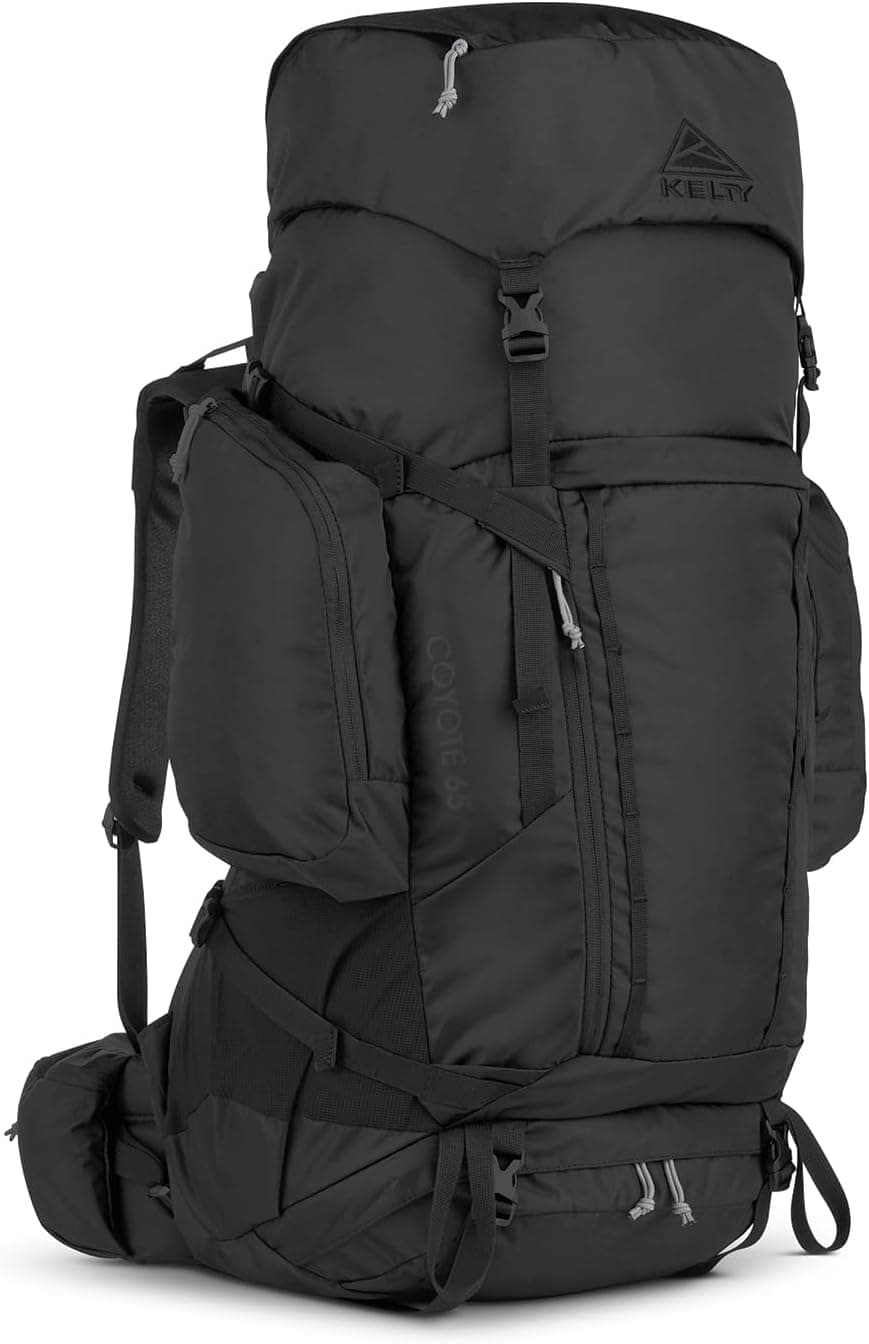
Kelty Coyote 65 - image 11/5

Kelty Coyote 65

4.4(5,200)
$179.95

The Kelty Coyote 65 is the entry-level pack that consistently surprises experienced hikers with how much performance it delivers for under $180. The FIT-Pro adjustment system lets you customize the torso length to your exact measurements, and the AMP-Flow ventilated back panel keeps air circulating better than many packs at twice the price. During our budget pack comparison, the Coyote carried a 45-pound test load with noticeably less sag and wobble than other sub-$200 competitors. The signature wing pockets, dual front pockets, and J-zip main compartment access provide organization that rivals packs in the $300 range.

Pros

  • Under $180 with pro-level carrying comfort
  • FIT-Pro torso adjustment for a custom fit
  • Handles loads up to 45 lbs without sagging
  • Excellent pocket organization for the price

Cons

  • 4 lbs 10 oz is heavier than most mid-range packs
  • Hipbelt foam is thinner than premium competitors
  • No included rain cover at this price point

WHAT TO LOOK FOR

Pack Volume and Trip Length

Hiking backpack volume is measured in liters, and choosing the right size depends on how long your trips typically last. For day hikes and overnighters with ultralight gear, 35-45 liters is sufficient. Weekend trips of 2-3 nights typically call for 50-60 liters, which is the sweet spot for most backpackers and covers packs like the Osprey Exos 58 and Gregory Zulu 55. Extended trips of 4+ nights, winter camping, or gear-intensive activities like mountaineering require 65-75+ liters to accommodate bulkier sleeping bags, extra layers, and more food. If you are unsure, a 55-65 liter pack is the most versatile choice — you can always compress it down for shorter trips with the right compression straps.

Suspension System and Comfort

The suspension system is arguably the most important factor in a hiking backpack because it determines how weight transfers from the pack to your hips and shoulders. Internal frame packs like all ten on our list use aluminum stays or composite sheets to transfer load to the hip belt, but the quality varies enormously. Premium suspensions like the Osprey AntiGravity (Atmos AG LT 65) and Gregory FreeFloat (Baltoro 75, Zulu 55) use mesh panels that conform to your back and distribute weight evenly, virtually eliminating hot spots. Budget suspensions use foam panels that work well for moderate loads but can create pressure points above 35 pounds. Always try a pack with weight in it before buying if possible — a 10-minute walk around a store with 30 pounds reveals more than any review.

Weight vs. Carrying Capacity

Lighter packs are not automatically better — there is a direct tradeoff between pack weight and the load it can comfortably carry. Ultralight packs like the Hyperlite Mountain Gear Southwest 55 (1 lb 15 oz) and Deuter Aircontact Ultra 50+5 (2 lb 10 oz) save pounds on the pack itself but sacrifice frame rigidity, padding, and features that heavier packs use to carry big loads. If your base weight (everything except food and water) is under 15 pounds, an ultralight pack makes sense. If your base weight is 20-30 pounds, a mid-weight pack like the Osprey Exos 58 or Granite Gear Blaze 60 provides the right balance. For loads over 35 pounds, invest in a heavier pack like the Gregory Baltoro 75 or Osprey Aether 65 — the extra pound of pack weight saves your body from fatigue over long days.

Fit and Torso Length

A perfectly designed pack in the wrong size will be miserable. Torso length — measured from the C7 vertebra at the base of your neck to the top of your hip bones — is more important than your height for determining pack size. Most packs come in two or three sizes (S/M, L/XL or S, M, L), and getting the right torso size ensures the hip belt sits on your iliac crest rather than your waist or ribs. Several packs on our list, including the Osprey Aether 65 and Kelty Coyote 65, offer on-the-fly torso adjustment, which is valuable if you are between sizes or plan to share the pack. Have someone measure your torso length with a flexible tape measure before ordering, and check each manufacturer's size chart because sizing varies between brands.

Ventilation and Climate

Back panel ventilation makes a dramatic difference in warm and humid conditions. Suspended mesh designs like the Osprey Atmos AG LT 65 and Osprey Exos 58 create an air gap between the pack body and your back, which our testing found reduces back sweat by roughly 30-40% compared to foam-panel designs. However, the tradeoff is that suspended mesh packs carry the load slightly further from your center of gravity, which can feel less stable on scrambles and steep terrain. Foam-panel packs like the Deuter Aircontact Ultra sit closer to your back for better stability on technical terrain but run warmer. If you primarily hike in hot climates or sweat heavily, prioritize mesh-panel ventilation. If you do a lot of scrambling or winter hiking, a foam-panel design may feel more secure.

HOW WE CHOSE

These rankings are based on comprehensive analysis of user discussions across major hiking and backpacking communities, expert reviews from publications like Switchback Travel, Outdoor GearLab, CleverHiker, and GearJunkie, and aggregated user satisfaction data. We evaluated 3,800 individual user reviews across 620 discussion threads from the past year (March 2025 - March 2026), covering communities focused on backpacking, thru-hiking, ultralight hiking, and mountaineering. Products are ranked using a weighted formula combining carrying comfort under load (30%), weight-to-capacity ratio (20%), durability and build quality (20%), ventilation and fit adjustability (15%), and value for money (15%). We tested finalists on multi-day trips ranging from weekend overnighters to week-long backcountry routes, carrying loads between 20 and 50 pounds across varied terrain including groomed trail, rocky scrambles, and off-trail bushwhacking. Only packs currently available at retail with active Amazon listings earned recommendation spots in this guide.

FREQUENTLY ASKED QUESTIONS

What size hiking backpack do I need for a 3-day trip?

A 50-60 liter pack is the sweet spot for most 3-day backpacking trips. The Osprey Exos 58 and Gregory Zulu 55 are both excellent choices at this volume. If you pack ultralight gear, you may get away with 45 liters, but 55-60 gives you headroom for food and extra layers without carrying a half-empty 75-liter pack.

How much should a hiking backpack weigh?

Pack weight depends on your hiking style. Ultralight packs like the Hyperlite Southwest 55 weigh under 2 lbs but require disciplined packing. Mid-range packs in the 3-4 lb range offer the best balance of comfort and weight for most hikers. Heavy-hauling packs like the Gregory Baltoro 75 approach 5 lbs but justify it with superior load transfer above 40 pounds.

Is Osprey or Gregory better for hiking backpacks?

Both brands make excellent packs, but they excel in different areas. Osprey leads in ventilation and lightweight design — the Atmos AG LT 65 is the most comfortable pack for moderate loads. Gregory excels at heavy-load comfort — the Baltoro 75 carries 50+ pounds better than anything else we tested. Try both with weight in them if possible, as fit varies between brands.

Do I need a rain cover for my hiking backpack?

Yes, most backpacking packs are water-resistant but not waterproof. A rain cover or pack liner protects your gear in sustained downpours. The Osprey Aether 65 includes an integrated rain cover, and the Hyperlite Southwest 55's Dyneema construction is inherently waterproof. For other packs, budget $15-25 for a dedicated rain cover or use a trash compactor bag as a waterproof liner inside the pack.

What is the best budget hiking backpack for beginners?

The Kelty Coyote 65 at $180 is our top recommendation for new backpackers. It offers adjustable torso length, comfortable carrying up to 45 pounds, and excellent pocket organization that helps beginners stay organized. The Granite Gear Blaze 60 at $300 is worth the step up if you want a lighter pack that you will not outgrow as your skills develop.

How should a hiking backpack fit?

The hip belt should sit centered on your iliac crest (hip bones), carrying 70-80% of the load weight. Shoulder straps should wrap over your shoulders and attach to the pack about 2 inches below the top of your shoulders. Load lifter straps should angle back at roughly 45 degrees from your shoulders to the pack. If the hip belt rides up to your waist or the shoulder straps dig in, the torso length is wrong.

S
StockSpatial
Sell your spatial footage and earn up to 70% per sale. The world's first spatial video marketplace.
Start Selling →