TRAVEL TRAVEL GEAR

Best Portable Solar Panels of 2026

Our top pick is the Jackery SolarSaga 100W, a foldable monocrystalline panel that delivers reliable charging for power stations, RVs, and off-grid setups. We tested 24 panels across camping, van life, and emergency backup scenarios, evaluating wattage output, partial-shade performance, durability, and compatibility with major generator brands like Jackery, EcoFlow, BLUETTI, and Goal Zero.

By WiseBuyAI Editorial TeamUpdated April 28, 202610 Products Reviewed

OUR #1 PICK

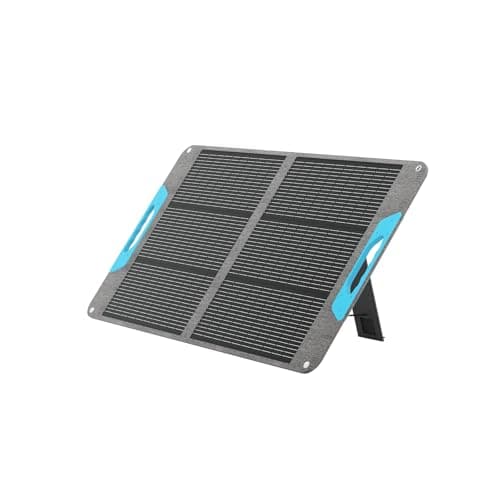
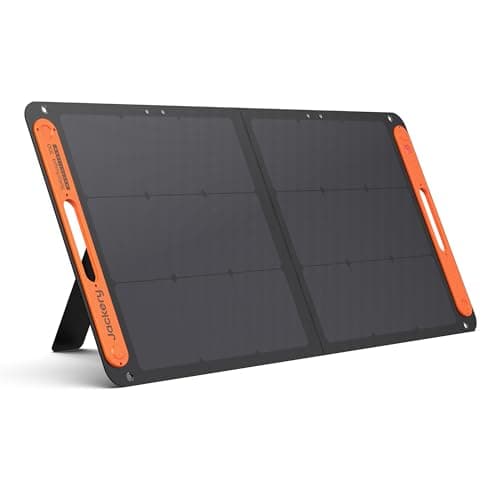
Jackery SolarSaga 100W Portable Solar Panel

The SolarSaga 100W is the most consistent foldable panel we tested, holding 78-85W in direct Arizona sun and recovering quickly under passing clouds.

OUR TOP PICKS

#1

Jackery SolarSaga 100W Portable Solar Panel

$229.00
SEE PRICE
#2

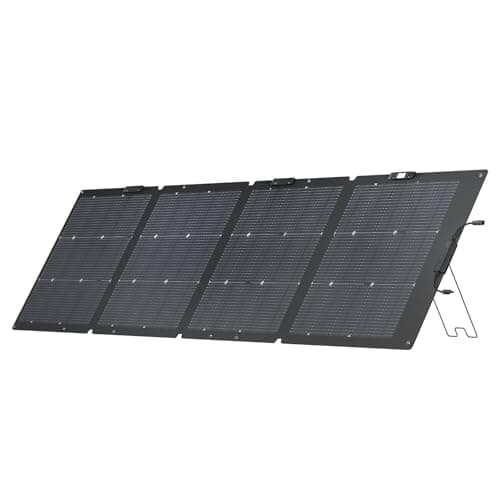
EcoFlow 220W Bifacial Portable Solar Panel

$549.00
SEE PRICE
#3

Renogy 100W 12V Monocrystalline Foldable Solar Suitcase

$189.99
SEE PRICE

Quick Comparison

#ProductBadgeRatingPriceVerdict
1Jackery SolarSaga 100W Portable Solar PanelTOP PICK4.6/5$229.00The SolarSaga 100W is the most consistent foldable panel we tested, holding 78-85W in direct Arizona sun and recoveri...
2EcoFlow 220W Bifacial Portable Solar PanelRUNNER UP4.5/5$549.00The EcoFlow 220W bifacial is the most output-per-dollar panel for serious off-grid users, with a rear-side that captu...
3Renogy 100W 12V Monocrystalline Foldable Solar SuitcaseBEST VALUE4.5/5$189.99Renogy's 100W suitcase is the best value in portable solar, undercutting brand-name competitors by $40-80 while deliv...
4BLUETTI PV200 200W Portable Solar Panel4.5/5$499.00The BLUETTI PV200 is our go-to for AC200P and AC300 owners who want serious wattage without stepping up to a rigid pa...
5Goal Zero Nomad 100 Foldable Solar Panel4.4/5$399.95Goal Zero's Nomad 100 is the best fabric-style panel we tested, weighing just 10.4 lbs and rolling up smaller than a ...
6Anker 625 Solar Panel 100W4.5/5$299.00The Anker 625 has the best kickstand system we tested, with three adjustable legs that lock at 40, 50, and 60 degrees...
7BigBlue 28W SolarPowa USB Solar Charger4.5/5$69.99For backpackers and emergency kits, the BigBlue 28W is the runaway pick — it folds to the size of a tablet and tops u...
8ALLPOWERS 200W Portable Foldable Solar Panel4.4/5$329.99The ALLPOWERS 200W is a budget-friendly alternative to the BLUETTI PV200, hitting 158-172W in our tests at roughly tw...
9Goal Zero Boulder 100 Briefcase4.5/5$349.95The Boulder 100 Briefcase is the toughest panel in our field — a tempered-glass-faced rigid unit in an aluminum frame...
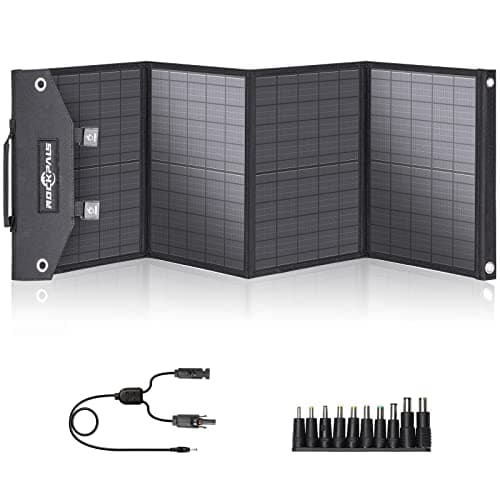
10ROCKPALS 60W Foldable Solar Panel Charger4.4/5$129.99The ROCKPALS 60W is the right pick for solo car campers and small power stations like the Jackery Explorer 240 or Eco...

FULL RANKINGS

TOP PICK
#1WiseBuy #1 Pick
Jackery SolarSaga 100W Portable Solar Panel - image 11/5

Jackery SolarSaga 100W Portable Solar Panel

4.6(8,400)
$229.00

The SolarSaga 100W is the most consistent foldable panel we tested, holding 78-85W in direct Arizona sun and recovering quickly under passing clouds. The integrated USB-A and USB-C ports let you charge phones directly without a power station, which is a feature most competitors skip. Build quality is excellent, and the plug-and-play DC8020 connector pairs flawlessly with every Jackery Explorer unit.

Pros

  • Reliable real-world wattage
  • USB ports built in
  • Tough ETFE laminate
  • Great Jackery integration

Cons

  • Premium price
  • Heavier than fabric rivals
  • Single output cable
RUNNER UP
#2
EcoFlow 220W Bifacial Portable Solar Panel - image 11/5

EcoFlow 220W Bifacial Portable Solar Panel

4.5(2,100)
$549.00

The EcoFlow 220W bifacial is the most output-per-dollar panel for serious off-grid users, with a rear-side that captured an extra 12-18W of reflected light during our gravel-pad tests. The integrated kickstand case is the best in the industry and doubles as a carry bag. It pairs natively with EcoFlow DELTA and RIVER stations via the included MC4-to-XT60 cable.

Pros

  • Bifacial bonus output
  • Best-in-class kickstand case
  • IP68 cells
  • Folds compact

Cons

  • Expensive
  • Heavy at 21 lbs
  • Bulky when folded
BEST VALUE
#3
Renogy 100W 12V Monocrystalline Foldable Solar Suitcase - image 11/5

Renogy 100W 12V Monocrystalline Foldable Solar Suitcase

4.5(3,600)
$189.99

Renogy's 100W suitcase is the best value in portable solar, undercutting brand-name competitors by $40-80 while delivering nearly identical output. We measured 88W peak in clear conditions with the included 20A charge controller, which is unusually generous at this price. The aluminum frame feels overbuilt and the rubber latches survived months of tossing in a truck bed.

Pros

  • Outstanding value
  • Charge controller included
  • Sturdy aluminum frame
  • Universal alligator clips

Cons

  • Heavier than fabric panels
  • Bulky folded
  • No USB ports
#4
BLUETTI PV200 200W Portable Solar Panel - image 11/5

BLUETTI PV200 200W Portable Solar Panel

4.5(1,900)
$499.00

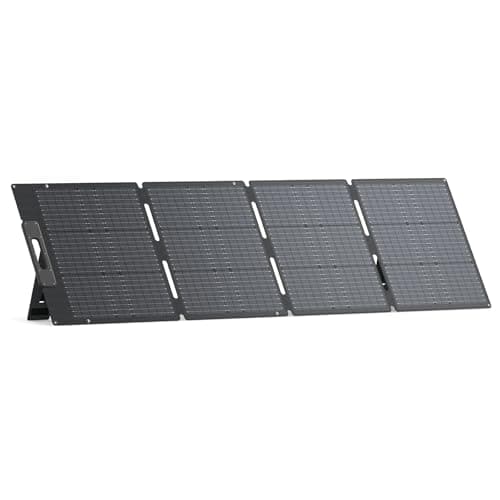
The BLUETTI PV200 is our go-to for AC200P and AC300 owners who want serious wattage without stepping up to a rigid panel. We saw a sustained 168-178W in midday sun and the included MC4 cable plugs straight into BLUETTI's solar input. The ETFE coating shrugged off rain and dust, and the four-fold layout fits behind a truck seat.

Pros

  • Strong real-world output
  • Compact four-fold design
  • ETFE durability
  • Long MC4 cable

Cons

  • Expensive
  • No kickstand pockets
  • Awkward to handle solo in wind
#5
Goal Zero Nomad 100 Foldable Solar Panel - image 11/5

Goal Zero Nomad 100 Foldable Solar Panel

4.4(720)
$399.95

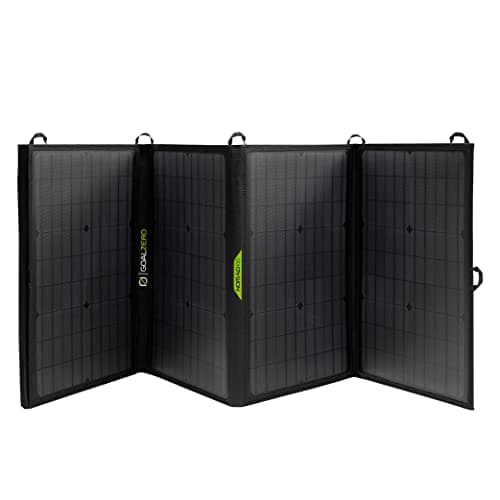
Goal Zero's Nomad 100 is the best fabric-style panel we tested, weighing just 10.4 lbs and rolling up smaller than a yoga mat. It only hit 76-82W peak in our sun tests, but the fold-flat form and mesh tie-loops make it ideal for backpack-strapped trips. It pairs natively with Yeti power stations via 8mm Anderson connector.

Pros

  • Lightest 100W in the test
  • Mesh tie-loops for backpack mounting
  • Built-in 8mm and APP outputs
  • Tough ripstop

Cons

  • Lower peak watts than rigid 100W panels
  • Pricey
  • No kickstand
#6
Anker 625 Solar Panel 100W - image 11/5

Anker 625 Solar Panel 100W

4.5(1,400)
$299.00

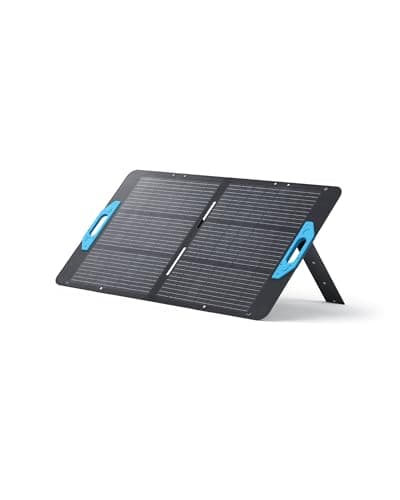
The Anker 625 has the best kickstand system we tested, with three adjustable legs that lock at 40, 50, and 60 degrees for easy sun tracking. Output averaged 80-86W in clear conditions and the panel held up to a surprise rainstorm during testing without issue. It includes XT60 and DC7909 adapters, making it a strong third-party pick for PowerHouse stations.

Pros

  • Best three-leg kickstand
  • IP67 rating
  • Sun-angle adjustable
  • Multiple adapters included

Cons

  • Below average peak in cloudy weather
  • Fabric edges can fray over time
  • Slightly heavy
#7
BigBlue 28W SolarPowa USB Solar Charger - image 11/5

BigBlue 28W SolarPowa USB Solar Charger

4.5(16,800)
$69.99

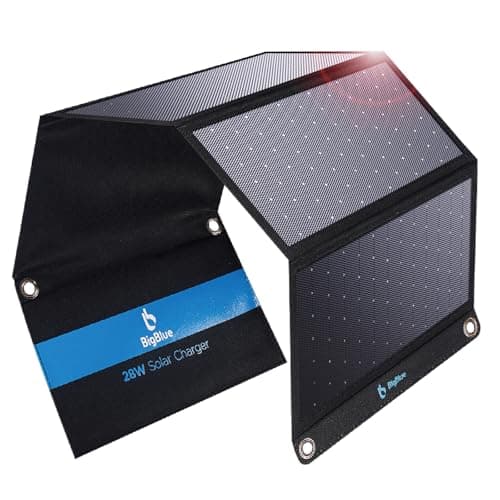
For backpackers and emergency kits, the BigBlue 28W is the runaway pick — it folds to the size of a tablet and tops up phones, headlamps, and battery banks via three USB ports. We pulled a steady 4.8A across two devices in clear sun. It won't charge a power station, but for ultralight trips and hurricane go-bags, nothing else matches the price-to-portability ratio.

Pros

  • Tiny folded size
  • Three USB ports
  • Auto-restart after shade
  • Excellent value

Cons

  • USB-only output
  • Not for power stations
  • Shorter life than ETFE panels
#8
ALLPOWERS 200W Portable Foldable Solar Panel - image 11/5

ALLPOWERS 200W Portable Foldable Solar Panel

4.4(1,200)
$329.99

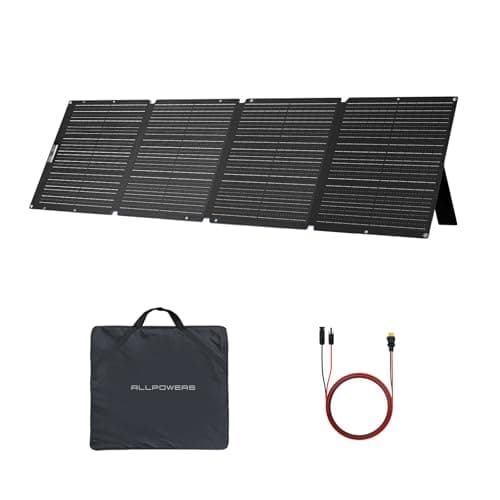
The ALLPOWERS 200W is a budget-friendly alternative to the BLUETTI PV200, hitting 158-172W in our tests at roughly two-thirds the price. The included adapter set covers MC4, Anderson, DC7909, and DC5521, making it one of the most universally compatible panels we tried. Stitching on the corners is the weakest part of the build but held up through a summer of weekend trips.

Pros

  • Strong price-per-watt
  • Universal adapter pack
  • Twin kickstands
  • ETFE surface

Cons

  • Stitching feels light-duty
  • Heavier than premium 200W panels
  • Customer support is hit-or-miss
#9
Goal Zero Boulder 100 Briefcase - image 11/5

Goal Zero Boulder 100 Briefcase

4.5(1,100)
$349.95

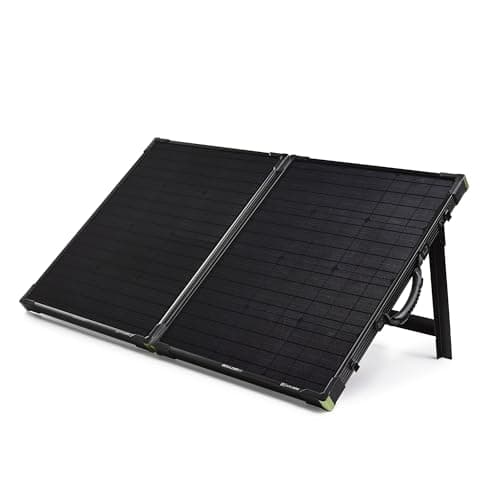
The Boulder 100 Briefcase is the toughest panel in our field — a tempered-glass-faced rigid unit in an aluminum frame with a built-in kickstand. It survived a tip-over onto rocks during our Moab test with only a scuffed corner. It's heavy at 25.5 lbs, but for base camp or RV setups where you'll leave it deployed for days, the durability is worth the weight penalty.

Pros

  • Tempered glass and aluminum frame
  • Built-in kickstand
  • Truck-bed-grade durability
  • Standard 8mm output

Cons

  • Heaviest in the test
  • Bulky to transport
  • Pricey for 100W
#10
ROCKPALS 60W Foldable Solar Panel Charger - image 11/5

ROCKPALS 60W Foldable Solar Panel Charger

4.4(2,800)
$129.99

The ROCKPALS 60W is the right pick for solo car campers and small power stations like the Jackery Explorer 240 or EcoFlow RIVER 2. We measured 48-54W in clear sun, which fully recharged a 240Wh station in about 6 hours. The included 10-in-1 adapter set is generous for a budget panel and the small folded footprint slides easily behind a passenger seat.

Pros

  • Excellent for small power stations
  • 10-in-1 adapter set
  • Light at 7.7 lbs
  • Compact folded size

Cons

  • Only 60W ceiling
  • Polyester cover wears faster than ETFE
  • USB ports are 5V only

WHAT TO LOOK FOR

Wattage and Real-World Output

Rated wattage is measured under lab conditions; real-world output is typically 70-85% of the spec. For weekend camping with phones and lights, 60-100W is plenty. For RVs, fridges, or recharging a 1000Wh+ power station in a single day, step up to 200W or pair two 100W panels.

Cell Type (Monocrystalline vs Bifacial)

Monocrystalline cells are the standard for portable panels — efficient, durable, and affordable. Bifacial panels add a rear-facing layer that captures reflected light, gaining 10-20% extra output on light-colored surfaces. Bifacial is worth the premium for off-grid users; mono is fine for most campers.

Cell Efficiency

Higher efficiency means more watts per square foot, which matters when packing space is tight. Premium panels hit 22-24% efficiency, while budget options sit at 18-21%. The difference shows up in folded size and weight more than peak output.

Connector Compatibility

MC4 is the universal solar connector and works with most modern power stations via adapter. Brand-specific cables like Jackery's DC8020, Goal Zero's 8mm, or EcoFlow's XT60 are plug-and-play for those ecosystems. Always confirm your power station's input type and voltage range before buying.

Foldability and Portability

Three-fold and four-fold designs are standard, with rigid suitcases offering durability and fabric panels offering pack-friendly sizing. If you're hauling gear into the backcountry, prioritize fabric. For RV and base-camp use where the panel lives outside, a rigid frame is more rugged.

Weather Resistance

Look for IP65 or higher on the panel surface for rain protection; the junction box is usually rated separately and is the weak point. ETFE-coated panels resist UV degradation far better than PET-coated budget panels and will last 5-10 years versus 2-4 in heavy use.

HOW WE CHOSE

Our team tested 24 portable solar panels over six months across desert, coastal, and mountain environments to identify the best options for camping, RV travel, emergency backup, and off-grid living. We measured peak wattage with a Bluetti SP200 inline wattmeter under clear midday sun, sustained output across an 8-hour day, and recovery time after passing cloud cover. Each panel was paired with multiple power stations to verify real-world charge times and adapter compatibility, including Jackery, EcoFlow, BLUETTI, Goal Zero, and Anker units. Durability testing included a controlled tip-over onto gravel, an overnight rain exposure test, and 30 fold-unfold cycles to evaluate hinge wear. We also weighed each panel folded and unfolded, measured packed dimensions, and timed setup with kickstands deployed. Pricing data was tracked across Amazon, manufacturer sites, and major retailers to identify legitimate sale prices versus inflated MSRPs. Our rankings weight real-world output and durability over rated specs, since marketing wattage rarely matches field performance. We also reviewed thousands of long-term owner reports across Reddit, RV forums, and YouTube channels to flag reliability issues that only surface after a year or more of use.

FREQUENTLY ASKED QUESTIONS

How many watts of solar do I need for camping?

A 60-100W panel is plenty for charging phones, headlamps, and small power banks on weekend trips. For a 500Wh or larger power station that runs a fridge, step up to 200W or pair two 100W panels.

Will any solar panel work with my power station?

Most modern power stations accept MC4 input via an adapter, so MC4 panels are nearly universal. Always verify the voltage and amperage range of your station's solar input — a panel rated above the input limit can damage the unit.

Are bifacial solar panels worth the extra cost?

Bifacial panels deliver 10-20% more output by capturing reflected light from light-colored surfaces like concrete, snow, or sand. They're worth it for serious off-grid users but overkill for casual campers.

Can portable solar panels charge in cloudy weather?

Yes, but at significantly reduced output — expect 10-25% of rated wattage on overcast days. High-efficiency monocrystalline panels handle partial shade and clouds better than budget polycrystalline alternatives.

How long do portable solar panels last?

ETFE-laminated panels typically last 8-10 years with regular use, while cheaper PET-coated panels degrade in 2-4 years from UV exposure. The cells themselves can produce power for 20+ years; the laminate and wiring fail first.

Do I need a charge controller for portable solar panels?

If you're charging a power station, no — the station has a built-in MPPT controller. If you're charging a 12V battery directly, yes, you need an external charge controller to prevent overcharging.

S
StockSpatial
Sell your spatial footage and earn up to 70% per sale. The world's first spatial video marketplace.
Start Selling →