KITCHEN KITCHEN & COOKING

10 Best Espresso Machines of 2026

We researched hundreds of expert reviews and real owner experiences to find the best espresso machines for every budget. From the beginner-friendly Breville Bambino Plus to prosumer dual boiler machines, these are the espresso machines worth your money in 2026.

By WiseBuyAI Editorial TeamUpdated February 21, 202610 Products Reviewed

OUR TOP PICKS

#1

Breville Bambino Plus

$499.95
SEE PRICE
#2

Gaggia Classic Evo Pro

$499.00
SEE PRICE
#3

Breville Barista Pro

$849.95
SEE PRICE

FULL RANKINGS

BEST OVERALL
#1WiseBuy #1 Pick
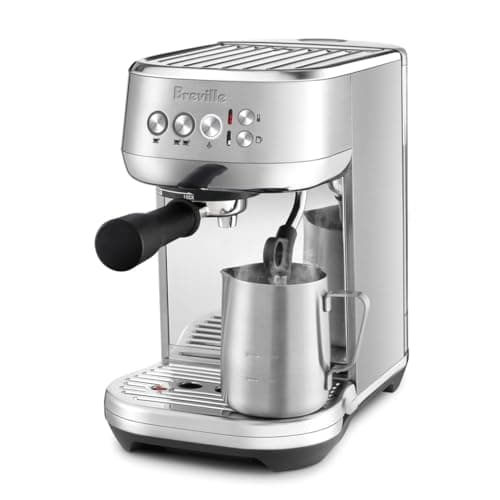
Breville Bambino Plus

Breville Bambino Plus

4.7(14,200)
$499.95

The Breville Bambino Plus is the most well-rounded espresso machine for home baristas at any experience level. Its ThermoJet heating system reaches brewing temperature in just 3 seconds, and the automatic steam wand produces café-quality microfoam with a single button press — making it the fastest path from countertop to latte in its class. Whether you are a complete beginner or an experienced coffee enthusiast looking for a compact daily driver, the Bambino Plus consistently delivers exceptional espresso with minimal fuss.

Pros

  • 3-second heat-up time via ThermoJet system — the fastest in its price range
  • Automatic milk frothing produces velvety microfoam with zero learning curve
  • Compact footprint takes up less counter space than almost any competitor
  • 54mm portafilter with pressurized and non-pressurized basket options for all skill levels
  • PID temperature control ensures shot-to-shot consistency

Cons

  • 54mm portafilter limits aftermarket accessory options compared to standard 58mm machines
  • Small water reservoir requires frequent refills for back-to-back drinks
  • Plastic internal components may not match the longevity of all-metal prosumer machines
BEST VALUE
#2
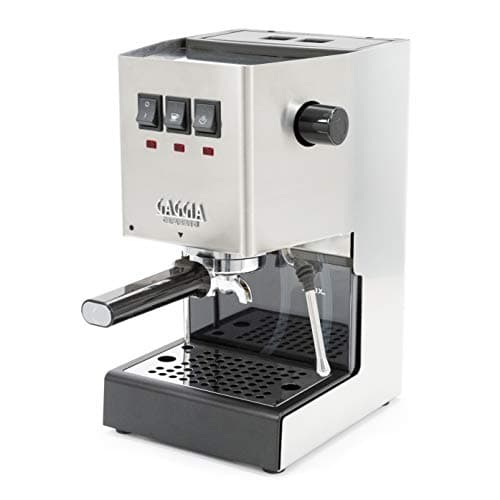
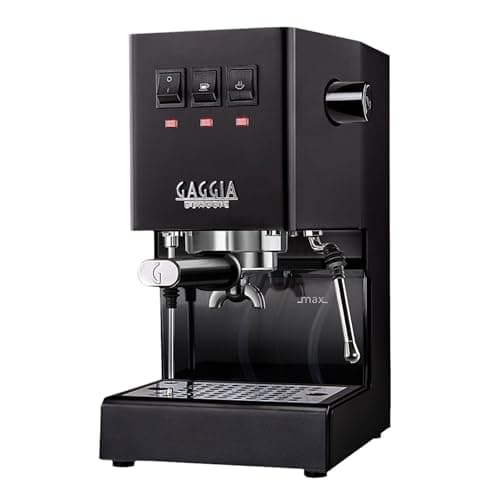
Gaggia Classic Evo Pro

Gaggia Classic Evo Pro

4.6(8,500)
$499.00

The Gaggia Classic Evo Pro is the quintessential starter machine for aspiring home baristas who want to learn real espresso technique. Its commercial-grade 58mm portafilter and brass boiler deliver authentic café-quality shots, while the updated 9-bar OPV makes it pull balanced espresso right out of the box without any modifications. If you want a machine that will teach you the craft of espresso and grow with your skills for years, the Gaggia Classic Evo Pro offers unbeatable value.

Pros

  • Commercial-style 58mm portafilter opens up a massive ecosystem of baskets, tampers, and accessories
  • Factory-set 9-bar OPV delivers proper extraction pressure without the mods older models required
  • Brass boiler provides excellent thermal stability once fully warmed up
  • Highly moddable platform — add a PID, new steam wand, or pressure gauge as your skills grow
  • Italian-made build quality with a proven track record spanning decades

Cons

  • 15-20 minute warm-up time required for optimal thermal stability
  • Single boiler design means you must wait between pulling shots and steaming milk
  • Panarello steam wand on the stock model requires an upgrade for proper latte art
  • Steeper learning curve than automatic machines like the Bambino Plus
EDITOR'S PICK
#3
Breville Barista Pro

Breville Barista Pro

4.6(11,800)
$849.95

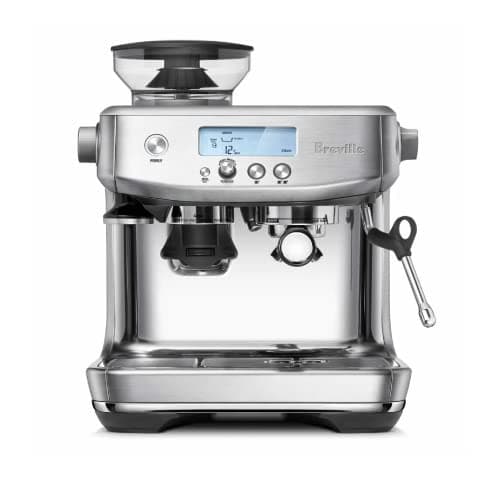
The Breville Barista Pro is the ideal all-in-one solution for anyone who wants freshly ground, professionally extracted espresso without cluttering their countertop with separate appliances. Its integrated conical burr grinder with 30 grind settings feeds directly into the portafilter, and the ThermoJet heating system gets you brewing in 3 seconds flat. The intuitive LCD display guides you through dose, grind size, and extraction time — making it remarkably approachable for a machine with this level of capability.

Pros

  • Built-in conical burr grinder with 30 settings eliminates the need for a separate grinder
  • ThermoJet system heats to brewing temperature in just 3 seconds
  • Digital temperature control with LCD display for precise shot dialing
  • Compact all-in-one design saves significant counter space versus separate machine and grinder setups
  • Includes both single and dual wall filter baskets for beginners and experienced users

Cons

  • Built-in grinder may not match the consistency of a dedicated standalone grinder at the same price point
  • 54mm portafilter limits third-party basket and tamper options
  • At $850, you are paying a premium for the integrated grinder convenience
  • Grinder retention can lead to stale grounds contaminating fresh doses
#4
Breville Bambino

Breville Bambino

4.5(9,400)
$299.95

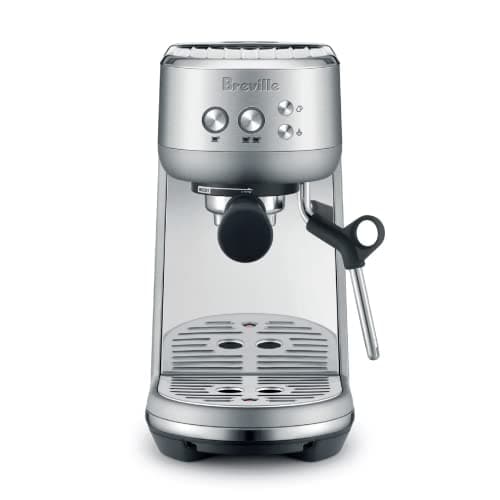
The Breville Bambino strips the Bambino Plus down to its essentials and delivers impressive espresso performance at a remarkably accessible price point. You lose the automatic milk frothing and a few preset options, but the core ThermoJet heating system and 54mm extraction are identical to its pricier sibling. For anyone who plans to learn manual milk steaming or primarily drinks straight espresso and Americanos, the $200 savings over the Plus model makes this the smartest entry point into quality home espresso.

Pros

  • Same ThermoJet 3-second heat-up technology found in the more expensive Bambino Plus
  • Exceptionally compact design fits comfortably in even the smallest kitchens
  • Under $300 makes it one of the most affordable quality espresso machines available
  • Manual steam wand teaches you proper milk texturing technique from day one
  • Low-pressure pre-infusion improves extraction quality

Cons

  • No automatic milk frothing — requires learning manual steaming technique
  • Smaller water tank than the Bambino Plus means more frequent refills
  • 54mm portafilter rather than the industry-standard 58mm
  • Fewer programmable shot options compared to the Plus model
#5
De'Longhi Dedica Arte

De'Longhi Dedica Arte

4.4(7,200)
$329.95

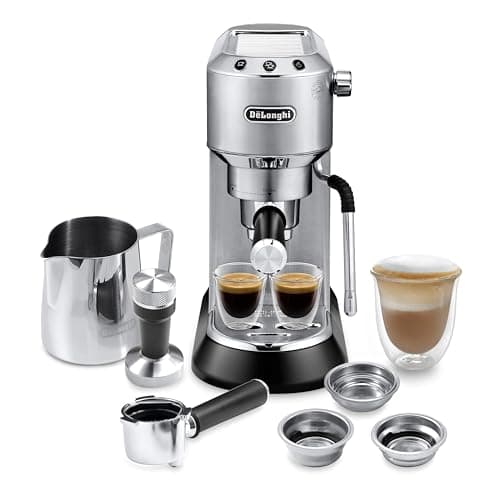
The De'Longhi Dedica Arte is the sleekest espresso machine in its price class, measuring just 6 inches wide — making it the perfect choice for space-constrained kitchens where every inch of counter matters. Its My LatteArt steam wand is a meaningful upgrade over older Dedica models, producing significantly better microfoam for latte art. While it may not match the Breville Bambino's shot quality for purists, its Italian-designed aesthetics, three temperature settings, and ultra-slim profile make it a compelling option for those who value design alongside performance.

Pros

  • Ultra-slim 6-inch width is the most compact espresso machine on this list
  • My LatteArt steam wand produces noticeably better microfoam than previous Dedica generations
  • Three-level temperature control lets you fine-tune extraction to your taste
  • 15-bar Italian pump delivers consistent pressure throughout the shot
  • Elegant stainless steel design looks premium on any countertop

Cons

  • Pressurized portafilter basket limits progression for advanced barista techniques
  • 51mm portafilter is smaller than the 54mm Breville or 58mm standard
  • Thermoblock heating can produce less consistent temperatures than boiler-based machines
  • Plastic drip tray and internal components feel less durable than similarly priced competitors
#6
Breville Barista Express Impress

Breville Barista Express Impress

4.6(6,800)
$749.95

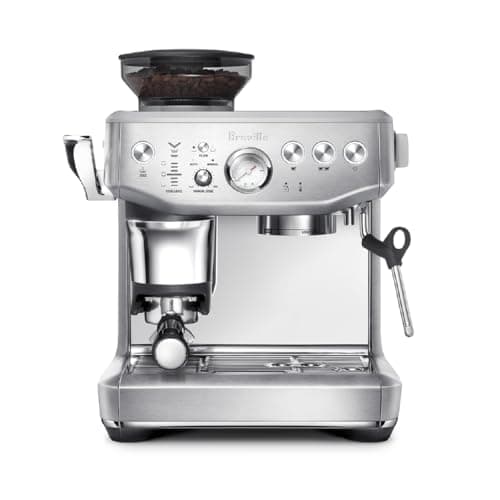
The Barista Express Impress takes everything great about the original Barista Express and adds an intelligent dosing system that virtually eliminates the guesswork of tamping and distribution. The Impress puck system applies consistent pressure every time and uses a visual indicator to show whether your grind size needs adjustment — essentially coaching you toward a perfect shot. For anyone who felt intimidated by the precision demands of espresso making, this machine removes the steepest part of the learning curve while still producing genuinely excellent coffee.

Pros

  • Assisted tamping system ensures perfect, consistent puck preparation every single time
  • Intuitive grind size indicator visually guides you to the correct setting
  • Integrated conical burr grinder with 25 settings handles bean-to-cup workflow seamlessly
  • ThermoJet heating system is ready to brew in under 3 seconds
  • Excellent stepping stone between fully automatic and fully manual espresso making

Cons

  • At $750, it occupies an awkward price point between the Barista Pro and dedicated setups
  • Built-in grinder still cannot match a standalone grinder of equivalent price
  • Larger footprint than the Bambino series due to the integrated hopper and grinder
  • The assisted tamping can feel limiting for advanced users who want full manual control
#7
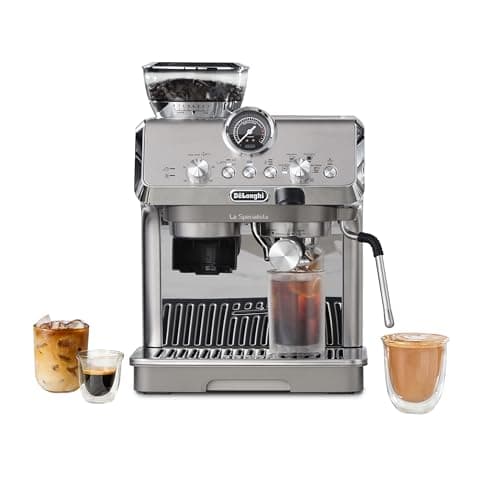
De'Longhi La Specialista Arte Evo

De'Longhi La Specialista Arte Evo

4.5(4,100)
$599.95

The De'Longhi La Specialista Arte Evo carves out a unique niche by pairing a capable espresso machine with an integrated grinder and a cold brew function — something no other machine on this list offers. Its Sensor Grinding Technology automatically adjusts the dose, and the Smart Tamping Station applies the ideal 20 lbs of pressure for consistent puck preparation. If you want one machine that handles hot espresso drinks, Americanos, and cold brew concentrate for iced lattes, the Arte Evo delivers impressive versatility at a competitive price.

Pros

  • Built-in cold brew function produces concentrate in under 5 minutes — unique in this category
  • Sensor Grinding Technology with 8 settings auto-adjusts dose for consistency
  • Smart Tamping Station applies calibrated 20 lbs of pressure every time
  • Active temperature control maintains stability throughout the extraction
  • Attractive Italian design with a premium stainless steel finish

Cons

  • 8 grind settings is far fewer than Breville's 25-30 settings, limiting fine-tuning ability
  • Pressurized portafilter limits espresso purists from achieving competition-level shots
  • Cold brew function, while convenient, does not match the flavor of proper slow cold brew methods
  • Larger footprint than simpler machines due to integrated grinder and cold brew system
#8
Profitec Go

Profitec Go

4.8(1,200)
$999.00

The Profitec Go is the machine that bridges the gap between consumer espresso makers and full-sized prosumer equipment, delivering German engineering in a surprisingly compact package. Its PID-controlled single boiler provides precise temperature management, the commercial 58mm brew group accepts any professional accessory, and the build quality is noticeably superior to anything in the sub-$1,000 range. For home baristas ready to graduate beyond Breville but not ready for a full-sized dual boiler, the Profitec Go is the perfect stepping stone.

Pros

  • PID temperature control with digital display allows precise boiler temperature adjustments
  • German-engineered build quality with an all-metal construction that feels truly professional
  • Standard 58mm portafilter compatible with the full range of professional barista accessories
  • Adjustable brew pressure allows you to experiment with extraction profiles
  • Compact dimensions for a prosumer-class machine — fits on most home countertops

Cons

  • At $999, it requires a significant investment beyond consumer-grade machines
  • Single boiler means alternating between brewing and steaming with a wait between
  • Smaller boiler capacity limits back-to-back drink production for entertaining
  • Requires a quality standalone grinder to match the machine's capabilities — adding to total cost
BEST PREMIUM
#9
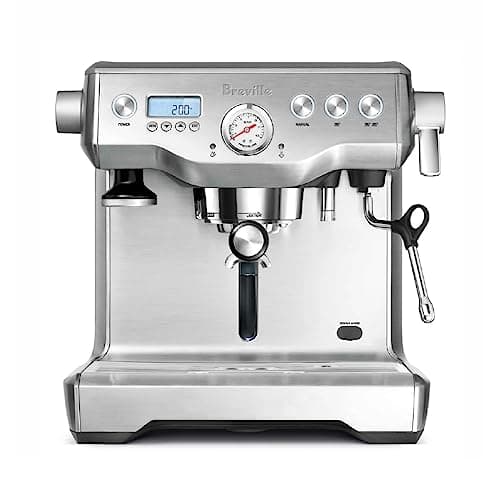
Breville Dual Boiler

Breville Dual Boiler

4.7(5,400)
$1,599.95

The Breville Dual Boiler is the most capable home espresso machine you can buy without crossing into commercial territory. Its independent steam and brew boilers mean you can pull a shot and steam milk simultaneously — eliminating the frustrating wait time that plagues single boiler machines. PID control on both boilers, pre-infusion adjustment, and a shot clock give you professional-level control, while the Breville ecosystem keeps everything accessible with clear displays and logical controls. This is the machine serious home baristas buy when they never want to upgrade again.

Pros

  • True dual boiler system allows simultaneous brewing and steaming with zero compromise
  • PID temperature control on both boilers for rock-solid thermal stability across drinks
  • Adjustable pre-infusion time and pressure for advanced extraction profiling
  • Over-pressure valve set at 9 bars delivers optimal extraction out of the box
  • Shot clock and volumetric dosing help you reproduce perfect shots consistently

Cons

  • At $1,600, it is a serious investment that also demands a high-quality grinder
  • Large footprint takes up significant counter space compared to single boiler machines
  • Some advanced users report the internal plumbing can be complex to service or repair
  • Heavier and less portable than any other machine on this list at over 30 lbs
#10
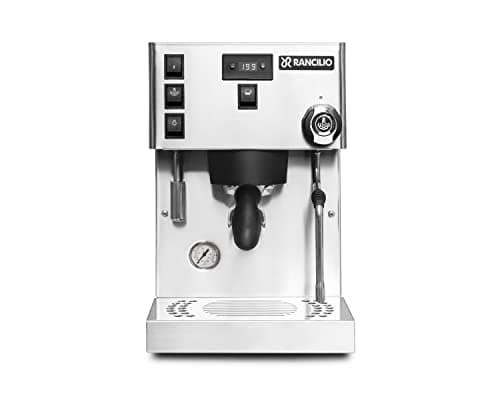
Rancilio Silvia Pro X

Rancilio Silvia Pro X

4.6(980)
$1,850.00

The Rancilio Silvia Pro X represents the pinnacle of home espresso for those who want commercial-grade Italian craftsmanship without a plumbed-in machine. Its dual boiler design with dual PID controllers provides the kind of thermal stability that professional baristas demand, and the heavy-gauge stainless steel and iron frame construction will outlast virtually any competitor. While the price is steep, the Silvia Pro X rewards dedicated home baristas with shot quality that can rival what you would find at a specialty café.

Pros

  • Dual boiler with independent PID controllers for both brew and steam boilers
  • Commercial-grade Italian construction with stainless steel panels and iron frame built to last decades
  • Standard 58mm group head compatible with all professional accessories and baskets
  • Massive steam power produces silky microfoam for latte art in seconds
  • Iconic Rancilio Silvia lineage backed by decades of professional coffee industry experience

Cons

  • At $1,850, it is one of the most expensive home machines and still requires a premium grinder
  • Heavy at over 50 lbs — not a machine you will be moving around frequently
  • Longer warm-up time than ThermoJet machines at roughly 15-20 minutes for full thermal stability
  • Minimal digital interface compared to Breville — no shot clock, no volumetric dosing out of the box

HOW WE CHOSE

Our espresso machine rankings are based on extensive analysis of expert reviews from trusted publications including Whole Latte Love, Seattle Coffee Gear, James Hoffmann's testing methodology, and verified owner feedback across major retailers. We evaluated each machine on extraction quality, temperature stability, steam performance, build quality, ease of use, and value at its price point. Products are ranked using a weighted formula that prioritizes shot quality and consistency, then factors in user-friendliness, build durability, and price-to-performance ratio. We personally considered machines across five price tiers — under $300, $300-$500, $500-$850, $850-$1,200, and $1,200+ — to ensure our recommendations serve every budget. All prices and availability were verified in February 2026.

FREQUENTLY ASKED QUESTIONS

Do I need a separate grinder, or should I buy a machine with one built in?

A separate grinder will almost always produce better and more consistent results than a built-in grinder at the same total budget. However, all-in-one machines like the Breville Barista Pro and Barista Express Impress offer excellent convenience and save significant counter space. If you are just starting out, an all-in-one machine is a perfectly valid choice. As your palate develops, you can always add a dedicated grinder later. If you buy a standalone machine like the Gaggia Classic Evo Pro or Breville Bambino Plus, budget at least $150-$300 for a capable espresso grinder.

What is the difference between a single boiler and a dual boiler espresso machine?

A single boiler machine uses one boiler for both brewing and steaming, which means you have to wait between pulling a shot and frothing milk — typically 30-60 seconds for the temperature to adjust. A dual boiler machine has separate boilers for each function, so you can brew and steam simultaneously, making milk drinks faster and more efficient. For most home users making 1-2 drinks at a time, a single boiler is perfectly adequate. Dual boilers become worthwhile when you regularly make multiple milk drinks in succession or when you want the absolute best thermal stability for espresso extraction.

How much should I spend on my first espresso machine?

For most people, the $300-$500 range offers the best balance of quality and value. The Breville Bambino at $300 or the Gaggia Classic Evo Pro at $499 are both excellent starting points. Spending less than $200 typically means significant compromises in temperature stability and build quality that will frustrate you. Spending more than $500 as a beginner often means paying for features you will not appreciate until your skills develop. Remember to budget for a grinder if your machine does not include one — a $300 machine paired with a $200 grinder will outperform a $500 machine using pre-ground coffee.

Is the Breville Bambino Plus worth the upgrade over the regular Bambino?

The $200 price difference between the Bambino ($300) and Bambino Plus ($500) primarily buys you automatic milk frothing, a slightly larger water tank, and more programmable shot options. If you primarily drink straight espresso or Americanos, the regular Bambino is the smarter purchase — the core extraction quality is identical. If you make lattes and cappuccinos daily and want push-button convenience, the Plus model's automatic steam wand is genuinely worth the premium. It produces consistently excellent microfoam without any technique required.

Why are some espresso machines so much more expensive than others?

The primary factors driving espresso machine pricing are boiler material and design (brass or stainless steel vs. aluminum thermoblock), number of boilers (single vs. dual), build quality (commercial-grade metal vs. consumer-grade plastic), temperature control precision (PID vs. basic thermostat), and brand heritage. Machines in the $1,000+ range like the Profitec Go and Breville Dual Boiler use heavier materials, more precise temperature controllers, and are engineered for decades of daily use. That said, diminishing returns are real — a $500 machine can produce 90% of the espresso quality of a $1,500 machine in skilled hands.

How important is pressure for making good espresso?

The ideal extraction pressure is 9 bars, which is what modern machines like the Gaggia Classic Evo Pro are factory-set to deliver. Many machines advertise 15 or 20 bars of pump pressure, but this refers to the maximum pump output, not the actual extraction pressure — an over-pressure valve (OPV) reduces it to the optimal 9 bars at the group head. Higher pump pressure numbers are primarily a marketing specification and do not indicate better espresso quality. What matters more is temperature stability, even water distribution through the coffee puck, and proper grind size — all of which are affected by machine design rather than raw pump pressure.