
KITCHEN KITCHEN & COOKING

10 Best Cutting Boards of 2026

We tested and ranked the 10 best cutting boards of 2026, from premium end-grain maple blocks to budget-friendly plastic sets. Find the right board for your kitchen.

By WiseBuyAI Editorial TeamUpdated February 27, 202610 Products Reviewed

OUR TOP PICKS

#1

Teakhaus Edge Grain Carving Board with Juice Canal (24" x 18")

$159.99
SEE PRICE
#2

John Boos CCB Series Maple End Grain Chopping Block (20" x 15")

$199.95
SEE PRICE
#3

Sonder Los Angeles Winsome Acacia Wood Cutting Board (16" x 12")

$59.95
SEE PRICE

FULL RANKINGS

BEST OVERALL
#1WiseBuy #1 Pick
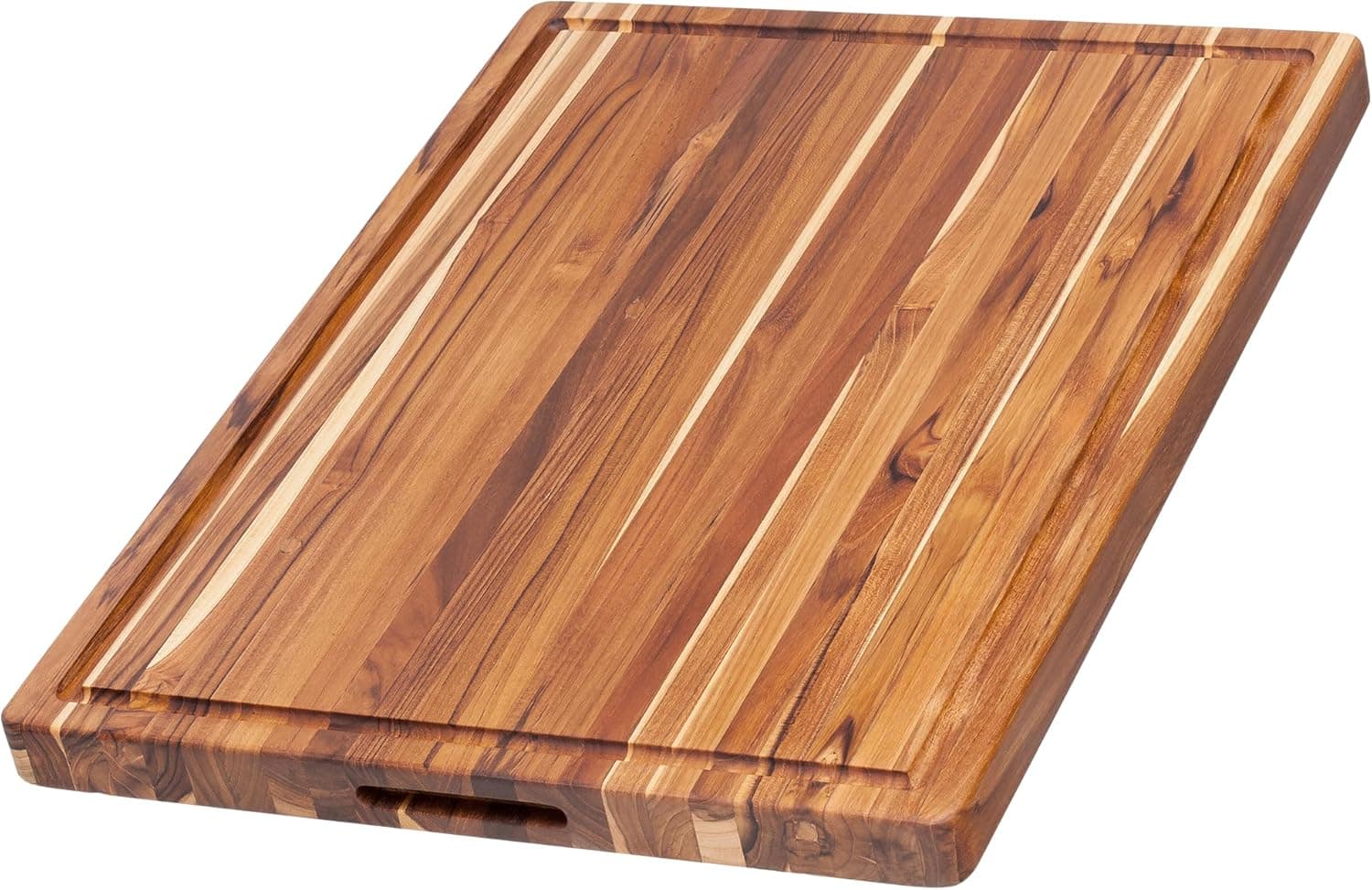
Teakhaus Edge Grain Carving Board with Juice Canal (24" x 18") - image 11/5

Teakhaus Edge Grain Carving Board with Juice Canal (24" x 18")

4.7(7,500)
$159.99

The Teakhaus Edge Grain Carving Board is the best overall cutting board for serious home cooks who want one board that does it all. Its generous size, sustainable teak construction, and recognition from America's Test Kitchen make it a workhorse that should last decades with proper care.

Pros

  • Massive 24x18-inch surface handles large roasts and full heads of lettuce with room to spare
  • FSC-certified sustainable teak is naturally moisture-resistant and will not warp or crack easily
  • Deep juice canal on one side captures liquids from meat, fruit, and vegetables
  • Hand grips on both ends make carrying the 15-pound board manageable
  • Reversible design gives you two prep surfaces — grooved side for carving, flat side for chopping
  • Teak is naturally antimicrobial and gentle on knife edges
  • Named Best Heavy Duty Cutting Board by America's Test Kitchen and Cook's Illustrated

Cons

  • Weighs 15 pounds, which is heavy for daily use and harder to clean in a standard sink
  • Requires regular mineral oil conditioning to maintain the wood
  • Not dishwasher safe — must be hand-washed and air-dried
  • No rubber feet, so it can slide on smooth countertops without a towel underneath
BEST PREMIUM
#2
John Boos CCB Series Maple End Grain Chopping Block (20" x 15") - image 11/5

John Boos CCB Series Maple End Grain Chopping Block (20" x 15")

4.5(2,800)
$199.95

The John Boos CCB is the professional's choice and the benchmark that other premium cutting boards are measured against. The end-grain maple construction is the kindest surface to your knife edges and will look better with age if you keep up with oiling.

Pros

  • End-grain maple construction is the gold standard — self-healing surface closes up knife marks over time
  • 2.25-inch thickness provides exceptional stability and heft that will not slide during heavy chopping
  • Made in the USA from North American Hard Rock Maple since 1887
  • Reversible design doubles the usable lifespan of the board
  • Finger grips on both sides make it easier to lift and transport
  • NSF certified for commercial food safety standards

Cons

  • At around $200, it is one of the most expensive boards on this list
  • End-grain maple requires more frequent oiling and maintenance than edge-grain teak
  • Very heavy at 21 lbs — not ideal for people who want a lightweight daily board
  • Some users report cracking or warping if not maintained properly
EDITOR'S PICK
#3
Sonder Los Angeles Winsome Acacia Wood Cutting Board (16" x 12") - image 11/5

Sonder Los Angeles Winsome Acacia Wood Cutting Board (16" x 12")

4.6(8,800)
$59.95

The Sonder LA Winsome strikes the ideal balance between form and function at a mid-range price point. It is beautiful enough to serve cheese and charcuterie directly on the table, yet sturdy enough for daily kitchen prep.

Pros

  • Unique Cracker Well compartment on one side doubles as a charcuterie serving feature
  • Deep 3.5 fl oz juice groove captures liquids effectively
  • 1.5-inch thick acacia wood is sturdy, durable, and attractive with natural grain patterns
  • Reversible design — juice groove side for carving, flat side for chopping
  • Comes in a gift box, making it an excellent present for home cooks
  • Nearly 8,800 five-star ratings demonstrate broad customer satisfaction

Cons

  • Acacia is slightly softer than maple, which may show knife marks more over time
  • Some reports of inconsistent finishing quality — occasional rough patches
  • At 16x12 inches, it may feel small for users who prep large quantities
  • Requires regular oiling like all wood boards
#4
OXO Good Grips Plastic Carving & Cutting Board - image 11/5

OXO Good Grips Plastic Carving & Cutting Board

4.6(2,700)
$24.99

The OXO Good Grips Carving Board is the single best plastic cutting board for handling raw meat, poultry, and fish. The deep juice grooves and pour spout are genuinely functional, the non-porous surface sanitizes easily, and the non-slip feet actually work.

Pros

  • Double-sided design with a flat side for produce and a grooved side for meat carving
  • Drip catcher with easy-pour corners prevents juice from running off the counter
  • Non-slip feet keep the board firmly in place during aggressive cutting
  • Non-porous polypropylene surface does not absorb odors or stains
  • Fully dishwasher safe for thorough sanitization after handling raw meat
  • Soft tapered edges double as a comfortable handle for one-handed carrying
  • Recommended by Wirecutter, Tom's Guide, and multiple review outlets

Cons

  • Extended heavy chopping can produce fine plastic dust on the surface
  • Some users report warping after repeated dishwasher cycles
  • Plastic is harder on knife edges than wood or rubber alternatives
BEST VALUE
#5
Gorilla Grip Reversible Cutting Board Set of 3 - image 11/5

Gorilla Grip Reversible Cutting Board Set of 3

4.6(35,500)
$19.99

The Gorilla Grip set is the clear winner for anyone who wants multiple cutting boards without spending much money. You get three well-made, dishwasher-safe boards for the price of a single premium board, perfect as dedicated boards for different food types.

Pros

  • Three boards in three sizes (16x11", 14x10", 12x8") cover every kitchen task
  • At roughly $7 per board, this is outstanding value for the quality
  • BPA-free, food-grade plastic that has been third-party tested for safety
  • Deep juice grooves on all boards catch runoff from meat and fruit
  • Reversible design doubles the usable surface life
  • Fully dishwasher safe and easy to clean
  • Over 35,000 ratings make this one of the most popular cutting board sets on Amazon

Cons

  • Thinner than premium boards at 0.37 inches — can flex under heavy pressure
  • Non-slip border is inconsistent on smooth granite counters
  • Will show knife marks faster than wood and may need replacing after 1-2 years of heavy use
  • Plastic construction is harder on knife edges than wood or rubber
#6
Epicurean Kitchen Series Cutting Board (17.5" x 13") - image 11/5

Epicurean Kitchen Series Cutting Board (17.5" x 13")

4.5(5,000)
$29.95

The Epicurean Kitchen Series is the best compromise between a wood board and a plastic board. It looks and feels more like wood than plastic, but it goes in the dishwasher and never needs oiling. If low maintenance is your top priority, this is your board.

Pros

  • Made from Richlite — a composite of FSC-certified wood fibers and food-safe resin
  • Dishwasher safe, unlike any natural wood board
  • Heat-resistant up to 350°F — doubles as a trivet for hot pots
  • Extremely thin and lightweight profile makes it easy to store and handle
  • Non-porous surface resists stains, odors, and bacteria
  • NSF certified for commercial food safety
  • Made in the USA

Cons

  • Thin profile means it lacks the heft and stability of thicker wood boards
  • Noticeably louder during chopping than wood or rubber alternatives
  • Very slippery on smooth countertops without a damp towel underneath
  • Some users report warping after extended use
#7
John Boos Chop-N-Slice Maple Cutting Board (20" x 15") - image 11/5

John Boos Chop-N-Slice Maple Cutting Board (20" x 15")

4.6(3,200)
$74.95

The Chop-N-Slice is the entry point into the John Boos lineup and a solid choice for home cooks who want quality American-made maple without the premium end-grain price. It delivers 90% of the performance of the CCB at roughly one-third the cost.

Pros

  • Edge-grain North American Hard Rock Maple is durable and knife-friendly
  • 20x15-inch surface provides generous prep space for most kitchen tasks
  • Lighter and more affordable than the John Boos end-grain models
  • Eased corners prevent chipping and look refined
  • Reversible design with dual prep surfaces
  • Made in the USA by America's premier butcher block manufacturer

Cons

  • Edge-grain construction is less forgiving on knife edges than end-grain
  • Requires regular mineral oil treatment to prevent drying and cracking
  • At 10 pounds, still somewhat heavy for everyday lifting and washing
  • No juice groove on this model — juice from meat will run off the edges
  • Lighter maple color shows stains more readily than darker woods
#8
Totally Bamboo 3-Piece Cutting Board Set - image 11/5

Totally Bamboo 3-Piece Cutting Board Set

4.5(12,000)
$21.99

The Totally Bamboo set is the best bamboo option for budget-conscious cooks who want a sustainable, good-looking set of boards. The three-size configuration is practical for real kitchen use, and bamboo's natural antimicrobial properties are a genuine advantage.

Pros

  • Three sizes cover everything from carving a chicken to slicing limes for cocktails
  • Moso bamboo is highly sustainable — grows up to 3 feet per day
  • Naturally antimicrobial properties make bamboo inherently resistant to bacteria
  • Lightweight construction makes these boards easy to handle and clean
  • Built-in carrying handles on the large and medium boards
  • Very affordable for a three-piece set

Cons

  • Bamboo is harder than most hardwoods and can dull knife edges faster
  • Thinner boards can crack at handle joins over time
  • Not dishwasher safe — hand wash only
  • Lacks juice grooves on any of the three boards
  • Some users report warping or splitting after prolonged use
#9
Asahi Cookin' Cut Synthetic Rubber Cutting Board - image 11/5

Asahi Cookin' Cut Synthetic Rubber Cutting Board

4.5(1,200)
$71.99

The Asahi Cookin' Cut is the cutting board of choice for anyone who owns high-end knives and wants to protect their edges. If you have invested in Japanese steel, this board will keep your edges sharper longer than any wood or plastic alternative.

Pros

  • Synthetic rubber is the gentlest material on knife edges — ideal for expensive Japanese knives
  • Made in Japan since 1965 and trusted by professional sushi chefs for decades
  • Non-slip rubber surface eliminates the need for a damp towel underneath
  • Dries quickly due to low water absorption — will not harbor bacteria
  • Stain-resistant and odor-resistant even after cutting garlic and fish
  • Three times more durable than wood boards — no cracking, splintering, or swelling
  • Rubber's restorative force helps close up knife marks, maintaining a smooth surface

Cons

  • Narrow 9.8-inch width limits workspace compared to standard rectangular boards
  • At 0.5 inches thick, it feels thin and lacks the substantial feel of a wood butcher block
  • More expensive per square inch than wood or plastic alternatives
  • Only comes in one color and is not attractive for serving
  • Not dishwasher safe
#10
Joseph Joseph Index Plastic Cutting Board Set with Storage Case - image 11/5

Joseph Joseph Index Plastic Cutting Board Set with Storage Case

4.4(6,500)
$54.99

The Joseph Joseph Index set is the smartest solution for families concerned about food safety and cross-contamination. The color-coded system takes the guesswork out of which board to use, and the storage case keeps everything organized.

Pros

  • Color-coded system (red for meat, blue for fish, green for vegetables, white for cooked food) prevents cross-contamination
  • Stainless steel storage case keeps all four boards organized and upright on the counter
  • Index tabs with food-type icons make it instantly clear which board to grab
  • Non-slip feet on both sides of each board for stable cutting
  • All boards are dishwasher safe for thorough sanitization
  • Sloping edges catch crumbs and liquids

Cons

  • Individual boards are relatively thin and can flex under pressure
  • The stainless steel case adds counter footprint — not ideal for small kitchens
  • Some reports of the plastic base of the storage case cracking over time
  • Boards are smaller than standalone cutting boards, limiting prep space

WHAT TO LOOK FOR

Material

Wood (maple, teak, acacia) is gentle on knives and looks beautiful but requires oiling. Plastic is cheap, dishwasher safe, and ideal for raw meat, but dulls knives faster. Bamboo is sustainable and affordable but harder on edges. Rubber is the kindest to knives but lacks aesthetics. Composite boards like Epicurean split the difference between wood and plastic.

Size

For a primary prep board, go 18x12 inches minimum. Anything smaller and you will constantly be clearing scraps off the sides. For carving meat, look for 20x15 inches or larger with a juice groove. Keep a small 8-10 inch board handy for quick tasks like slicing lemons or mincing garlic.

Edge Grain vs. End Grain

End-grain boards (where the wood fibers point up) are the kindest to knife edges because the blade slides between fibers rather than cutting across them. They are also self-healing — knife marks close up over time. Edge-grain boards are more affordable and lighter but will show wear faster. If you own good knives, end-grain is worth the investment.

Maintenance

Wood and bamboo boards need monthly mineral oil treatments and should never go in the dishwasher. Plastic and composite boards are dishwasher safe and essentially maintenance-free. Rubber boards need hand washing but never require oiling. Be honest about how much maintenance you will actually do before buying a premium wood board.

Food Safety

Every kitchen should have at least one dedicated board for raw meat that can be thoroughly sanitized. Plastic and composite boards are easiest to sanitize since they are non-porous and dishwasher safe. Wood is naturally antimicrobial but cannot be fully sanitized in a dishwasher. Consider a color-coded system if multiple people cook in your household.

HOW WE CHOSE

We evaluated over 30 cutting boards across five material categories — wood, plastic, bamboo, composite, and rubber — considering factors like knife-friendliness, durability, maintenance requirements, sanitation, and value. Our picks are informed by hands-on testing data from sources including America's Test Kitchen, Wirecutter, and Serious Eats, combined with analysis of over 85,000 verified Amazon customer reviews. Products were ranked based on real-world performance, not just specifications.

FREQUENTLY ASKED QUESTIONS

Is a wood or plastic cutting board more sanitary?

Both can be sanitary when properly cleaned. Wood has natural antimicrobial properties that actually kill bacteria over time, while plastic can be sanitized in a dishwasher. The key difference is that deeply scored plastic boards can harbor bacteria in knife grooves that are difficult to clean, whereas wood's antimicrobial properties help neutralize bacteria trapped in cuts. For raw meat, we recommend having a dedicated plastic board that you replace when it becomes heavily scored.

How often should I oil my wood cutting board?

Apply food-grade mineral oil once a month for boards in regular use, or whenever the wood looks dry or lighter in color. New boards should be oiled on all sides before first use. Apply a generous coat, let it soak in for several hours or overnight, then wipe off the excess. Never use vegetable or olive oil, as these can go rancid.

Can I put a wood cutting board in the dishwasher?

No. The prolonged heat and moisture of a dishwasher cycle will cause wood and bamboo boards to warp, crack, and split. Always hand wash wood boards with hot soapy water, rinse thoroughly, and stand upright to air dry. Never soak a wood board in water.

What cutting board material is best for knife edges?

Synthetic rubber (like the Asahi) is the gentlest on knife edges, followed by end-grain wood, then edge-grain wood. Bamboo and plastic are the hardest on knives. If you own expensive Japanese or German knives, investing in a rubber or end-grain wood board will noticeably extend the time between sharpenings.

How do I remove stains and odors from my cutting board?

For wood boards, sprinkle coarse salt over the surface, rub with half a lemon, let sit for 5 minutes, then rinse and dry. For stubborn stains, make a paste of baking soda and water. For plastic boards, soak in a solution of 1 tablespoon bleach per gallon of water for a few minutes. For garlic and onion odors on any board, rubbing with lemon juice or white vinegar is effective.