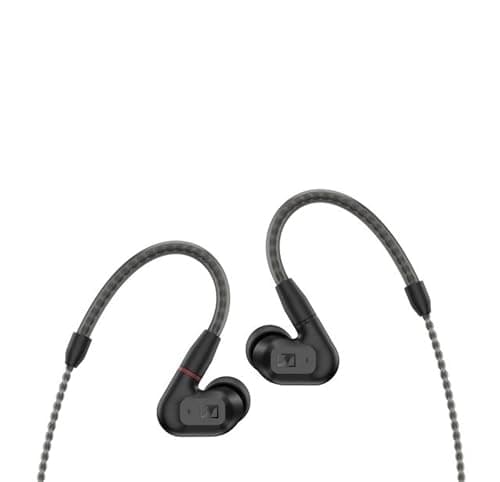
Wired earbuds and IEMs come in a wide range of sound signatures, and understanding them is key to finding the right pair. Neutral or reference tuning (Sennheiser IE 200, Etymotic ER2XR) aims for accurate reproduction of the original recording, making it ideal for critical listening, mixing, and genres like classical and jazz where detail matters. Warm or bass-forward tuning (Shure SE215, JBL Tune 310C) emphasizes low-end punch and body, which suits hip-hop, pop, and electronic music. V-shaped tuning (KZ ZS10 Pro) boosts both bass and treble while slightly recessing the midrange for an exciting, energetic presentation. The best approach is to match the tuning to the genres you listen to most, though neutral and mildly warm signatures tend to be the most versatile across different types of music.
Wired earbuds use several types of driver technology, each with distinct characteristics. Single dynamic drivers (Apple EarPods, Shure SE215) use a traditional cone and coil design that excels at natural bass reproduction and coherent sound. Balanced armature drivers (Shure AONIC 3) are smaller and more precise, typically offering superior detail and speed in the midrange and treble but sometimes sounding less natural in the bass. Hybrid designs (1MORE Triple Driver, KZ ZS10 Pro) combine both types to leverage the strengths of each, using dynamic drivers for bass and balanced armatures for mids and treble. More drivers do not automatically mean better sound — a well-tuned single dynamic driver often outperforms a poorly tuned five-driver hybrid. Focus on the overall tuning and quality rather than the driver count.
With most modern smartphones dropping the 3.5mm headphone jack, the cable and connector type has become a critical buying factor. Traditional 3.5mm cables (Sennheiser IE 200, Shure SE215, Etymotic ER2XR) offer universal compatibility but require a USB-C dongle for newer phones, which can actually improve audio quality if you choose a good DAC adapter. Native USB-C earbuds (JBL Tune 310C, Apple EarPods USB-C) include a built-in DAC and connect directly to modern devices without adapters, trading convenience for the inability to use them with 3.5mm devices like older laptops and audio interfaces. Detachable cables (Shure AONIC 3, Moondrop Aria 2) are the enthusiast-preferred option because a broken cable does not mean a dead pair of earbuds, and you can upgrade to higher-quality aftermarket cables.
Wired earbuds rely entirely on passive noise isolation since they do not have active noise cancellation, and the level of isolation varies dramatically between designs. Deep-insertion IEMs like the Etymotic ER2XR can block 35-42 dB of ambient noise, rivaling many ANC earbuds, making them excellent for commuting, air travel, and noisy environments. Standard silicone-tip IEMs (Sennheiser IE 200, Moondrop Aria 2) typically provide 20-30 dB of isolation, which is sufficient for most daily use. Semi-open designs like the Apple EarPods offer essentially no isolation, which is actually preferable for situations where you need awareness of your surroundings, like walking on busy streets. The tip material matters too — foam tips generally seal better and block more noise than silicone, at the expense of tip longevity.
Comfort is paramount for wired earbuds since the physical connection to your device means you cannot just set them on a desk to take a break from the fit. In-ear designs that use silicone or foam tips (most IEMs) provide better noise isolation but can cause ear fatigue during extended sessions if the nozzle diameter or insertion depth does not suit your ear canals. Over-ear cable routing (Shure SE215, Shure AONIC 3) adds stability and reduces cable microphonics but takes a moment to put on. Earbud-style designs like the Apple EarPods sit in the outer ear without entering the canal, offering maximum comfort at the expense of isolation and bass response. Always try multiple tip sizes — most listeners settle on a different size than they initially expect, and the wrong tip size is the most common reason people find IEMs uncomfortable.
The wired earbuds market spans from under $20 to over $1,000, and the sweet spot for most listeners sits between $50 and $200. Under $30, the Apple EarPods USB-C and JBL Tune 310C offer surprisingly competent sound for casual listening and everyday use. The $40-$100 range is where value peaks — the Moondrop Aria 2, KZ ZS10 Pro, and 1MORE Triple Driver deliver sound quality that genuinely competes with earbuds at two or three times their price, making this the range we recommend for most buyers. Between $100-$200, the Sennheiser IE 200, Shure SE215 Pro, and Meze Audio Alba bring audiophile-grade tuning and premium build quality. Above $200, the Shure AONIC 3 targets listeners who prioritize transparency and noise isolation above all else. Unlike wireless earbuds, wired models have no battery to degrade, so a quality pair can last five to ten years with proper care.

 1/5
1/5


