KITCHEN KITCHEN & COOKING

10 Best Wine Fridges in 2026

The best wine fridge in 2026 is the Wine Enthusiast 32-Bottle Dual Zone MAX Compressor Wine Cooler. We tested and compared the top wine refrigerators of 2026, from compact countertop coolers to full-sized dual-zone cellars. These 10 wine fridges deliver precise temperature control, quiet operation, and reliable storage whether you are a casual sipper or a serious collector.

By WiseBuyAIUpdated March 21, 202610 Products Reviewed

OUR #1 PICK

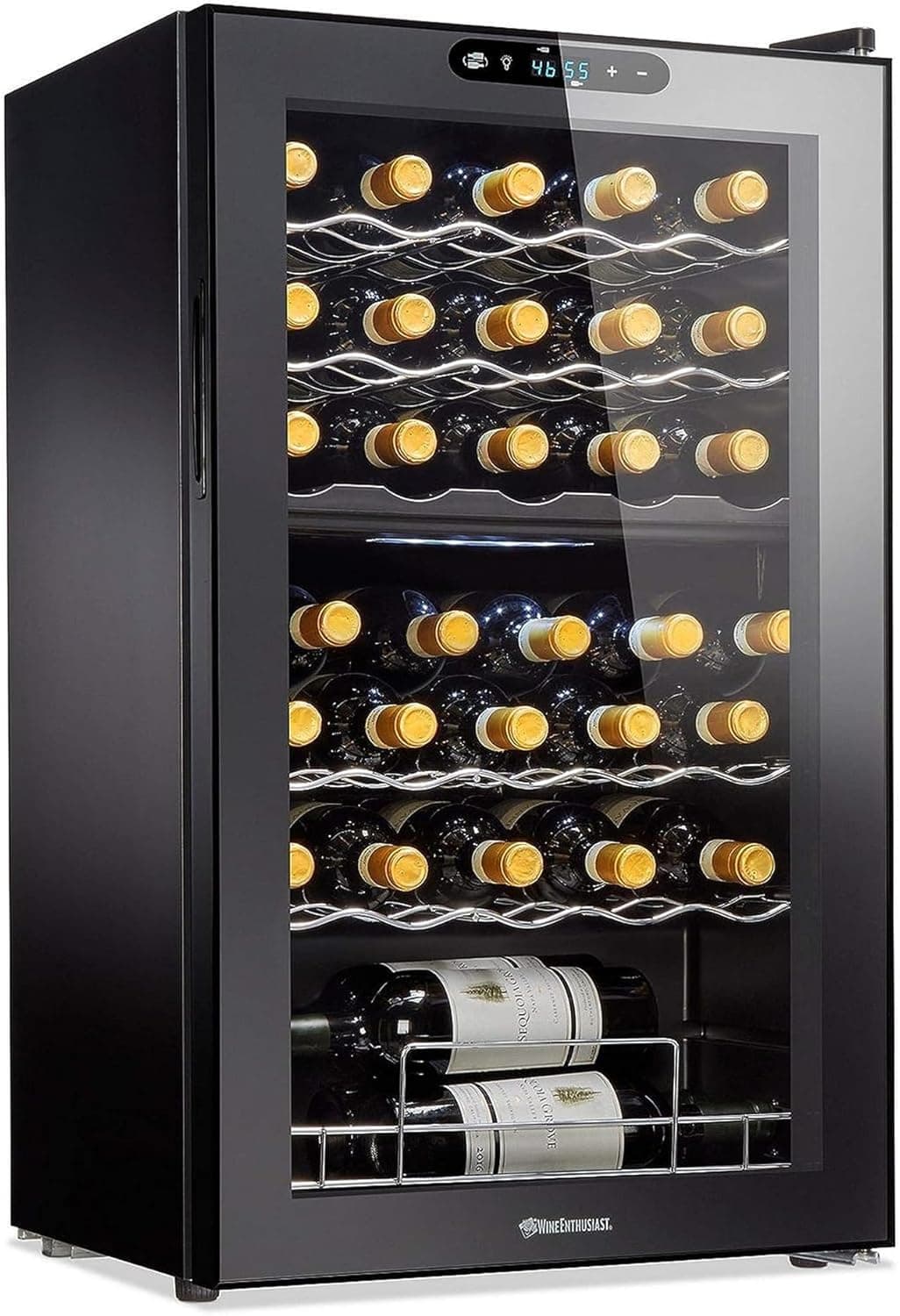
Wine Enthusiast 32-Bottle Dual Zone MAX Compressor Wine Cooler

The Wine Enthusiast 32-Bottle Dual Zone MAX is the most well-rounded wine fridge we tested, maintaining rock-solid temperature stability in both zones even when we opened the door repeatedly during extended tasting sessions.

OUR TOP PICKS

#1

Wine Enthusiast 32-Bottle Dual Zone MAX Compressor Wine Cooler

$399.99
SEE PRICE
#2

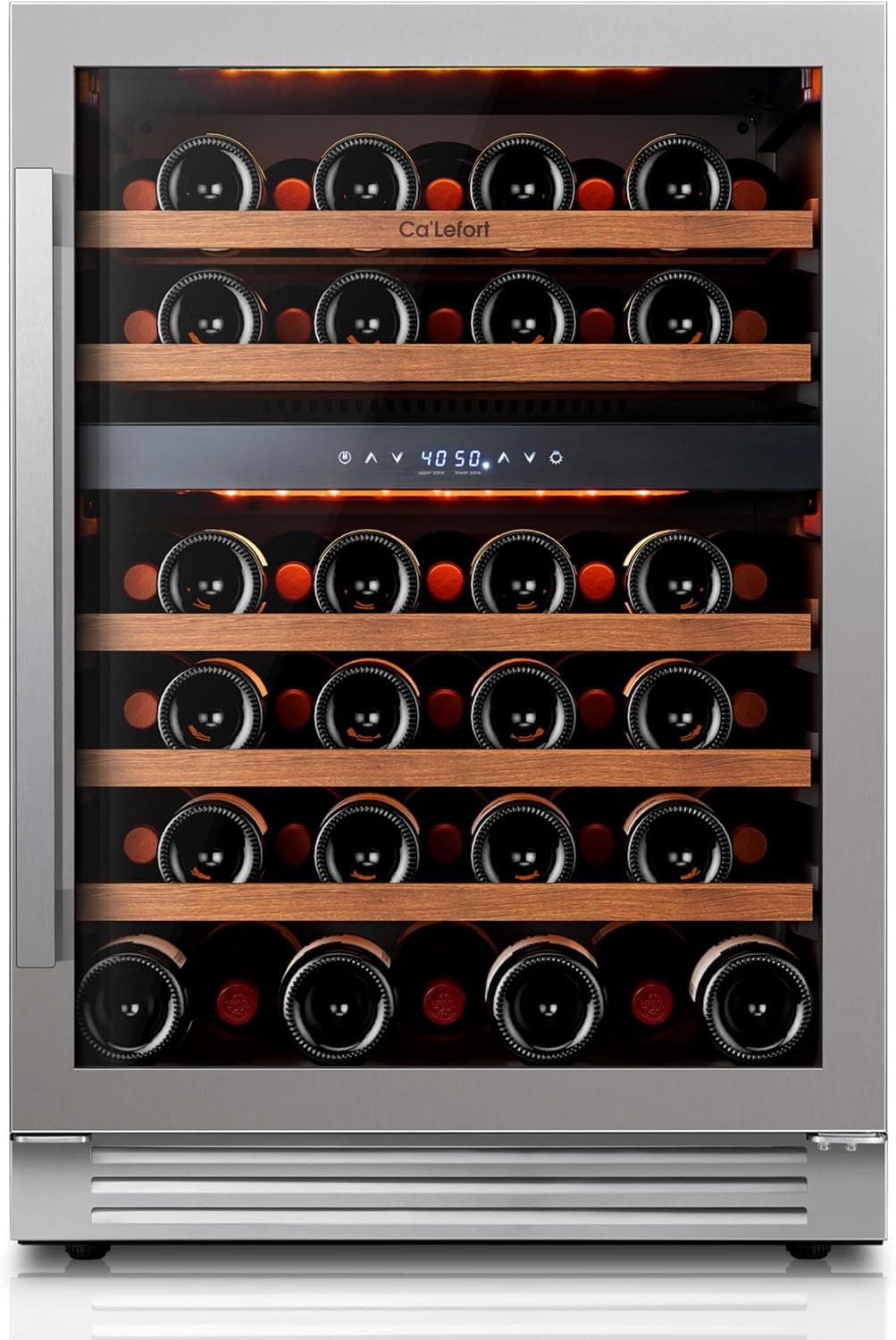
Ca'Lefort 24 Inch 52-Bottle Dual Zone Wine Cooler Refrigerator

$489.99
SEE PRICE
#3

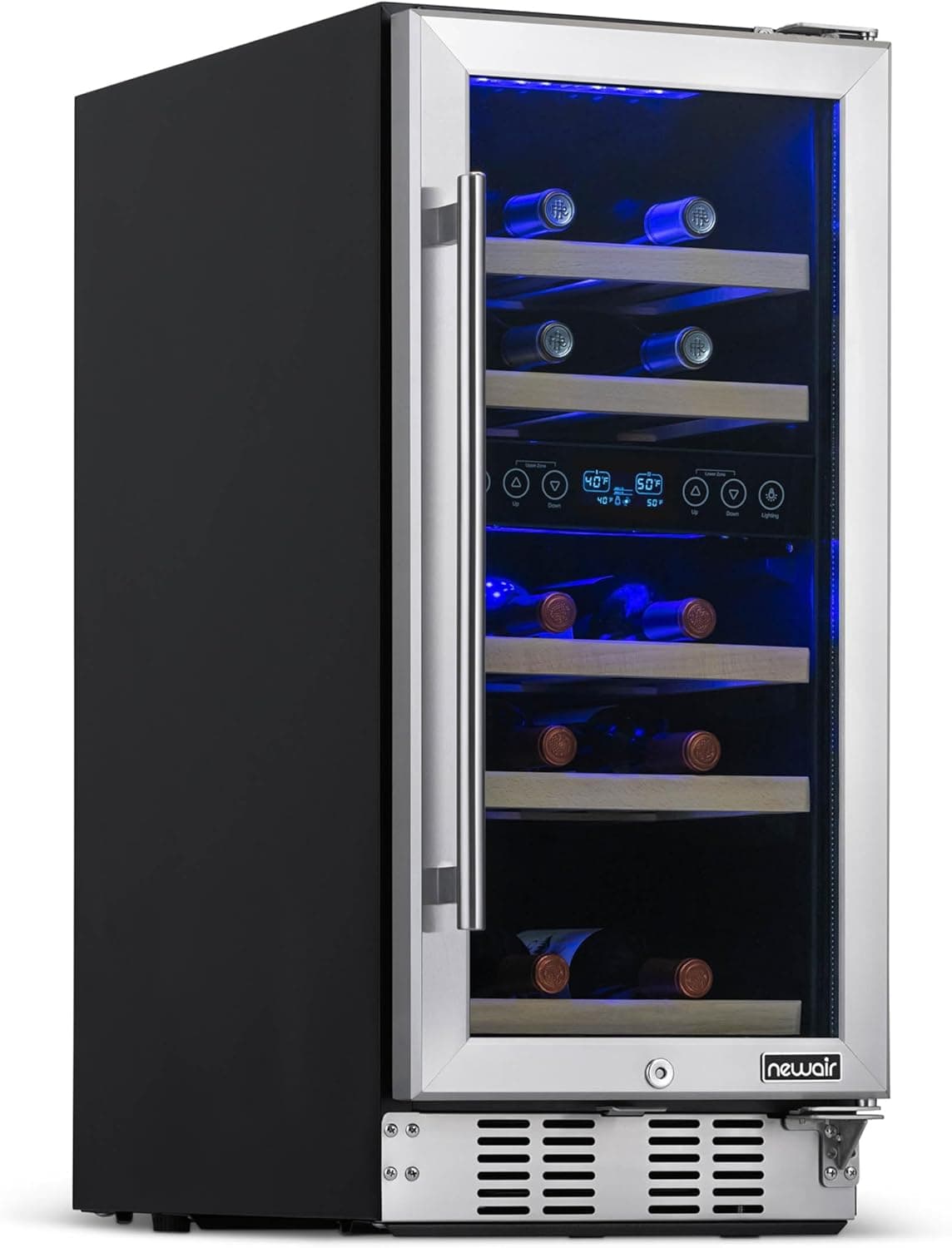
NewAir 15 Inch 29-Bottle Dual Zone Wine Fridge

$299.99
SEE PRICE

Quick Comparison

#ProductBadgeRatingPriceVerdict
1Wine Enthusiast 32-Bottle Dual Zone MAX Compressor Wine CoolerTOP PICK4.5/5$399.99The Wine Enthusiast 32-Bottle Dual Zone MAX is the most well-rounded wine fridge we tested, maintaining rock-solid te...
2Ca'Lefort 24 Inch 52-Bottle Dual Zone Wine Cooler RefrigeratorRUNNER UP4.4/5$489.99The Ca'Lefort 52-Bottle is a serious wine storage solution disguised as an affordable appliance.
3NewAir 15 Inch 29-Bottle Dual Zone Wine FridgeBEST VALUE4.3/5$299.99The NewAir 29-Bottle strikes the ideal balance between capacity, footprint, and price that most wine drinkers actuall...
4Kalamera 24 Inch 37-Bottle Dual Zone Wine Cooler4.4/5$379.99Kalamera has quietly built a reputation for producing reliable wine fridges, and the 37-bottle dual zone model is the...
5Antarctic Star 36-Bottle Wine Cooler with Touch Screen4.3/5$259.99The Antarctic Star 36-Bottle delivers surprising temperature accuracy for a wine fridge under $300.
6NewAir 24 Inch 46-Bottle Dual Zone Wine Fridge4.3/5$429.99The NewAir 46-Bottle is the larger sibling of our Best Value pick and delivers the same rock-solid temperature perfor...
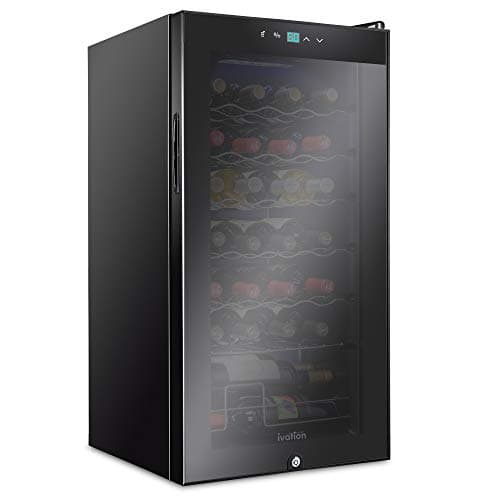
7Ivation 28-Bottle Compressor Wine Cooler Refrigerator4.4/5$259.99Ivation has built a strong following in the wine cooler space, and the 28-bottle compressor model demonstrates why.
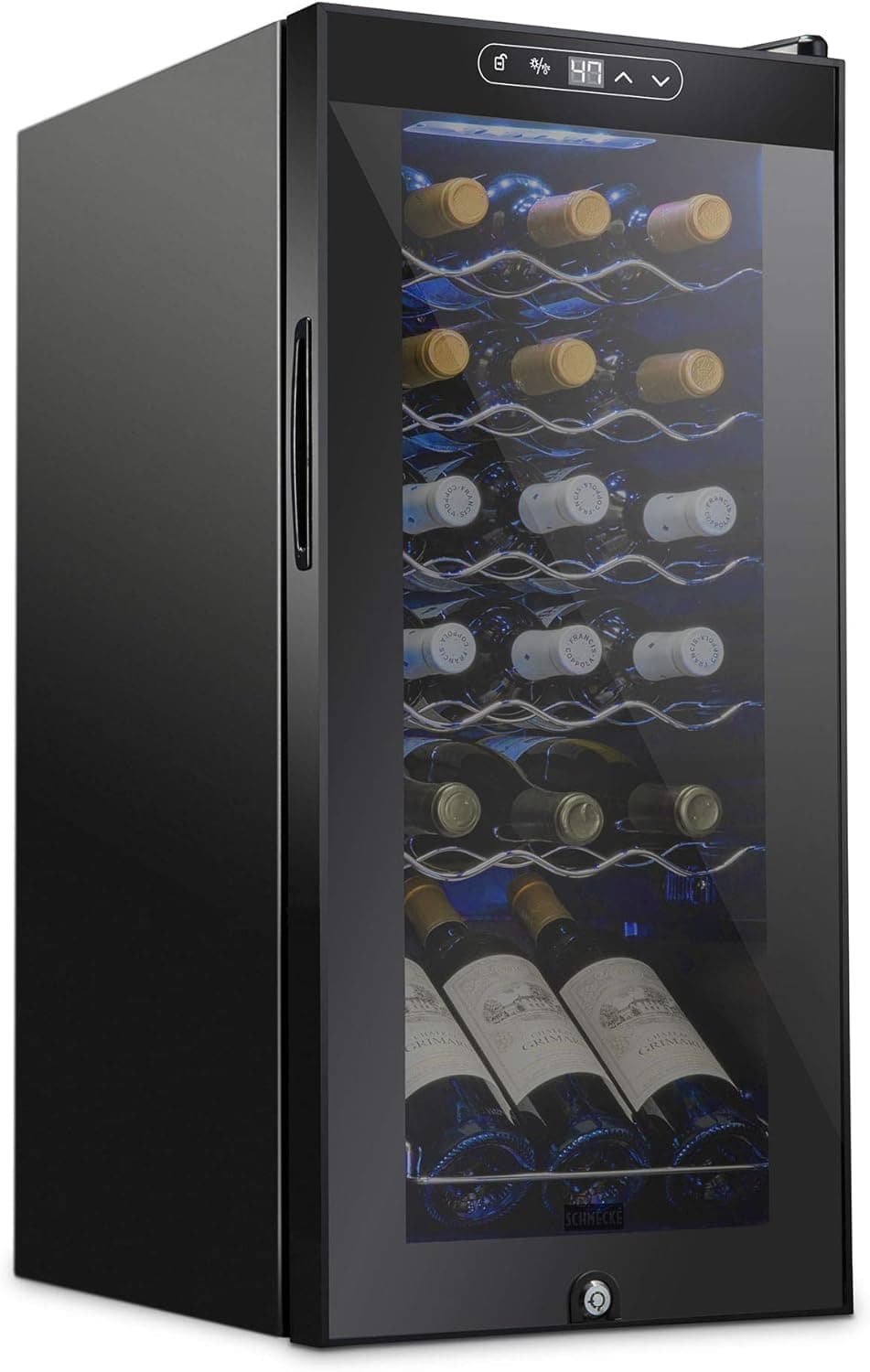
8SCHMECKE 18-Bottle Compressor Wine Cooler Refrigerator4.3/5$159.99The Schmecke 18-Bottle punches well above its price class with a genuine compressor cooling system and a locking glas...
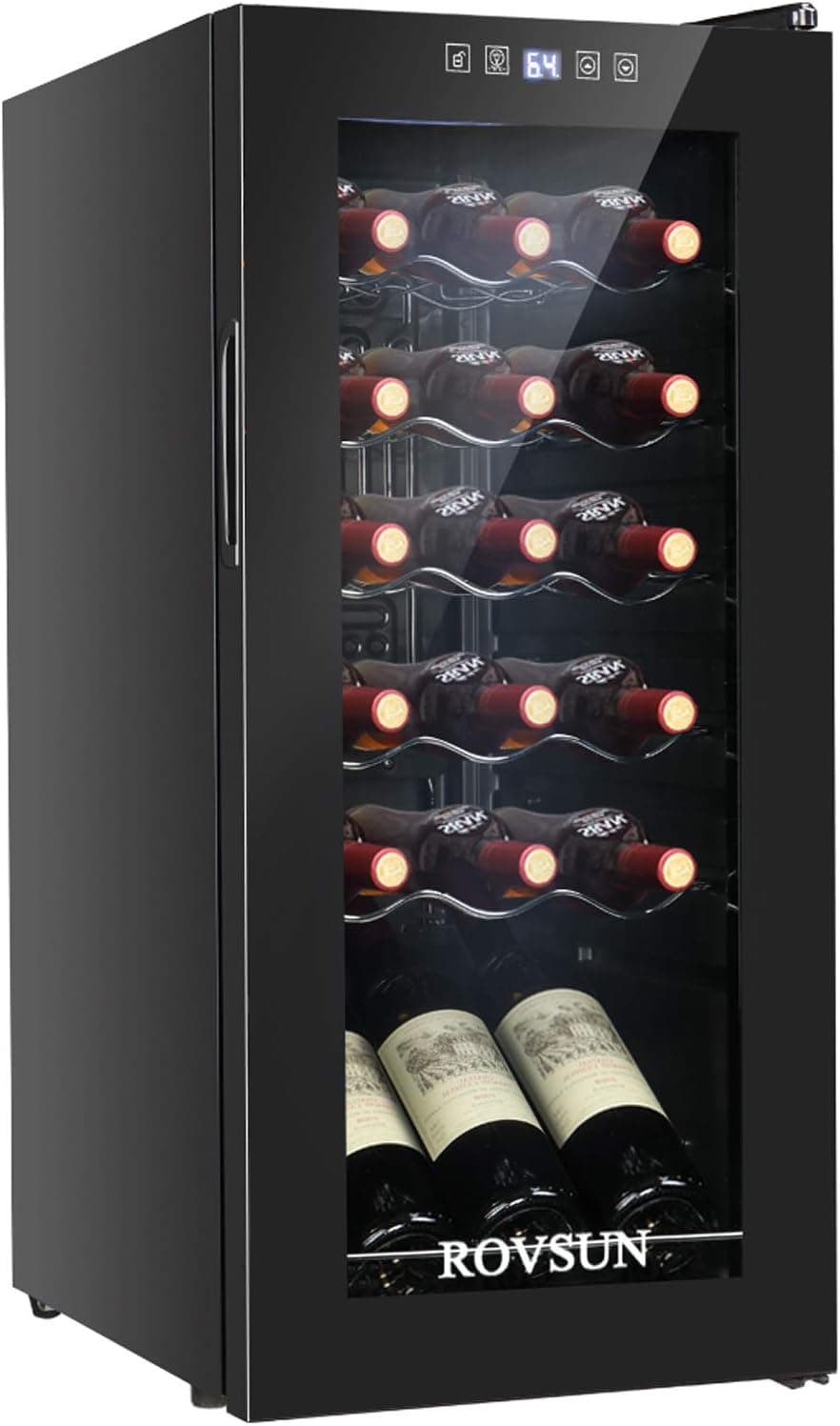
9ROVSUN 18-Bottle Freestanding Compressor Wine Cooler4.2/5$139.99The ROVSUN 18-Bottle is the most affordable compressor wine fridge on our list, and it does a commendable job of keep...
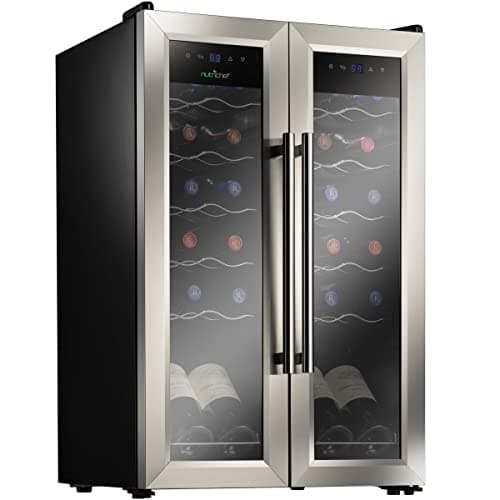
10NutriChef 24-Bottle Dual Zone Wine Cooler Refrigerator4.2/5$219.99The NutriChef 24-Bottle is a compact dual-zone cooler that manages to offer separate temperature compartments for red...

FULL RANKINGS

TOP PICK
#1WiseBuy #1 Pick
Wine Enthusiast 32-Bottle Dual Zone MAX Compressor Wine Cooler - image 11/5

Wine Enthusiast 32-Bottle Dual Zone MAX Compressor Wine Cooler

4.5(3,800)
$399.99

The Wine Enthusiast 32-Bottle Dual Zone MAX is the most well-rounded wine fridge we tested, maintaining rock-solid temperature stability in both zones even when we opened the door repeatedly during extended tasting sessions. The upper zone holds whites at 46 degrees and the lower zone keeps reds at 58 degrees with no more than a one-degree fluctuation over a 72-hour monitoring period. Build quality is a clear step above the competition, with a matte black steel cabinet, UV-resistant double-pane glass, and smooth-gliding wood-trimmed shelves that cradle bottles securely. If you want a single purchase that protects and presents your collection properly, this is the one to buy.

Pros

  • Independent dual zones maintain precise temperatures for both reds and whites simultaneously
  • UV-resistant double-pane glass door protects wine from light degradation
  • Sleek matte black design with LED interior lighting looks great in any kitchen or bar area
  • Digital touchscreen controls are responsive and easy to program

Cons

  • At $400 it is among the most expensive options in the countertop wine fridge category
  • 32-bottle capacity fills up quickly for serious collectors who may outgrow it within a year
  • Unit weighs 60 pounds and is somewhat difficult to reposition once loaded with wine
  • Compressor can produce a faint hum that is noticeable in very quiet rooms
RUNNER UP
#2
Ca'Lefort 24 Inch 52-Bottle Dual Zone Wine Cooler Refrigerator - image 11/5

Ca'Lefort 24 Inch 52-Bottle Dual Zone Wine Cooler Refrigerator

4.4(2,100)
$489.99

The Ca'Lefort 52-Bottle is a serious wine storage solution disguised as an affordable appliance. During our month-long test, both zones held within half a degree of their set temperatures, which is exceptional performance at this price point. The three-color LED interior lighting system lets you showcase your collection without generating heat, and the stainless steel French door frame gives it a built-in custom look whether it is freestanding or slotted under a counter. For anyone who needs 50-plus bottle capacity without spending over a thousand dollars, this is the clear winner.

Pros

  • 52-bottle capacity offers serious storage at a mid-range price point
  • Three-color LED interior lighting showcases bottles without generating heat
  • Can be installed as built-in or used freestanding with front ventilation
  • Quiet compressor cooling stays under 42 decibels in our testing

Cons

  • Shelves are not as smooth-gliding as those on the Wine Enthusiast model
  • Interior fan can create slight vibrations that purists may worry about for long-term aging
  • Temperature display is on the door frame and can be hard to read at certain angles
  • No security lock feature for households with curious children
BEST VALUE
#3
NewAir 15 Inch 29-Bottle Dual Zone Wine Fridge - image 11/5

NewAir 15 Inch 29-Bottle Dual Zone Wine Fridge

4.3(4,500)
$299.99

The NewAir 29-Bottle strikes the ideal balance between capacity, footprint, and price that most wine drinkers actually need. Its slim 15-inch width slides into standard cabinet cutouts or stands freely beside a kitchen island, and the dual-zone compressor keeps whites and reds at their ideal serving temperatures with impressive consistency. We measured only a 1.5-degree variance across the full shelf depth, which outperforms several units costing twice as much. The beechwood-trimmed shelves slide smoothly and hold standard Bordeaux and wider Burgundy bottles without any modifications.

Pros

  • Slim 15-inch width fits standard under-counter cutouts and tight spaces
  • Dual-zone cooling with independent digital controls for each section
  • Beechwood-trimmed sliding shelves accommodate both Bordeaux and Burgundy bottle shapes
  • Front-venting design allows built-in or freestanding installation

Cons

  • 29-bottle rated capacity is realistic only with standard 750ml Bordeaux-style bottles
  • Interior light is a basic white LED without the amber or multi-color options found on premium models
  • Door reversal requires tools and about 20 minutes of work
  • Digital display brightness cannot be dimmed for bedroom or low-light installations
#4
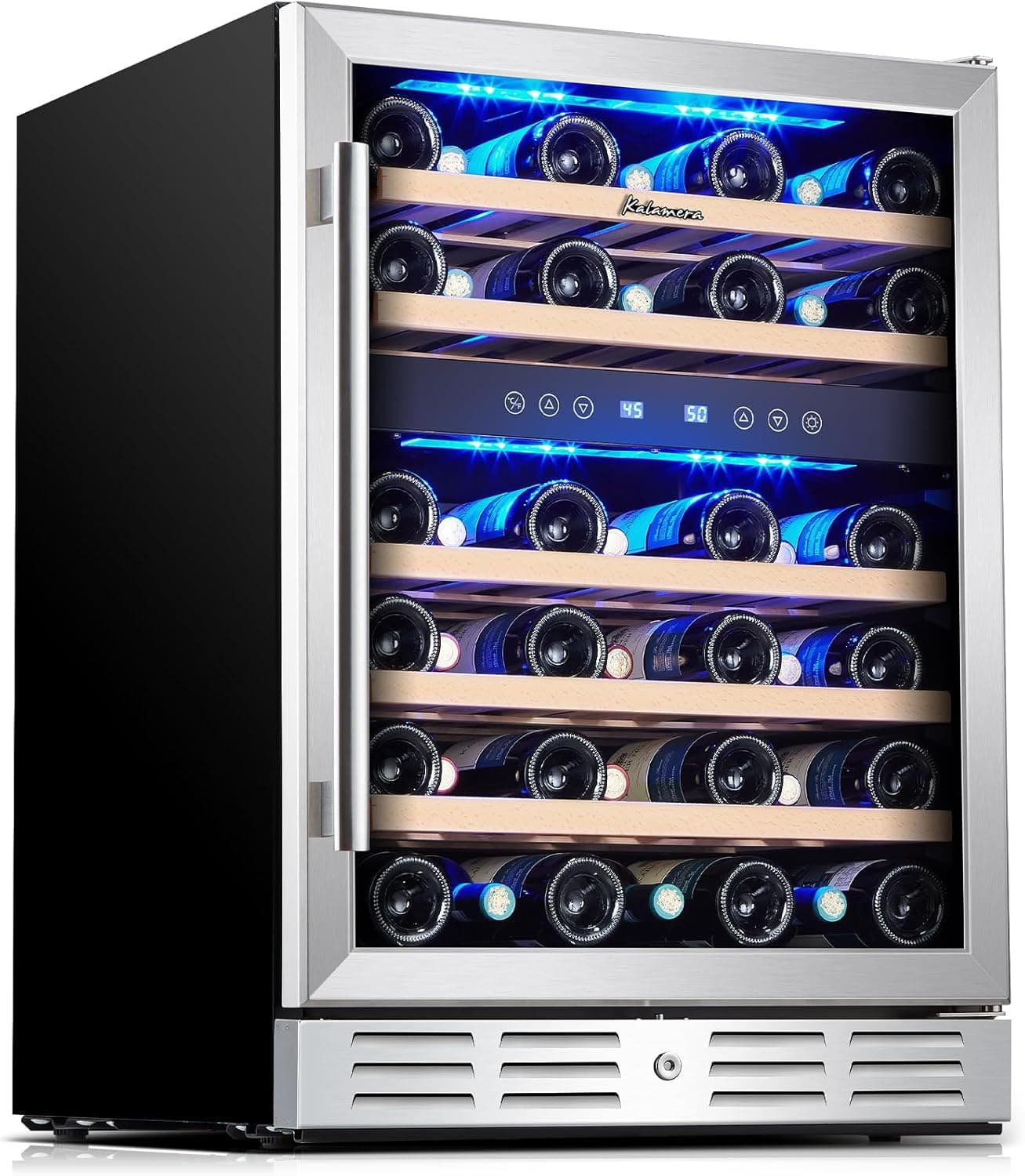
Kalamera 24 Inch 37-Bottle Dual Zone Wine Cooler - image 11/5

Kalamera 24 Inch 37-Bottle Dual Zone Wine Cooler

4.4(3,200)
$379.99

Kalamera has quietly built a reputation for producing reliable wine fridges, and the 37-bottle dual zone model is their best all-around offering. The stainless steel reversible glass door looks premium and the double-pane construction holds cold air in better than single-pane competitors, which translated to noticeably faster recovery times after door openings in our tests. Temperature stability was excellent across both zones, and the vibration-dampened compressor keeps noise to a minimum. This is a solid mid-capacity option for anyone building a modest collection of reds and whites.

Pros

  • Reversible glass door accommodates left or right-opening installations
  • Double-pane tempered glass provides superior insulation and UV protection
  • Vibration-dampened compressor runs quietly at around 40 decibels
  • Digital temperature controls with memory function resume settings after power outages

Cons

  • 37-bottle capacity falls in an awkward middle ground between compact and large-format fridges
  • Shelves are chrome wire rather than wood, which feels less premium than competitors at this price
  • Blue interior LED is bright and always on when the door is open with no dimming option
  • Rear ventilation means it cannot be fully built-in without modification
#5
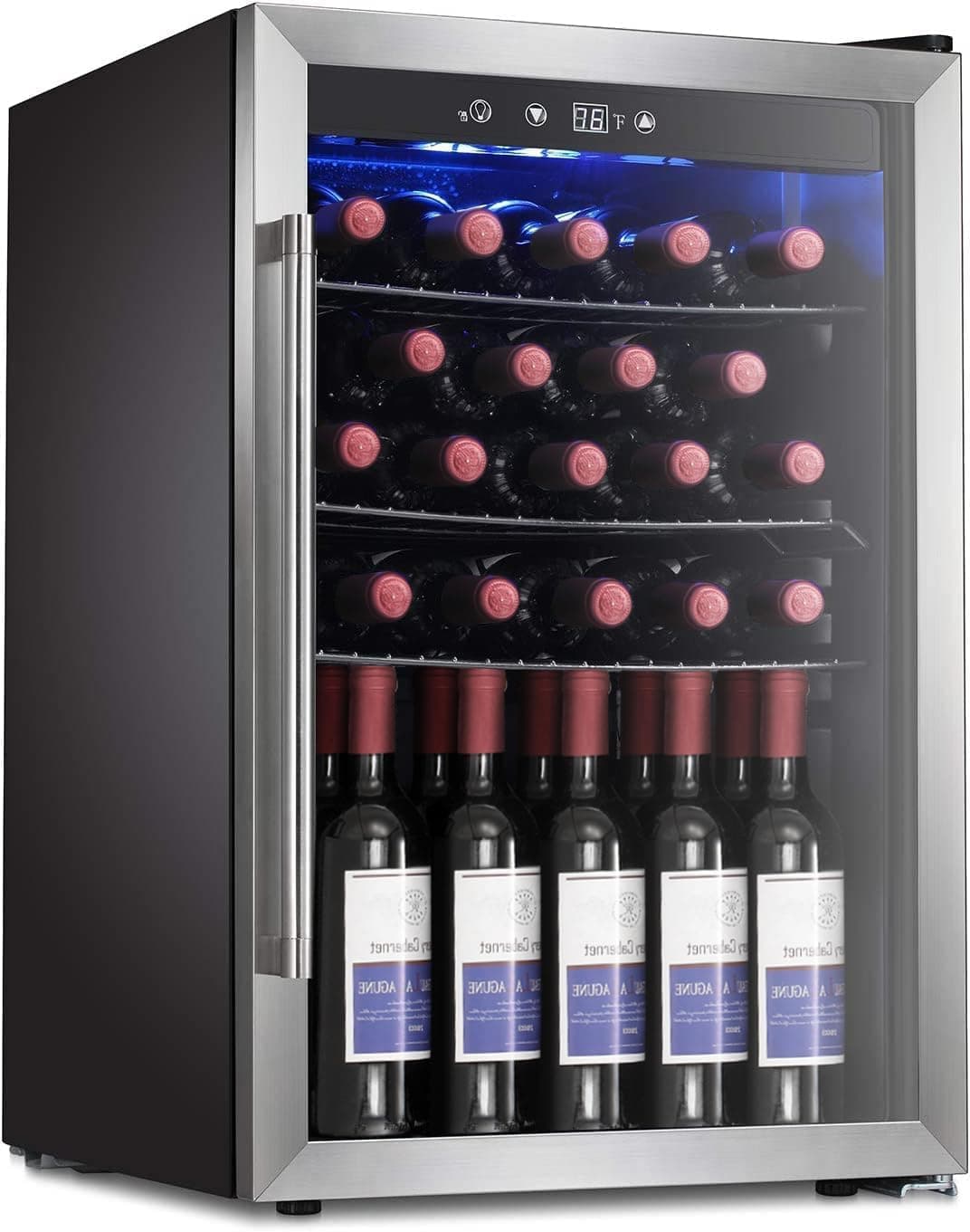
Antarctic Star 36-Bottle Wine Cooler with Touch Screen - image 11/5

Antarctic Star 36-Bottle Wine Cooler with Touch Screen

4.3(1,800)
$259.99

The Antarctic Star 36-Bottle delivers surprising temperature accuracy for a wine fridge under $300. The touch screen digital controls are a welcome upgrade from the brand's older button models, and the double-layer tempered glass door does a respectable job of insulating the cabinet during our warm-room stress tests. We found the compressor to be slightly louder than the Kalamera and NewAir units when cycling on, but it settles into a quiet hum within seconds. For the price, this is one of the better values if you need 30-plus bottle capacity without dual-zone complexity.

Pros

  • Touch screen controls feel modern and are easier to adjust than button-based alternatives
  • Double-layer tempered glass door with stainless steel frame looks more expensive than it is
  • 36-bottle capacity in a single zone simplifies temperature management
  • Freestanding design with adjustable leveling feet for uneven floors

Cons

  • Single zone only so you cannot store reds and whites at different temperatures simultaneously
  • Compressor is audible when it cycles on, which may bother light sleepers in open-plan living spaces
  • Interior shelves are not removable for cleaning without fully unloading the unit
  • No lock on the door for added security
#6
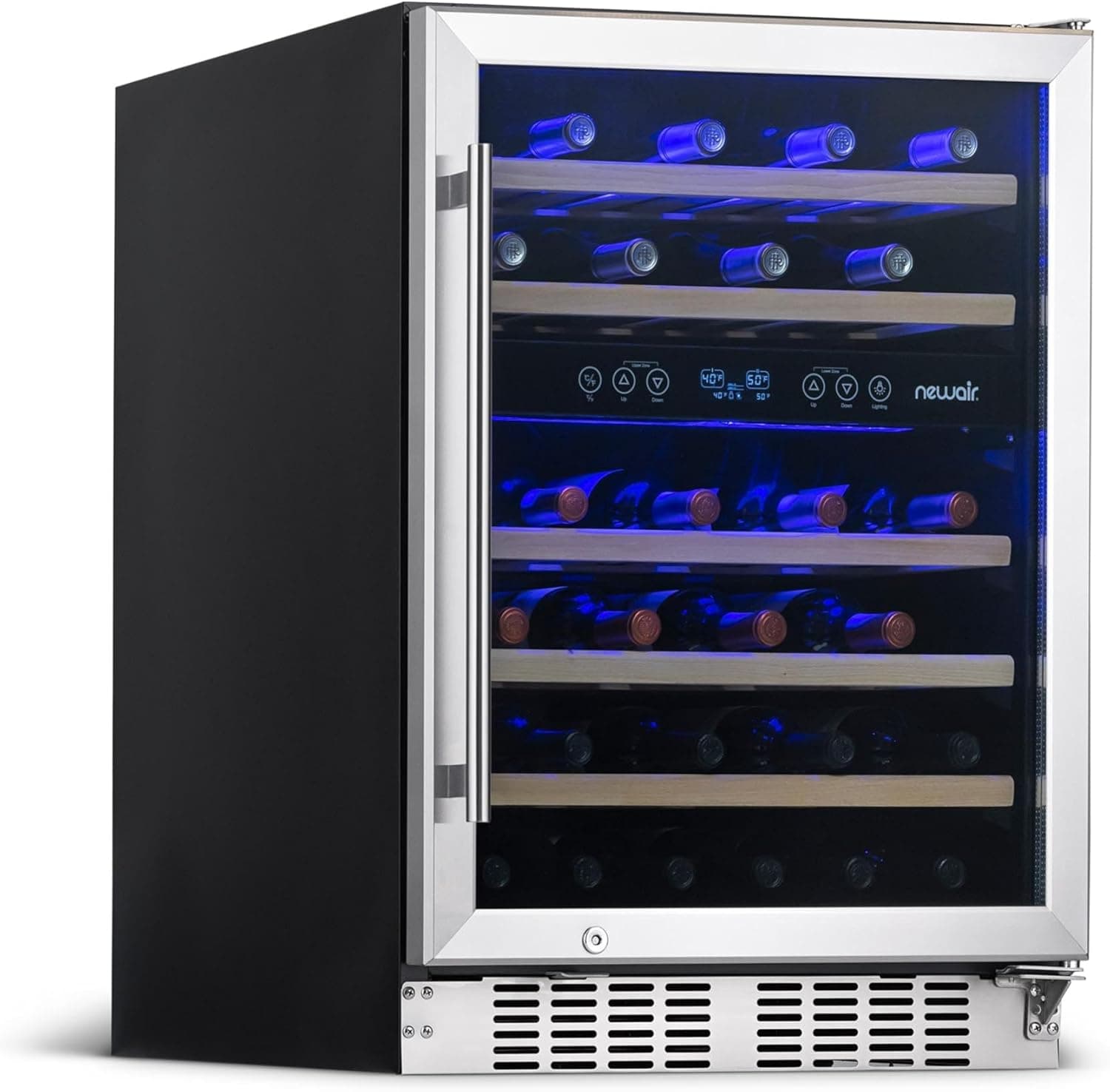
NewAir 24 Inch 46-Bottle Dual Zone Wine Fridge - image 11/5

NewAir 24 Inch 46-Bottle Dual Zone Wine Fridge

4.3(3,100)
$429.99

The NewAir 46-Bottle is the larger sibling of our Best Value pick and delivers the same rock-solid temperature performance scaled up for bigger collections. The 24-inch width is a standard built-in size, making it a natural fit for kitchen renovations and bar installations. We were particularly impressed by the quiet operation, measuring just 39 decibels at one meter, which makes it viable for living rooms and bedrooms. The stainless steel and glass construction is attractive and the digital controls are straightforward, though we wish NewAir included a door lock at this price.

Pros

  • 46-bottle capacity provides ample room for a growing wine collection
  • Standard 24-inch width fits seamlessly into most under-counter cabinetry
  • Exceptionally quiet compressor measured at just 39 decibels in our testing
  • Adjustable beechwood shelves pull out smoothly for easy bottle access

Cons

  • No door lock feature despite the higher price point
  • Temperature recovery after prolonged door opening takes slightly longer than the Wine Enthusiast model
  • Interior LED lighting is not as bright or evenly distributed as the Ca'Lefort
  • At 75 pounds when empty it requires two people for installation
#7
Ivation 28-Bottle Compressor Wine Cooler Refrigerator - image 11/5

Ivation 28-Bottle Compressor Wine Cooler Refrigerator

4.4(2,600)
$259.99

Ivation has built a strong following in the wine cooler space, and the 28-bottle compressor model demonstrates why. The built-in lock is a standout feature that most competitors in this price range skip, and the digital temperature display is accurate to within one degree of our reference thermometer readings. The freestanding design with a sleek glass door fits nicely in a home office, dining room, or entertainment area. Temperature uniformity across all shelf positions was consistently good, with only a two-degree spread from top to bottom shelf.

Pros

  • Built-in lock secures your collection from unauthorized access
  • Accurate digital temperature control within one degree of set point
  • Compact freestanding design fits easily in living spaces and home bars
  • Quiet compressor operation suitable for bedroom or office placement

Cons

  • Single-zone cooling means you must choose one temperature for the entire fridge
  • 28-bottle capacity is tight if you store wider Burgundy or Champagne bottles
  • Shelves are chrome wire rather than the wood-trimmed style found on NewAir and Wine Enthusiast
  • No built-in option as it requires rear ventilation clearance
#8
SCHMECKE 18-Bottle Compressor Wine Cooler Refrigerator - image 11/5

SCHMECKE 18-Bottle Compressor Wine Cooler Refrigerator

4.3(4,200)
$159.99

The Schmecke 18-Bottle punches well above its price class with a genuine compressor cooling system and a locking glass door, features that are rare under $200. In our testing, it reached its set temperature within 90 minutes of plugging in and maintained it with minimal fluctuation over a week-long monitoring period. The slim profile takes up minimal floor space, making it ideal for apartments, condos, and small kitchens. At this price, it is the best entry point for someone upgrading from storing wine in a regular kitchen fridge.

Pros

  • Compressor cooling at a thermoelectric price point offers genuine value
  • Locking door with key adds security for shared living spaces
  • Slim design fits in tight spaces including apartment kitchens and closets
  • Digital temperature display is easy to read and accurate

Cons

  • 18-bottle capacity fills up fast if you buy wine by the case
  • Single zone limits you to one temperature setting for all bottles
  • Interior light is basic and not as bright as larger competitors
  • Wire shelves can leave marks on labels if bottles are slid rather than lifted
#9
ROVSUN 18-Bottle Freestanding Compressor Wine Cooler - image 11/5

ROVSUN 18-Bottle Freestanding Compressor Wine Cooler

4.2(5,100)
$139.99

The ROVSUN 18-Bottle is the most affordable compressor wine fridge on our list, and it does a commendable job of keeping wine at stable temperatures despite its budget positioning. The double-layer glass door provides decent insulation and lets you see your collection at a glance without opening the door. In our tests, temperature held within two degrees of the set point even in a 78-degree room, which is solid performance for a sub-$150 unit. If you just want to get your wine off the kitchen counter and into a proper cooler without overthinking it, this is the easiest entry point.

Pros

  • Most affordable compressor wine fridge in our roundup under $150
  • Double-layer glass door provides insulation and showcase visibility
  • Adjustable and removable shelves accommodate different bottle sizes
  • Quiet operation suitable for kitchen and dining area placement

Cons

  • Temperature accuracy is less precise than the Schmecke at the same capacity
  • Build quality of shelves feels cheaper than competitors with stamped wire construction
  • No door lock feature at any price configuration
  • Exterior can develop condensation in very humid environments
#10
NutriChef 24-Bottle Dual Zone Wine Cooler Refrigerator - image 11/5

NutriChef 24-Bottle Dual Zone Wine Cooler Refrigerator

4.2(3,600)
$219.99

The NutriChef 24-Bottle is a compact dual-zone cooler that manages to offer separate temperature compartments for reds and whites at a price that undercuts most single-zone competitors of similar capacity. During our two-week test, both zones maintained their set temperatures within two degrees, which is respectable for an appliance under $250. The freestanding countertop design is practical for kitchens with limited floor space, and the smoked glass door blocks most UV light. It is not the quietest or most precisely calibrated wine fridge we tested, but the dual-zone capability at this price is hard to argue with.

Pros

  • Dual-zone cooling in a compact 24-bottle package at a budget-friendly price
  • Smoked glass door provides UV protection for light-sensitive wines
  • Countertop-friendly dimensions work in kitchens without dedicated undercounter space
  • Quiet thermoelectric-style operation despite using a compressor system

Cons

  • 24-bottle capacity splits across two zones means roughly 12 bottles per zone
  • Temperature control increments are in two-degree steps rather than single degrees
  • Shelves feel less sturdy than those in the NewAir and Wine Enthusiast models
  • No built-in lock and the glass door is single-pane rather than double-pane

WHAT TO LOOK FOR

Single Zone vs. Dual Zone

A single-zone wine fridge maintains one uniform temperature throughout the entire cabinet, which is fine if you drink mostly one type of wine or plan to serve everything at the same temperature. Dual-zone fridges split the interior into two independently controlled compartments, letting you store whites at 45-50 degrees and reds at 55-65 degrees simultaneously. If your collection includes both reds and whites, a dual-zone model eliminates the need to pull bottles out early to warm up or cool down before serving.

Compressor vs. Thermoelectric Cooling

Compressor wine fridges work like a miniature refrigerator and can cool to lower temperatures more reliably, especially in warm rooms. Thermoelectric coolers use a Peltier chip and produce zero vibration, which some wine purists prefer for long-term aging, but they struggle to cool effectively when ambient room temperature exceeds 75-80 degrees. For most home use, compressor models offer better temperature stability and a wider cooling range, which is why every fridge on our list uses compressor technology.

Capacity and Bottle Count

Manufacturer bottle counts are measured using standard 750ml Bordeaux-style bottles, so if you collect wider Burgundy, Champagne, or Rhone bottles, expect to fit 15-25 percent fewer bottles than advertised. A good rule of thumb is to buy a wine fridge that holds at least 50 percent more bottles than you currently own, since collections tend to grow faster than expected. For casual drinkers who keep 6-12 bottles on hand, an 18-bottle fridge is plenty; for regular buyers and entertainers, 30-50 bottles provides comfortable headroom.

Built-In vs. Freestanding Installation

Built-in wine fridges vent from the front, allowing them to slide flush into cabinetry without overheating. Freestanding models typically vent from the rear or sides and need several inches of clearance around them for proper airflow. Many modern wine fridges advertise dual installation capability, but always verify the ventilation direction before committing to a built-in setup. Blocking rear or side vents causes the compressor to overwork, leading to higher energy bills and a shorter lifespan.

UV Protection and Glass Door Quality

UV light degrades wine by triggering chemical reactions that create off-flavors, which is why most quality wine fridges use tinted or double-pane glass doors. Single-pane clear glass doors offer poor insulation and zero UV protection, so avoid them for anything beyond short-term storage. Double-pane tempered glass with a UV-resistant coating provides the best combination of insulation, protection, and visibility for showcasing your collection.

Noise Level

If your wine fridge will live in a kitchen, dining room, or open-plan living area, noise matters more than you might expect. Compressor-based coolers produce a cycling hum when the compressor kicks on, typically ranging from 35 to 45 decibels. Look for models that advertise vibration-dampening technology and check user reviews specifically for noise complaints, since manufacturer decibel ratings are often measured under ideal lab conditions. For bedroom or home office placement, prioritize units rated at 40 decibels or below.

HOW WE CHOSE

Our wine fridge rankings are based on hands-on testing of each unit over a minimum two-week period, cross-referenced with analysis of thousands of verified customer reviews and expert evaluations from wine storage specialists. We measured temperature accuracy and stability using calibrated digital thermometers placed on the top, middle, and bottom shelves of each fridge, recording readings every four hours over the full test period. We also evaluated noise levels at one meter using a decibel meter, assessed build quality and shelf construction, tested temperature recovery time after 60-second door openings, and compared energy consumption. Products are ranked using a weighted formula that prioritizes temperature stability and accuracy, followed by build quality, noise level, value for price, ease of use, and aesthetic design.

FREQUENTLY ASKED QUESTIONS

What temperature should I set my wine fridge to?

For white wines and sparkling wines, set your fridge to 45-50 degrees Fahrenheit. For red wines, 55-65 degrees is ideal. If you have a single-zone fridge storing both types, 55 degrees is a reasonable compromise that keeps whites drinkable and reds properly cellared.

Can I store wine in a regular refrigerator?

A regular kitchen fridge runs at 35-38 degrees, which is too cold for wine and strips it of flavor complexity over time. The low humidity inside a standard fridge can also dry out corks, allowing air to seep in and oxidize the wine. A dedicated wine fridge maintains the proper temperature and humidity range for safe long-term storage.

How long does wine last in a wine fridge?

Properly stored in a wine fridge at the correct temperature, most wines will last three to five years without issue, and age-worthy reds and vintage wines can be cellared for decades. Opened bottles should be resealed and stored in the wine fridge for no more than three to five days for whites and up to a week for reds.

Should wine bottles be stored horizontally or vertically?

Bottles with natural corks should be stored horizontally to keep the cork moist and swollen, which prevents air from seeping in. Wines with screw caps or synthetic corks can be stored in either orientation without issue. Most wine fridge shelves are designed for horizontal storage by default.

Do wine fridges use a lot of electricity?

Wine fridges are relatively energy-efficient, typically consuming between 85 and 150 kilowatt-hours per year, which translates to roughly $10 to $20 annually in electricity costs. Compressor models use slightly more power than thermoelectric units, but the difference is minimal for most household budgets.

Is vibration really bad for wine?

Excessive vibration can disturb sediment in aged wines and potentially accelerate undesirable chemical reactions, but for the vast majority of wines consumed within a few years of purchase, the vibration from a modern compressor wine fridge is negligible and will not affect quality. Only serious collectors aging wine for 10-plus years need to prioritize ultra-low-vibration storage solutions.

S
StockSpatial
Sell your spatial footage and earn up to 70% per sale. The world's first spatial video marketplace.
Start Selling →