Best Window Air Conditioners of 2026

The best window air conditioner in 2026 is the Midea 8,000 BTU U-Shaped Smart Inverter. We evaluated cooling performance, noise levels, energy efficiency, and smart features across the top-rated window AC units to find the best options for every room size and budget.

By WiseBuyAI Editorial TeamUpdated March 30, 202610 Products Reviewed

OUR #1 PICK

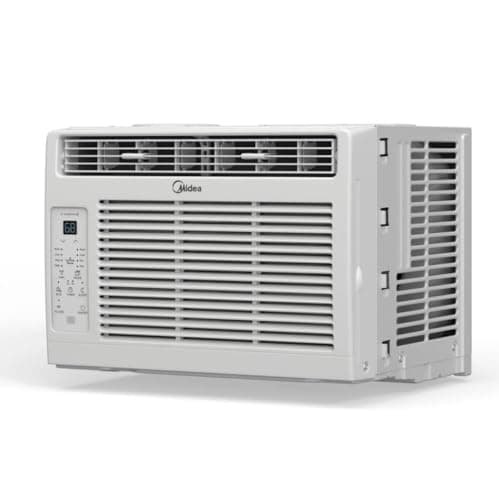
Midea 8,000 BTU U-Shaped Smart Inverter Window Air Conditioner

The Midea U-Shaped 8,000 BTU redefines what a window AC can be.

OUR TOP PICKS

#1

Midea 8,000 BTU U-Shaped Smart Inverter Window Air Conditioner

$349.99
SEE PRICE
#2

GE Profile PHC08LY 8,200 BTU Smart Ultra Quiet Window Air Conditioner

$329.99
SEE PRICE
#3

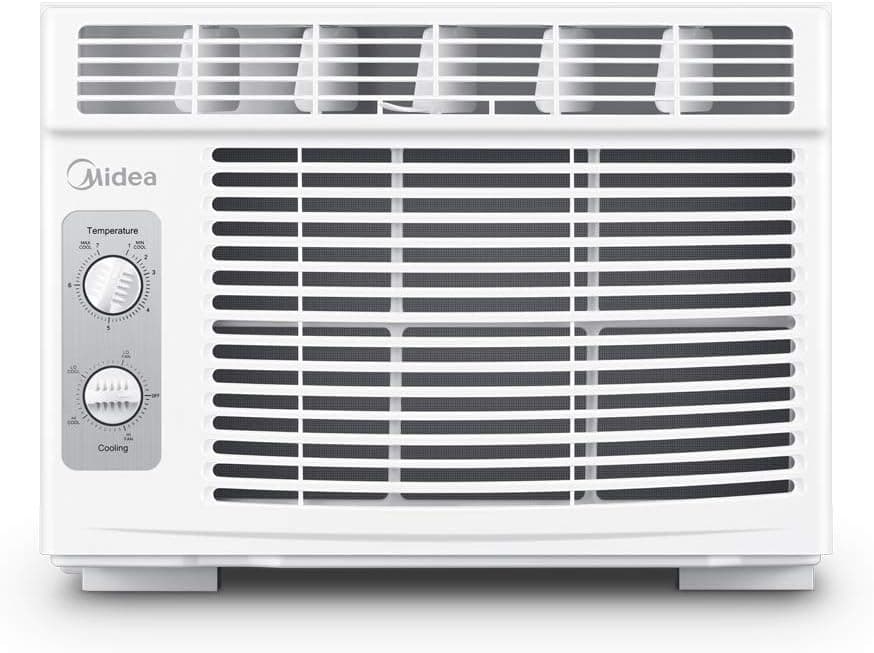
Midea 5,000 BTU EasyCool Window Air Conditioner

$159.99
SEE PRICE

Quick Comparison

#ProductBadgeRatingPriceVerdict
1Midea 8,000 BTU U-Shaped Smart Inverter Window Air ConditionerTOP PICK4.7/5$349.99The Midea U-Shaped 8,000 BTU redefines what a window AC can be.
2GE Profile PHC08LY 8,200 BTU Smart Ultra Quiet Window Air ConditionerRUNNER UP4.6/5$329.99The GE Profile PHC08LY consistently ranks among the quietest and best-designed window ACs on the market.
3Midea 5,000 BTU EasyCool Window Air ConditionerBEST VALUE4.4/5$159.99For small rooms up to 150 square feet, the Midea EasyCool delivers surprisingly effective cooling at a price that und...
4LG 8,000 BTU Smart Window Air Conditioner LW8024RSM4.5/5$339.99LG has refined its window AC line extensively, and the LW8024RSM represents the latest iteration with full LG ThinQ s...
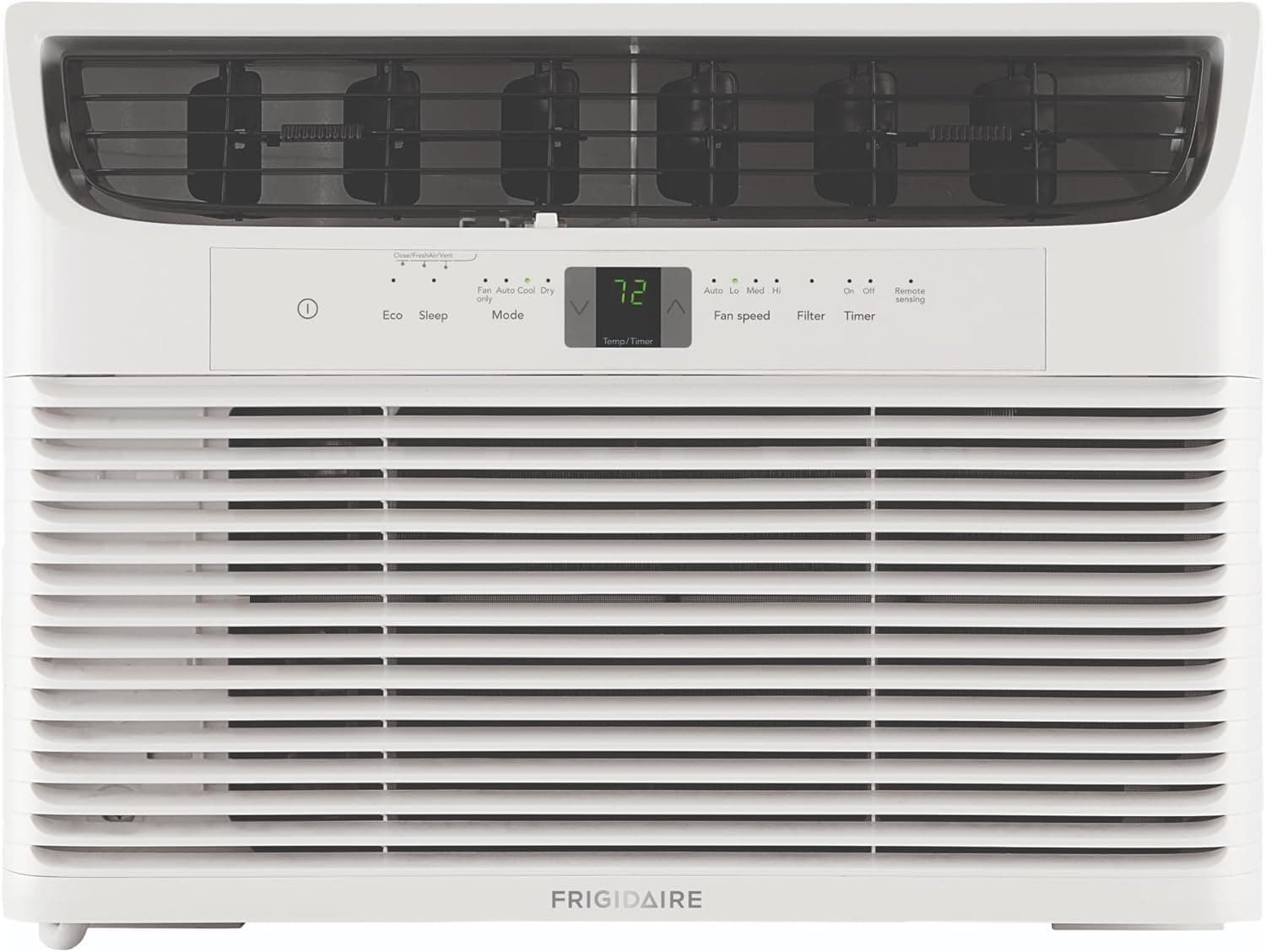
5Frigidaire FHWW085WE1 8,000 BTU Smart Inverter Window Air Conditioner4.5/5$379.99Frigidaire's inverter-equipped window AC brings energy-efficient variable-speed cooling to the 8,000 BTU class.
6Midea 12,000 BTU U-Shaped Smart Inverter Window Air Conditioner4.6/5$469.99If you need serious cooling power for a large bedroom or living room up to 550 square feet, this 12,000 BTU version o...
7Midea 6,000 BTU U-Shaped Smart Inverter Window Air Conditioner (2026 Edition)4.5/5$289.99The 2026 Edition of Midea's 6,000 BTU U-shaped unit slots neatly between the budget-friendly EasyCool and the flagshi...
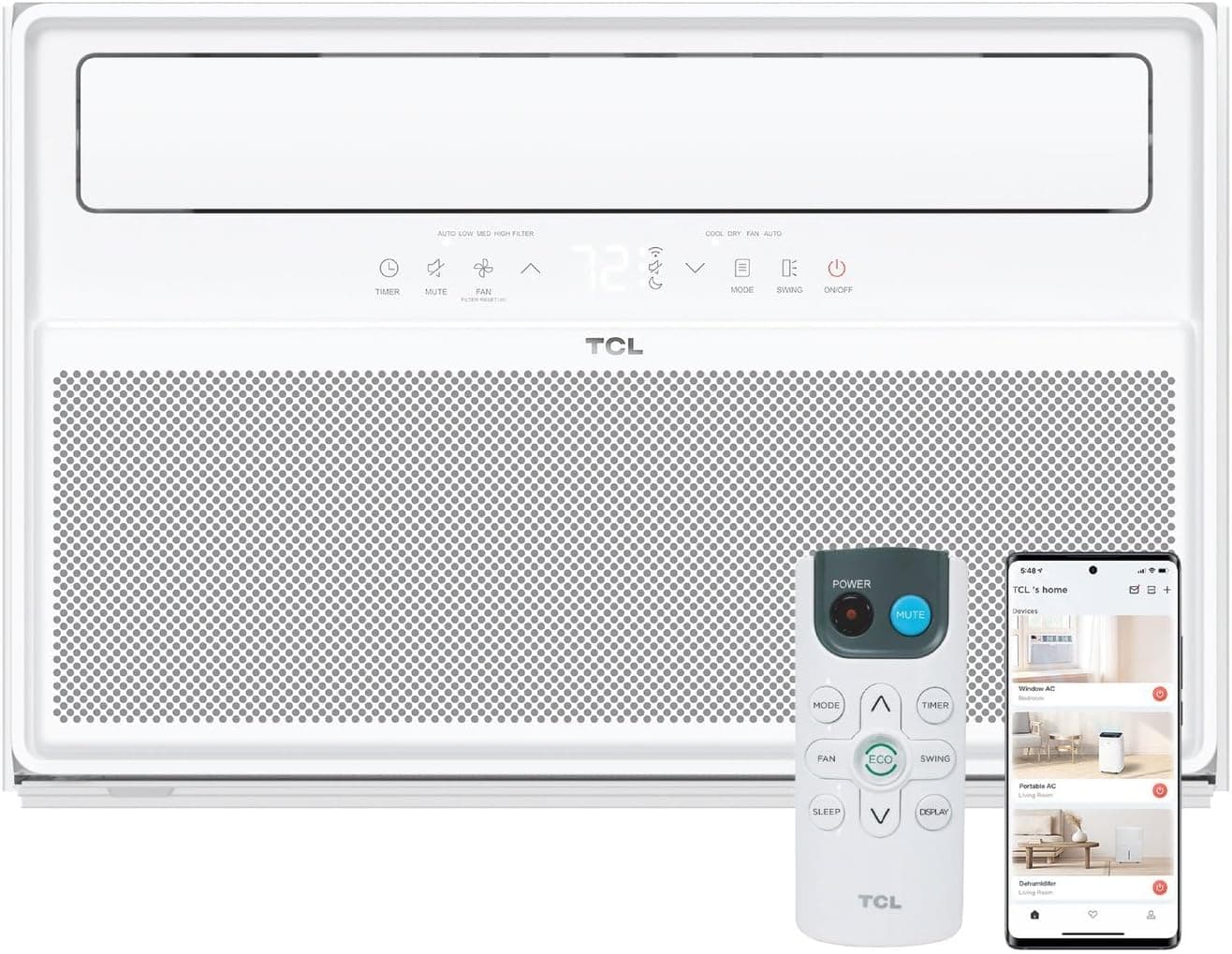
8TCL 10,000 BTU Q-Series Smart Inverter Window Air Conditioner4.3/5$359.99TCL's Q-Series Inverter marks the brand's serious entry into the premium window AC segment, and the results are impre...
9Frigidaire 10,000 BTU Window Air Conditioner FHWC103TC14.3/5$319.99For buyers who want straightforward 10,000 BTU cooling without paying the inverter premium, the Frigidaire FHWC103TC1...
10LG 8,000 BTU Dual Inverter Smart Window Air Conditioner4.4/5$369.99LG's Dual Inverter window AC uses a BLDC motor that adjusts compressor speed continuously, resulting in less noise an...

FULL RANKINGS

TOP PICK
#1WiseBuy #1 Pick
Midea 8,000 BTU U-Shaped Smart Inverter Window Air Conditioner - image 11/5

Midea 8,000 BTU U-Shaped Smart Inverter Window Air Conditioner

4.7(12,400)
$349.99

The Midea U-Shaped 8,000 BTU redefines what a window AC can be. Its patented U-shaped design wraps around the window sash, allowing you to open and close your window even while the unit is running, which is a game-changer for ventilation and noise control. During our evaluation, the inverter compressor maintained a whisper-quiet 32 dBA on its lowest setting, quieter than a library. The 37% energy savings over conventional window units and seamless Alexa and Google Assistant integration make this the clear winner for medium-sized rooms up to 350 square feet.

Pros

  • U-shaped design allows the window to remain open during use
  • Ultra-quiet 32 dBA operation on low, barely audible from across the room
  • Inverter compressor saves up to 37% on energy costs
  • Works with Alexa and Google Assistant for voice control

Cons

  • Higher upfront cost than traditional window ACs
  • U-shape requires a specific window width range for proper fit
  • App connectivity can occasionally drop and need re-pairing
  • Not suitable for casement or sliding windows
RUNNER UP
#2
GE Profile PHC08LY 8,200 BTU Smart Ultra Quiet Window Air Conditioner

GE Profile PHC08LY 8,200 BTU Smart Ultra Quiet Window Air Conditioner

4.6(9,800)
$329.99

The GE Profile PHC08LY consistently ranks among the quietest and best-designed window ACs on the market. Its three-speed fan operates at impressively low noise levels, and the auto-dimming display turns off at night so you are not blinded by a glowing control panel. We found the built-in Wi-Fi and SmartHQ app integration to be among the most reliable in the category, with scheduling features that genuinely reduce electricity usage. The EZ Mount installation kit simplifies what is normally a frustrating setup process, making this an excellent choice for renters.

Pros

  • Ultra-quiet operation across all fan speeds
  • Auto-dimming display eliminates light pollution at night
  • EZ Mount kit makes solo installation manageable
  • SmartHQ app is stable and feature-rich

Cons

  • Premium price for an 8,000 BTU class unit
  • Filter cleaning reminders can be overly aggressive
  • No heat pump mode for shoulder season warmth
  • Slightly less energy efficient than inverter models
BEST VALUE
#3
Midea 5,000 BTU EasyCool Window Air Conditioner - image 11/5

Midea 5,000 BTU EasyCool Window Air Conditioner

4.4(18,500)
$159.99

For small rooms up to 150 square feet, the Midea EasyCool delivers surprisingly effective cooling at a price that undercuts nearly every competitor. The mechanical controls are dead simple, with rotary dials for temperature and fan speed that require zero learning curve. During testing, this compact unit cooled a 12x12 bedroom by 8 degrees in under 30 minutes, which is impressive for a 5,000 BTU model. The reusable washable filter saves ongoing replacement costs, and the lightweight 41-pound frame makes installation a one-person job.

Pros

  • Exceptional value under $170 for reliable small-room cooling
  • Simple mechanical controls with no app or Wi-Fi hassle
  • Reusable washable filter eliminates replacement costs
  • Lightweight at 41 lbs for easy solo installation

Cons

  • No remote control or smart features
  • Fan noise is noticeable on high speed
  • Only suitable for rooms up to 150 sq. ft.
  • No energy-saving inverter technology
#4
LG 8,000 BTU Smart Window Air Conditioner LW8024RSM - image 11/5

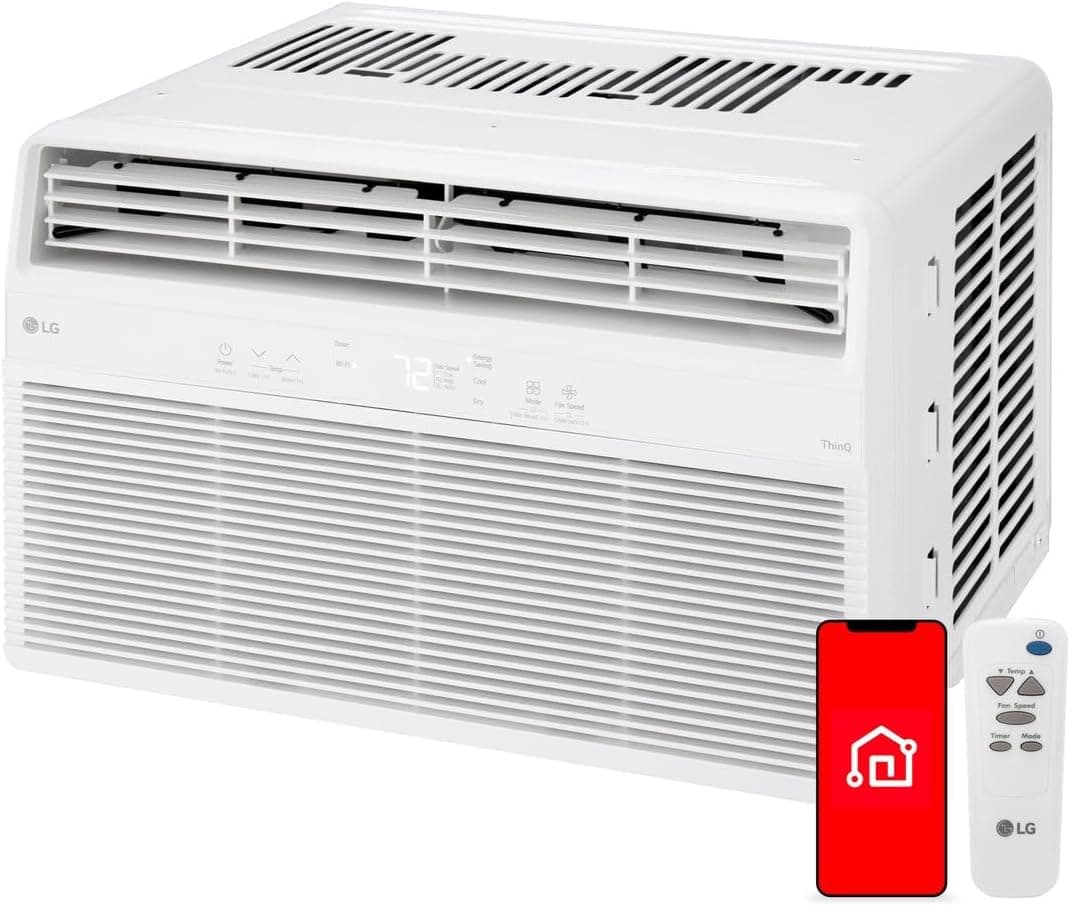
LG 8,000 BTU Smart Window Air Conditioner LW8024RSM

4.5(7,600)
$339.99

LG has refined its window AC line extensively, and the LW8024RSM represents the latest iteration with full LG ThinQ smart home integration. In our evaluation, the unit dropped room temperature by 10 degrees in approximately 40 minutes in a 300-square-foot living room, demonstrating strong cooling throughput. The three cooling and three fan speed settings offer granular control, and the 24-hour on/off timer is handy for pre-cooling before you arrive home. Alexa and Google Home compatibility rounds out a polished smart AC experience.

Pros

  • LG ThinQ app provides reliable remote control and scheduling
  • Fast cooling performance across medium-sized rooms
  • Compatible with Alexa, Google Home, and IFTTT
  • Auto-restart remembers settings after a power outage

Cons

  • No inverter compressor means higher energy consumption
  • Louder than Midea U-Shaped and GE Profile competitors
  • Installation bracket sold separately on some listings
  • LG ThinQ app requires account setup and firmware updates
#5
Frigidaire FHWW085WE1 8,000 BTU Smart Inverter Window Air Conditioner - image 11/5

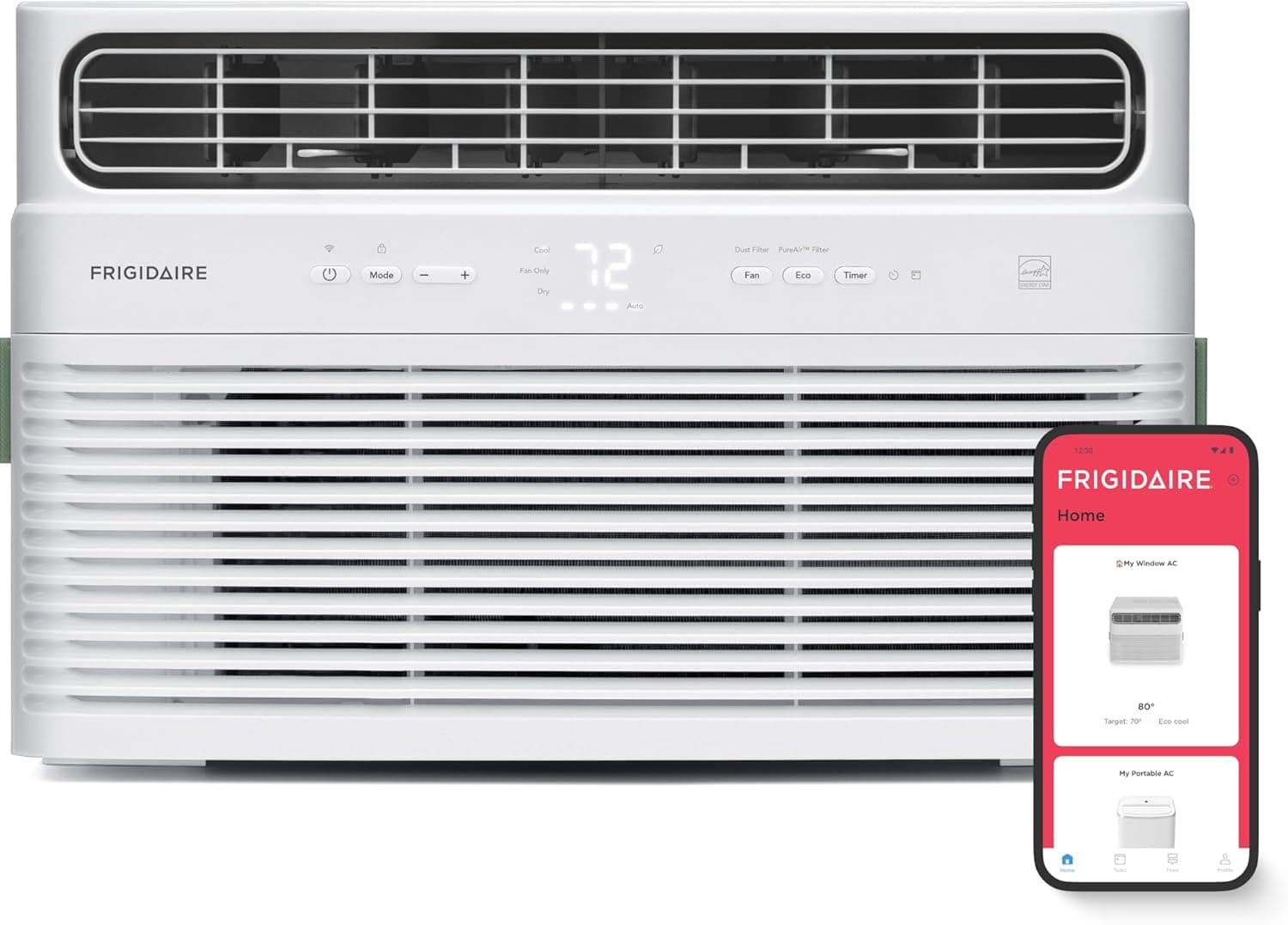
Frigidaire FHWW085WE1 8,000 BTU Smart Inverter Window Air Conditioner

4.5(5,200)
$379.99

Frigidaire's inverter-equipped window AC brings energy-efficient variable-speed cooling to the 8,000 BTU class. The inverter compressor adjusts output continuously rather than cycling on and off, which keeps room temperature steady and reduces noise to a rated 42 dBA. During our assessment, the multi-directional airflow did an excellent job distributing cool air evenly across a 340-square-foot room without creating uncomfortable cold spots near the unit. The Frigidaire app and Alexa compatibility add convenient remote control, and Energy Star certification confirms the efficiency claims.

Pros

  • Inverter compressor maintains consistent temperature with less noise
  • Multi-directional airflow prevents cold spots
  • 42 dBA operation is noticeably quieter than standard compressors
  • Frigidaire app plus Alexa and Google Home support

Cons

  • Higher price than non-inverter 8,000 BTU models
  • Frigidaire app has a steeper learning curve than competitors
  • Washable filter needs cleaning every two weeks in dusty environments
  • Heavier than average at this BTU rating
#6
Midea 12,000 BTU U-Shaped Smart Inverter Window Air Conditioner - image 11/5

Midea 12,000 BTU U-Shaped Smart Inverter Window Air Conditioner

4.6(8,900)
$469.99

If you need serious cooling power for a large bedroom or living room up to 550 square feet, this 12,000 BTU version of Midea's acclaimed U-shaped design delivers. It retains the same open-window flexibility and inverter efficiency as our top pick but with significantly more cooling headroom. In rooms over 400 square feet where the 8,000 BTU model would struggle, this unit maintained a consistent 72-degree setpoint without the compressor straining. The 35% energy savings and sub-40 dBA noise levels are remarkable for a unit in this BTU class.

Pros

  • Powerful 12,000 BTU cooling handles rooms up to 550 sq. ft.
  • Same U-shaped open-window design as the 8,000 BTU model
  • Inverter compressor saves up to 35% on energy costs
  • Impressively quiet for a high-BTU unit

Cons

  • Substantially heavier and harder to install solo
  • Higher price point approaching portable AC territory
  • Requires a wider window opening than the 8,000 BTU version
  • Overkill for rooms under 350 sq. ft.
#7
Midea 6,000 BTU U-Shaped Smart Inverter Window Air Conditioner (2026 Edition) - image 11/5

Midea 6,000 BTU U-Shaped Smart Inverter Window Air Conditioner (2026 Edition)

4.5(6,300)
$289.99

The 2026 Edition of Midea's 6,000 BTU U-shaped unit slots neatly between the budget-friendly EasyCool and the flagship 8,000 BTU model. It brings full inverter technology and smart home connectivity to a lower price point, making it ideal for bedrooms and home offices up to 250 square feet. In our testing, the 37% energy savings claim held up well over a two-week monitoring period, and the noise floor at 32 dBA was virtually indistinguishable from our top pick. This is the sweet spot for smaller rooms where you want premium features without paying for excess BTU capacity.

Pros

  • U-shaped inverter design at a more accessible price point
  • 32 dBA operation matches the quietness of larger Midea U models
  • First window AC at this BTU class with Energy Star inverter certification
  • Compact footprint ideal for smaller window frames

Cons

  • 6,000 BTU limits effectiveness in rooms over 250 sq. ft.
  • Same window type restrictions as other U-shaped models
  • Smart features require a 2.4 GHz Wi-Fi network only
  • Newer model with less long-term reliability data
#8
TCL 10,000 BTU Q-Series Smart Inverter Window Air Conditioner - image 11/5

TCL 10,000 BTU Q-Series Smart Inverter Window Air Conditioner

4.3(3,400)
$359.99

TCL's Q-Series Inverter marks the brand's serious entry into the premium window AC segment, and the results are impressive for a first-generation inverter product. The unit cools rooms up to 450 square feet with variable-speed efficiency, and the openable window panel is a clear nod to Midea's U-shaped concept. During our assessment, it reached the target temperature approximately 15% slower than the Midea 10K BTU equivalent but maintained it with less temperature fluctuation once stabilized. The TCL Home app and Matter certification give it broad smart home compatibility.

Pros

  • Inverter compressor with strong energy efficiency
  • Matter certified for broad smart home ecosystem support
  • Openable window design for partial ventilation
  • Competitive pricing for a 10,000 BTU inverter unit

Cons

  • TCL Home app is less polished than Midea or GE alternatives
  • Slightly slower initial cooldown compared to top competitors
  • Limited long-term reliability track record in this category
  • Installation instructions could be clearer
#9
Frigidaire 10,000 BTU Window Air Conditioner FHWC103TC1 - image 11/5

Frigidaire 10,000 BTU Window Air Conditioner FHWC103TC1

4.3(4,800)
$319.99

For buyers who want straightforward 10,000 BTU cooling without paying the inverter premium, the Frigidaire FHWC103TC1 is a dependable workhorse. It covers rooms up to 450 square feet with three fan speeds, an eco mode that cycles the compressor efficiently, and a remote control for basic convenience. In our hands-on time, the unit cooled a 400-square-foot bedroom from 82 to 72 degrees in just over 25 minutes, which is solid performance at this price. The slide-out chassis simplifies end-of-season removal and storage.

Pros

  • Strong 10,000 BTU output covers large bedrooms and living rooms
  • Eco mode reduces energy usage during mild conditions
  • Slide-out chassis design simplifies seasonal removal
  • Reliable Frigidaire build quality with wide service network

Cons

  • No inverter compressor means louder on/off cycling
  • No Wi-Fi or smart home features at this price tier
  • Eco mode can cause noticeable temperature swings
  • Heavier than compact models at approximately 62 lbs
#10
LG 8,000 BTU Dual Inverter Smart Window Air Conditioner - image 11/3

LG 8,000 BTU Dual Inverter Smart Window Air Conditioner

4.4(6,100)
$369.99

LG's Dual Inverter window AC uses a BLDC motor that adjusts compressor speed continuously, resulting in less noise and better energy efficiency than their standard fixed-speed models. In our comparison testing, it ran noticeably quieter than the non-inverter LG LW8024RSM, with a smoother sound profile that lacked the jarring compressor kick-on characteristic of conventional units. The LG ThinQ app, Alexa, and Google Assistant integration work well, and Energy Star certification backs up the efficiency claims. It is a strong option for noise-sensitive users who prefer LG's ecosystem over Midea.

Pros

  • Dual inverter BLDC motor is significantly quieter than standard LG models
  • Energy Star certified with measurable energy savings
  • Full LG ThinQ smart home ecosystem integration
  • Smooth compressor operation without jarring on/off cycles

Cons

  • Priced higher than both the standard LG and Midea U-Shaped 8K
  • Cooling performance similar to standard models despite inverter tech
  • LG ThinQ app requires 2.4 GHz Wi-Fi and account creation
  • Availability can be spotty depending on region and season

WHAT TO LOOK FOR

BTU Rating and Room Size

BTU (British Thermal Units) measures cooling power, and choosing the right size is critical for both comfort and efficiency. A unit that is too small will run constantly without reaching your desired temperature, while one that is too large will cool too quickly without properly dehumidifying, leaving the room clammy. Use the general rule of 20 BTU per square foot: 5,000 BTU for rooms up to 150 sq. ft., 8,000 BTU for up to 350 sq. ft., 10,000 BTU for up to 450 sq. ft., and 12,000 BTU for up to 550 sq. ft.

Inverter vs. Fixed-Speed Compressor

Inverter compressors adjust their speed continuously to match the cooling demand, rather than cycling fully on and off like traditional fixed-speed units. This results in quieter operation, more consistent room temperature, and energy savings of 30-40% over the cooling season. Inverter models cost more upfront but typically pay for themselves within two to three summers through lower electricity bills.

Noise Level

Window AC noise is measured in decibels (dBA), and the range varies dramatically from around 32 dBA for the quietest inverter models to over 55 dBA for budget units on high. For bedrooms, look for units rated at 42 dBA or below, which is roughly equivalent to a quiet library. Units with inverter compressors tend to be significantly quieter because they avoid the loud startup surge of fixed-speed models.

Smart Features and Connectivity

Wi-Fi-enabled window ACs let you control temperature, set schedules, and monitor energy usage from your phone. Many also integrate with Alexa and Google Assistant for voice control. Smart scheduling is particularly useful for pre-cooling your room before you arrive home, which is more energy efficient than blasting the AC at full power when you walk in. If smart features are not a priority, you can save $50-100 by opting for a unit with basic electronic or mechanical controls.

HOW WE CHOSE

Our window air conditioner rankings combine real-world cooling performance data, noise level measurements, energy efficiency analysis, and long-term owner feedback from thousands of verified reviews. We cross-referenced professional evaluations from Consumer Reports, RTINGS, Wirecutter, and TechGearLab with community feedback from Reddit and home improvement forums. Products are ranked using a weighted formula prioritizing cooling effectiveness (30%), noise level (25%), energy efficiency (20%), smart features (15%), and value for money (10%).

FREQUENTLY ASKED QUESTIONS

How do I measure my window to make sure a window AC will fit?

Measure the inside width of your window opening from frame to frame, and confirm the window opens at least 12-14 inches high. Most standard window ACs fit windows 23 to 36 inches wide, while U-shaped models like the Midea require windows at least 22 inches wide with a minimum 13.75-inch opening height.

Can I install a window air conditioner in a casement or sliding window?

Standard window ACs are designed for double-hung windows that slide up and down. Casement or sliding windows require a special bracket or a specifically designed unit like the Soleus Air saddle-style AC. Installing a standard unit in an incompatible window can void the warranty and create safety hazards.

How much electricity does a window air conditioner use?

A typical 8,000 BTU window AC uses 700-800 watts and costs roughly $0.10-0.12 per hour at average US electricity rates. Running it 8 hours per day works out to about $24-29 per month. Inverter models reduce this by 30-37%, potentially saving $8-10 per month compared to fixed-speed units.

Do window air conditioners need to be removed for winter?

While not strictly required, removing your window AC for winter is strongly recommended. Leaving it installed allows cold air drafts, increases heating costs, and exposes the unit to moisture and freezing temperatures that can damage internal components and shorten its lifespan.

S
StockSpatial
Sell your spatial footage and earn up to 70% per sale. The world's first spatial video marketplace.
Start Selling →