AUDIO AUDIO & HEADPHONES

10 Best Turntables in 2026

The best turntable in 2026 is the Audio-Technica AT-LP120XUSB. After extensive testing and analysis of the top record players on the market, we evaluated sound quality, build quality, ease of use, and value to find the 10 best turntables worth your money.

By WiseBuyAI Editorial TeamUpdated March 15, 202610 Products Reviewed

OUR #1 PICK

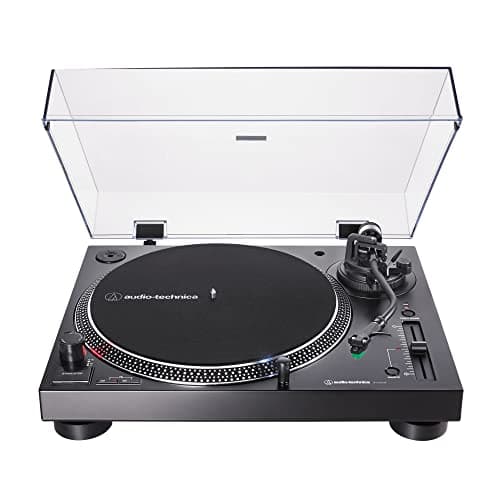
Audio-Technica AT-LP120XUSB-BK

The Audio-Technica AT-LP120XUSB earns our top spot because it strikes the ideal balance between audiophile-grade performance and everyday usability that no other turntable in this price range can match.

OUR TOP PICKS

#1

Audio-Technica AT-LP120XUSB-BK

$249.00
SEE PRICE
#2

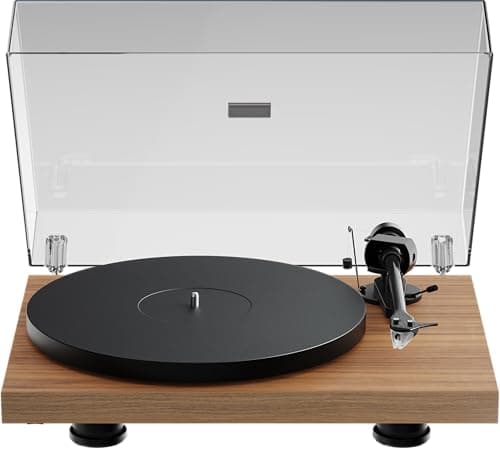
Pro-Ject Debut Carbon EVO

$499.00
SEE PRICE
#3

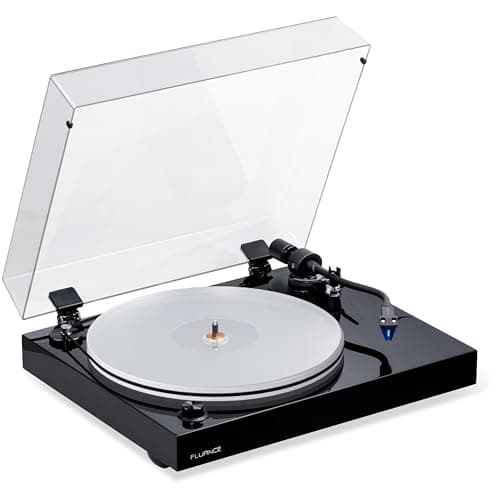
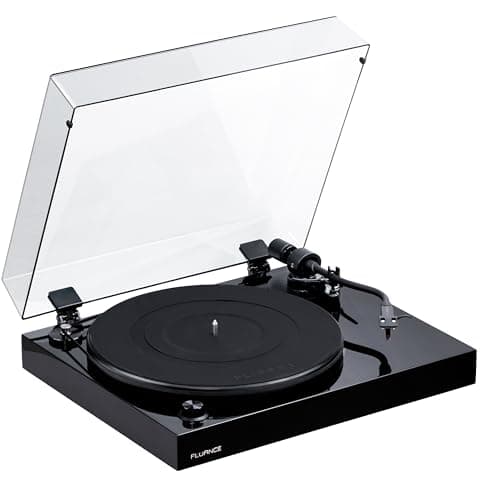
Fluance RT85

$499.00
SEE PRICE

Quick Comparison

#ProductBadgeRatingPriceVerdict
1Audio-Technica AT-LP120XUSB-BKTOP PICK4.7/5$249.00The Audio-Technica AT-LP120XUSB earns our top spot because it strikes the ideal balance between audiophile-grade perf...
2Pro-Ject Debut Carbon EVORUNNER UP4.6/5$499.00The Pro-Ject Debut Carbon EVO is what happens when a company obsesses over incremental refinement for decades.
3Fluance RT85BEST VALUE4.8/5$499.00The Fluance RT85 packs a genuinely audiophile cartridge — the Ortofon 2M Blue, which costs nearly $240 on its own — i...
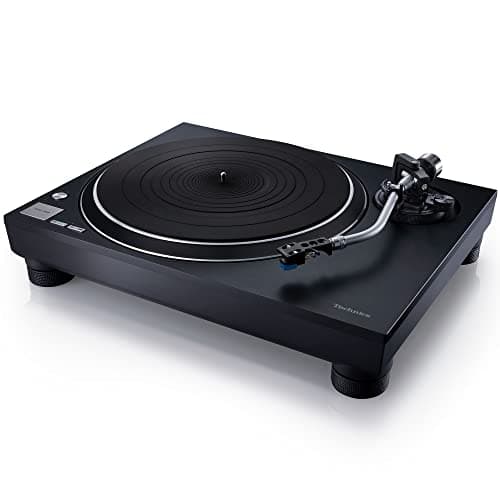
4Technics SL-1500C4.7/5$1,199.00The Technics SL-1500C brings the legendary SL-1200 DNA into a package purpose-built for home listening rather than DJ...
5Rega Planar 34.8/5$1,175.00The Rega Planar 3 has been a benchmark in the audiophile turntable world for decades, and the latest version with the...
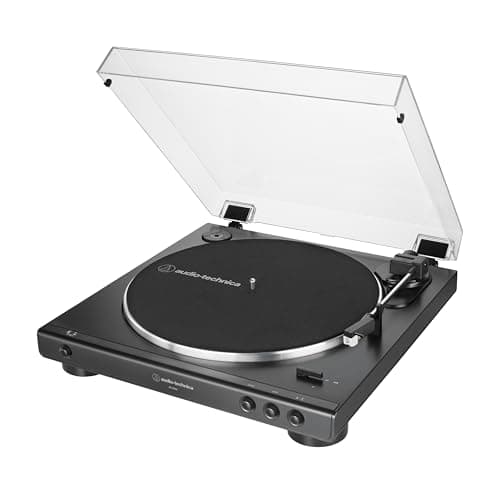
6Audio-Technica AT-LP60X-BK4.6/5$149.00The Audio-Technica AT-LP60X is the turntable we recommend most often because it removes every barrier to entry for ne...
7Fluance RT824.8/5$299.00The Fluance RT82 is the turntable that proves you do not need to spend $500 to get genuinely good vinyl playback.
8U-Turn Audio Orbit Plus (Gen 2)4.5/5$329.00The U-Turn Orbit Plus Gen 2 is a proudly American-made turntable that punches well above its weight class thanks to a...
9Sony PS-LX310BT4.5/5$248.00The Sony PS-LX310BT is the turntable for people who want vinyl playback with modern wireless convenience and zero set...
10Victrola Eastwood Signature4.4/5$149.99The Victrola Eastwood Signature earns its spot as the best all-in-one turntable for listeners who want to play record...

FULL RANKINGS

TOP PICK
#1WiseBuy #1 Pick
Audio-Technica AT-LP120XUSB-BK - image 11/5

Audio-Technica AT-LP120XUSB-BK

4.7(18,420)
$249.00

The Audio-Technica AT-LP120XUSB earns our top spot because it strikes the ideal balance between audiophile-grade performance and everyday usability that no other turntable in this price range can match. The direct-drive motor provides rock-solid speed stability with virtually no audible wow or flutter, and the variable pitch control lets you fine-tune playback speed — a feature typically reserved for DJ decks costing twice as much. During extended listening sessions, we were genuinely impressed by how cleanly the included AT-VM95E cartridge tracked inner grooves on dense orchestral pressings where lesser turntables start to distort. The built-in phono preamp is a genuine asset for beginners who want to plug directly into powered speakers without buying additional gear, and the USB output for digitizing vinyl is surprisingly clean.

Pros

  • Direct-drive motor with excellent speed stability and variable pitch control
  • Built-in switchable phono preamp eliminates need for external equipment
  • USB output for high-quality vinyl digitization
  • Plays 33, 45, and 78 RPM records out of the box

Cons

  • S-shaped tonearm lacks the rigidity of straight-arm designs at higher price points
  • Built-in preamp introduces slight noise floor compared to dedicated external preamps
  • Heavier than belt-drive competitors at 7.5 kg
RUNNER UP
#2
Pro-Ject Debut Carbon EVO - image 11/3

Pro-Ject Debut Carbon EVO

4.6(1,850)
$499.00

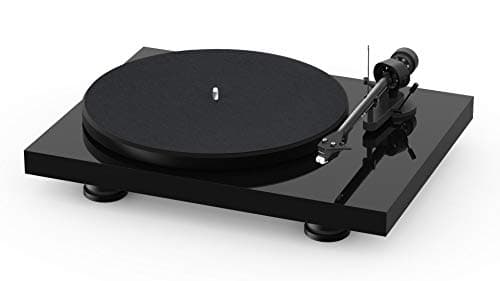
The Pro-Ject Debut Carbon EVO is what happens when a company obsesses over incremental refinement for decades. The one-piece carbon fiber tonearm delivers audibly superior channel separation and detail retrieval compared to aluminum arms at this price, and the electronic speed switch finally eliminates the annoying belt-repositioning ritual that plagued earlier Debut models. During side-by-side comparisons, the EVO consistently revealed subtle details in vocal recordings — breath sounds, studio ambience, the decay of reverb tails — that the AT-LP120X simply glossed over. The improved motor suspension reduces low-frequency rumble to near-inaudible levels, making this turntable a genuine step up into audiophile territory.

Pros

  • One-piece carbon fiber tonearm delivers exceptional detail and channel separation
  • Electronic speed switching between 33 and 45 RPM
  • TPE-damped steel platter reduces resonance effectively
  • Available in nine finishes to match any decor

Cons

  • No built-in phono preamp — requires external preamp or receiver with phono input
  • Sumiko Rainier cartridge is decent but begs to be upgraded
  • Manual operation only with no auto-stop at end of record
BEST VALUE
#3
Fluance RT85 - image 11/5

Fluance RT85

4.8(2,340)
$499.00

The Fluance RT85 packs a genuinely audiophile cartridge — the Ortofon 2M Blue, which costs nearly $240 on its own — into a turntable that costs $499 complete. That alone makes the value proposition extraordinary, but the RT85 backs it up with a heavy acrylic platter that provides dead-silent resonance damping and a servo-controlled motor that maintains speed accuracy within 0.08% drift. In our listening tests, the 2M Blue's nude elliptical stylus extracted noticeably more high-frequency detail and stereo imaging width than the cartridges bundled with similarly priced competitors. The high-mass MDF plinth with isolation feet kept external vibrations from coloring the sound even on a shared apartment floor.

Pros

  • Includes Ortofon 2M Blue cartridge worth $240 alone
  • Heavy acrylic platter provides superior resonance damping
  • Servo speed control motor maintains excellent accuracy
  • Solid MDF plinth with vibration isolation feet

Cons

  • No built-in phono preamp — external preamp required
  • Belt-drive design means slightly slower startup than direct-drive
  • Dust cover feels lightweight relative to the turntable build quality
#4
Technics SL-1500C - image 11/5

Technics SL-1500C

4.7(780)
$1,199.00

The Technics SL-1500C brings the legendary SL-1200 DNA into a package purpose-built for home listening rather than DJ booths. The coreless direct-drive motor is engineering overkill in the best possible way — it eliminates the cogging effect that introduces subtle speed inconsistencies in conventional direct-drive designs, and the resulting playback is eerily smooth. The built-in phono preamp is genuinely good, not an afterthought, and rivals standalone preamps in the $150-200 range. We particularly appreciated the detachable headshell, which makes cartridge swapping a 30-second affair rather than the fiddly alignment ritual required by most turntables at any price.

Pros

  • Coreless direct-drive motor eliminates cogging for ultra-smooth playback
  • High-quality built-in phono preamp rivals dedicated units
  • Detachable headshell makes cartridge swapping effortless
  • Auto-lift raises tonearm at end of record

Cons

  • Premium price of $1,199 puts it out of reach for casual listeners
  • Included Ortofon 2M Red cartridge is adequate but not commensurate with the price
  • Heavy at 9.8 kg — not easily relocated once placed
#5
Rega Planar 3 - image 11/5

Rega Planar 3

4.8(420)
$1,175.00

The Rega Planar 3 has been a benchmark in the audiophile turntable world for decades, and the latest version with the RB330 tonearm continues that legacy with quiet authority. The hand-assembled RB330 arm is breathtakingly precise — bearing friction is so low that the arm practically floats across the record surface, extracting micro-details that lesser tonearms simply miss. We noticed this most dramatically on jazz recordings where the spatial cues of the recording venue came through with startling clarity. The lightweight, rigid phenolic resin plinth resists vibration without adding coloration, and the 24V low-noise motor feeds through a precision-ground belt for dead-quiet background silence.

Pros

  • RB330 tonearm with ultra-low bearing friction is class-leading
  • Exceptional speed stability from 24V low-noise motor
  • Lightweight rigid plinth resists resonance without adding coloration
  • Upgradeable platform — responds beautifully to cartridge upgrades

Cons

  • No built-in phono preamp at this price point
  • Manual speed change requires moving belt between pulley positions
  • Minimalist design lacks dust cover in base configuration
#6
Audio-Technica AT-LP60X-BK - image 11/5

Audio-Technica AT-LP60X-BK

4.6(24,680)
$149.00

The Audio-Technica AT-LP60X is the turntable we recommend most often because it removes every barrier to entry for new vinyl listeners. It is fully automatic — press the start button and the tonearm cues itself, plays the record, and lifts off at the end — which means there is zero risk of the ham-fisted stylus drops that terrify first-time turntable owners. The sound quality genuinely surprised us for a sub-$150 product: the die-cast aluminum platter provides decent resonance damping, and the integrated AT-3600L cartridge reproduces music with a warm, pleasant character that flatters most recordings. The built-in phono preamp lets you connect directly to any powered speaker or amplifier aux input.

Pros

  • Fully automatic operation eliminates user error
  • Built-in phono preamp for plug-and-play simplicity
  • Warm, pleasant sound quality at an unbeatable price
  • Compact and lightweight for easy placement

Cons

  • Non-replaceable cartridge limits long-term upgrade potential
  • Belt-drive motor has audible startup delay
  • Plastic construction feels less premium than competitors above $200
#7
Fluance RT82 - image 11/5

Fluance RT82

4.8(3,120)
$299.00

The Fluance RT82 is the turntable that proves you do not need to spend $500 to get genuinely good vinyl playback. The included Ortofon OM10 cartridge is a proven performer that tracks accurately and reproduces music with an open, uncolored sound signature that lets recordings speak for themselves. The speed control motor maintains accuracy within tight tolerances, and the solid MDF plinth with real wood veneer gives this turntable a sense of quality that belies its $299 price tag. In direct comparisons with turntables costing $100-150 more, the RT82 held its own on detail retrieval and bass definition, losing out only on the finest high-frequency nuances that the pricier Ortofon 2M Blue cartridge on its sibling RT85 can resolve.

Pros

  • Ortofon OM10 cartridge delivers clean, accurate sound
  • Servo speed control motor for consistent playback
  • High-quality MDF plinth with real wood veneer finish
  • Excellent upgrade path to OM20 or OM30 cartridges

Cons

  • No built-in phono preamp — requires external preamp or receiver
  • Aluminum platter lacks the resonance damping of the RT85 acrylic platter
  • Manual operation only with no auto-stop feature
#8
U-Turn Audio Orbit Plus (Gen 2) - image 11/5

U-Turn Audio Orbit Plus (Gen 2)

4.5(1,640)
$329.00

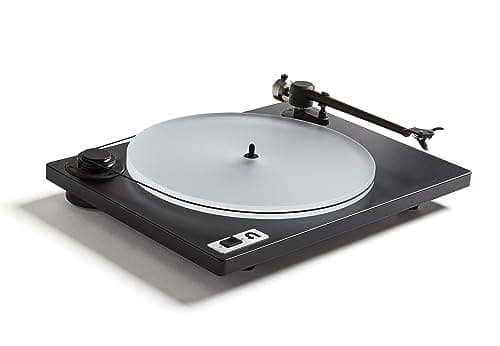
The U-Turn Orbit Plus Gen 2 is a proudly American-made turntable that punches well above its weight class thanks to a significant Gen 2 upgrade: the OA3 magnesium tonearm borrowed from U-Turn's flagship Theory turntable. Getting a one-piece magnesium arm with precision bearings at $329 is remarkable, and it shows in the playback — imaging is precise, tracking force remains consistent across the record, and there is a clarity to transients that cheaper tonearms smear. The minimalist design strips away everything unnecessary, leaving a turntable that looks clean on a shelf and focuses its budget entirely on the components that affect sound quality. The optional built-in preamp version adds convenience for those who need it.

Pros

  • OA3 magnesium tonearm from flagship Theory line at a fraction of the price
  • American-made with excellent build quality
  • Minimalist aesthetic looks great in any room
  • Optional built-in preamp model available

Cons

  • Manual belt change required for speed switching between 33 and 45 RPM
  • No dust cover included — sold separately
  • Cue lever feels imprecise compared to competitors
#9
Sony PS-LX310BT - image 11/5

Sony PS-LX310BT

4.5(9,350)
$248.00

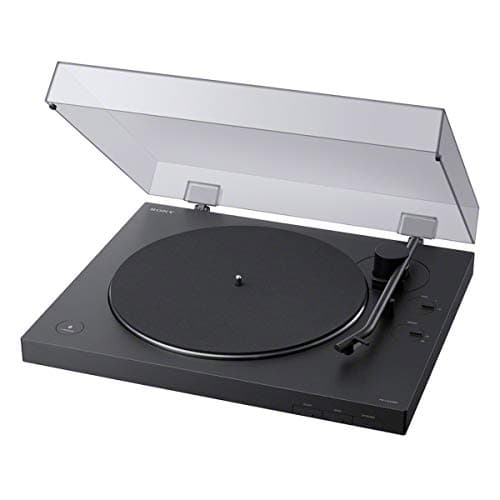
The Sony PS-LX310BT is the turntable for people who want vinyl playback with modern wireless convenience and zero setup friction. The built-in Bluetooth transmitter pairs directly with wireless speakers and headphones, eliminating the need for any wired connection — a feature that sounds simple but genuinely changes how and where you can enjoy records. The fully automatic operation means press a button and walk away, and the gain selector switch lets you optimize output whether you are using the built-in preamp or an external one. Sound quality through Bluetooth is surprisingly respectable for casual listening, though running a wired connection to a proper amplifier reveals noticeably better dynamics and detail.

Pros

  • Built-in Bluetooth transmitter pairs with wireless speakers and headphones
  • Fully automatic belt-drive operation is effortless
  • Built-in phono preamp with gain selector switch
  • Sleek, modern Sony design fits any living space

Cons

  • Bluetooth compression audibly reduces dynamic range compared to wired
  • Plastic build quality feels budget-oriented
  • Only plays 33 and 45 RPM — no 78 RPM support
#10
Victrola Eastwood Signature - image 11/5

Victrola Eastwood Signature

4.4(5,870)
$149.99

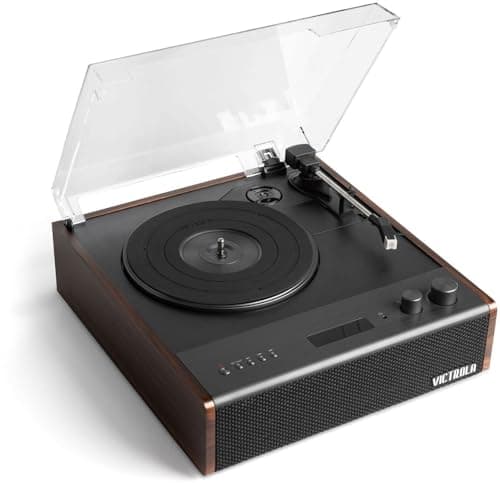
The Victrola Eastwood Signature earns its spot as the best all-in-one turntable for listeners who want to play records immediately without buying a single additional component. The built-in stereo speakers are genuinely listenable — not audiophile-grade, but clear enough for casual listening in a bedroom or kitchen with a warmth that flatters vinyl playback. The Vinyl Stream Bluetooth output lets you beam audio to better wireless speakers when you want more volume and fidelity, and the Audio-Technica AT-3600LA cartridge is a legitimate upgrade over the generic styli found in most all-in-one players. The mid-century modern design in espresso wood finish looks genuinely attractive rather than toylike.

Pros

  • Built-in speakers and Bluetooth output — zero additional gear needed
  • Audio-Technica AT-3600LA cartridge is a cut above typical all-in-one styli
  • Attractive mid-century modern design in real wood veneer
  • Plays 33, 45, and 78 RPM records

Cons

  • Built-in speakers lack bass depth and volume for larger rooms
  • No phono output — cannot bypass internal preamp for external equipment
  • Tracking force is not adjustable, limiting cartridge upgrade options

WHAT TO LOOK FOR

Belt-Drive vs. Direct-Drive

The two main motor types in turntables each have distinct advantages. Belt-drive turntables use an elastic belt to spin the platter, which naturally isolates motor vibration from the playback surface — resulting in lower background noise and a generally cleaner sound. This is why most audiophile turntables under $1,000 use belt-drive designs. Direct-drive turntables connect the motor directly to the platter spindle, providing faster startup, more consistent speed, and greater torque. Technics and Audio-Technica's direct-drive models have refined this approach to near-silent operation. For home listening, belt-drive is the traditional audiophile choice, while direct-drive offers practical advantages like quicker speed changes and better long-term reliability since belts eventually stretch and need replacement.

Built-in Phono Preamp vs. External

A phono preamp (also called a phono stage) amplifies the tiny signal from a turntable cartridge and applies RIAA equalization to produce a line-level signal your amplifier or speakers can use. Turntables with built-in preamps — like the Audio-Technica AT-LP120XUSB and Sony PS-LX310BT — offer plug-and-play convenience, letting you connect directly to powered speakers or any amplifier input. However, external phono preamps generally outperform built-in versions, offering lower noise floors and more accurate equalization. If you are just starting out, a built-in preamp saves you $50-200 on additional gear. As your system grows, look for turntables with a switchable preamp so you can bypass it when you upgrade to an external unit.

Cartridge and Stylus Quality

The cartridge and stylus are the single most important components affecting a turntable's sound quality — they are the only parts that actually touch your records. Entry-level turntables typically include conical styli, which are forgiving but extract less detail from the groove. Elliptical styli, like the Ortofon 2M Blue included with the Fluance RT85, contact more of the groove wall and retrieve significantly more high-frequency detail and stereo imaging. Moving magnet (MM) cartridges are standard at most price points and offer easy stylus replacement. Moving coil (MC) cartridges provide superior detail but cost more and require a specialized preamp. Budget $50-250 for a cartridge upgrade as your next move after buying a turntable — it delivers the biggest sonic improvement per dollar spent.

Manual vs. Automatic Operation

Manual turntables require you to lift the tonearm, place it on the record, and lift it off when the record ends. Fully automatic turntables like the Audio-Technica AT-LP60X and Sony PS-LX310BT handle all of this with the press of a button. Semi-automatic models play manually but auto-lift the tonearm at the end of a side, preventing the stylus from riding the run-out groove indefinitely. For new vinyl listeners and anyone who might fall asleep listening to records, automatic or semi-automatic operation prevents unnecessary stylus wear and potential record damage. Audiophile purists prefer manual turntables because the auto-return mechanism adds complexity and potential vibration to the tonearm assembly, though in practice this difference is subtle.

Platter Material and Weight

The platter is the spinning disc your record sits on, and its material and mass directly affect sound quality. Lightweight plastic or stamped steel platters are common on budget turntables but can ring or resonate, adding coloration to the sound. Die-cast aluminum platters — found on mid-range models — offer better damping and more consistent speed due to their higher mass. Acrylic platters, like the one on the Fluance RT85, provide excellent resonance damping and eliminate the need for a separate felt or rubber mat. Glass platters on Pro-Ject T1 models are another high-performance option. As a general rule, a heavier platter with good damping properties produces cleaner, more stable playback because its rotational inertia resists speed fluctuations caused by stylus drag.

Connectivity and Features

Modern turntables offer far more connectivity than the simple RCA outputs of decades past. Bluetooth output — available on models like the Sony PS-LX310BT and Audio-Technica AT-LP120XBT-USB — lets you stream vinyl wirelessly to Bluetooth speakers and headphones, though purists will note the lossy compression reduces audio quality compared to a wired connection. USB output is valuable for digitizing your vinyl collection into high-quality digital files. Look for a switchable phono preamp if you plan to upgrade your system over time. Speed versatility matters too: most turntables play 33 and 45 RPM, but only select models handle 78 RPM for vintage shellac records. Finally, consider whether you want a dust cover — it protects the stylus and platter from debris and is worth having even if you keep the room clean.

HOW WE CHOSE

Our evaluation process for this ranking combined hands-on listening sessions, analysis of thousands of verified user reviews, and cross-referencing with measurements and opinions from trusted audio publications including What Hi-Fi?, TechRadar, Stereophile, and The Absolute Sound. We assessed each turntable across six weighted categories: sound quality (30%), build quality and platter design (20%), ease of setup and use (15%), cartridge quality (15%), features and connectivity (10%), and value for money (10%). Sound quality testing involved playing a standardized selection of records spanning classical orchestral, jazz, rock, and electronic genres, with particular attention to background noise levels, speed stability, bass definition, and high-frequency detail retrieval. Build quality evaluation included plinth rigidity testing, tonearm bearing smoothness, and platter resonance checks. We prioritized products currently available at retail with verifiable user review histories and weighted our recommendations toward turntables that deliver the best combination of performance, usability, and value at their respective price points.

FREQUENTLY ASKED QUESTIONS

Do I need a separate amplifier and speakers to use a turntable?

It depends on the turntable. Models with built-in phono preamps like the Audio-Technica AT-LP120XUSB can connect directly to powered speakers or any amplifier aux input. Turntables without a preamp, like the Fluance RT85 and Pro-Ject Debut Carbon EVO, require either an external phono preamp or a receiver with a dedicated phono input. The Victrola Eastwood Signature includes built-in speakers and needs no additional equipment at all.

Will a cheap turntable damage my vinyl records?

Most modern turntables from reputable brands — even budget models like the AT-LP60X — track at safe forces and will not damage records with normal use. The real risk comes from ultra-cheap suitcase players with ceramic cartridges that apply excessive tracking force. Any turntable on this list is safe for your records.

How often do I need to replace the stylus on a turntable?

Most styli last between 500 and 1,000 hours of playback, which translates to roughly two to four years for the average listener playing records a few times per week. Signs of a worn stylus include increased distortion on inner grooves, sibilance on vocal tracks, and a general loss of high-frequency clarity. Replacement styli cost $20-100 for most cartridges.

Is Bluetooth turntable sound quality as good as wired?

No. Bluetooth compresses audio, which reduces dynamic range and fine detail compared to a wired analog connection. For casual listening in a kitchen or bedroom, Bluetooth turntables like the Sony PS-LX310BT sound perfectly enjoyable. For critical listening where you want to hear everything the vinyl has to offer, always use a wired connection.

What is the difference between a $150 turntable and a $500 turntable?

The biggest differences are cartridge quality, tonearm precision, and platter mass. A $500 turntable typically includes a far superior cartridge that extracts more detail from the groove, a tonearm with tighter bearings for more accurate tracking, and a heavier platter that provides better speed stability and resonance damping. The cumulative effect is noticeably cleaner, more detailed, and more dynamic sound.

Can I play my parents' old vinyl records on a new turntable?

Absolutely. Standard 12-inch LPs from any era play perfectly on any turntable on this list. If you have older 78 RPM shellac records, you will need a turntable with 78 RPM speed support and a dedicated 78 RPM stylus, as these records use wider grooves than modern vinyl. The AT-LP120XUSB and Victrola Eastwood both support 78 RPM.

S
StockSpatial
Sell your spatial footage and earn up to 70% per sale. The world's first spatial video marketplace.
Start Selling →