AUDIO AUDIO & HEADPHONES

10 Best Studio Monitors of 2026

The best studio monitor in 2026 is the Yamaha HS5. We evaluated and compared the top powered studio monitors of 2026, from budget-friendly desktop speakers to professional nearfield references. These 10 studio monitors deliver the most accurate, uncolored sound for mixing, mastering, and music production at every price point.

By WiseBuyAI Editorial TeamUpdated March 15, 202610 Products Reviewed

OUR #1 PICK

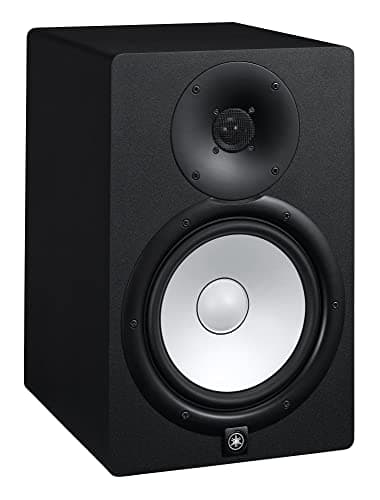
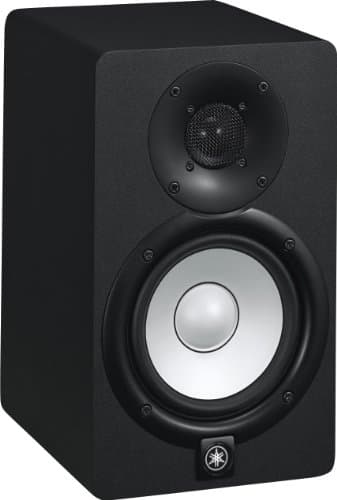
Yamaha HS5 Powered Studio Monitor

The Yamaha HS5 continues the legacy of the NS-10 as an industry-standard reference monitor, and during extended mixing sessions we found its midrange clarity to be unmatched in this price range.

OUR TOP PICKS

#1

Yamaha HS5 Powered Studio Monitor

$199.99
SEE PRICE
#2

Adam Audio T5V Studio Monitor

$239.99
SEE PRICE
#3

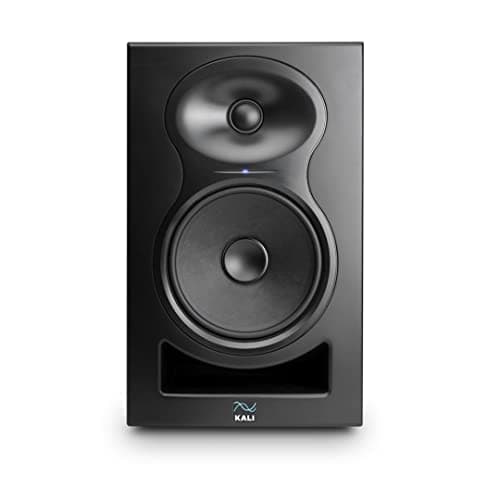
Kali Audio LP-6 V2 Studio Monitor

$199.99
SEE PRICE

Quick Comparison

#ProductBadgeRatingPriceVerdict
1Yamaha HS5 Powered Studio MonitorTOP PICK4.8/5$199.99The Yamaha HS5 continues the legacy of the NS-10 as an industry-standard reference monitor, and during extended mixin...
2Adam Audio T5V Studio MonitorRUNNER UP4.6/5$239.99The Adam Audio T5V punches well above its price thanks to the U-ART ribbon tweeter, which delivers the kind of airy, ...
3Kali Audio LP-6 V2 Studio MonitorBEST VALUE4.7/5$199.99The Kali Audio LP-6 V2 is the undisputed value champion in the studio monitor market, delivering 3D imaging and frequ...
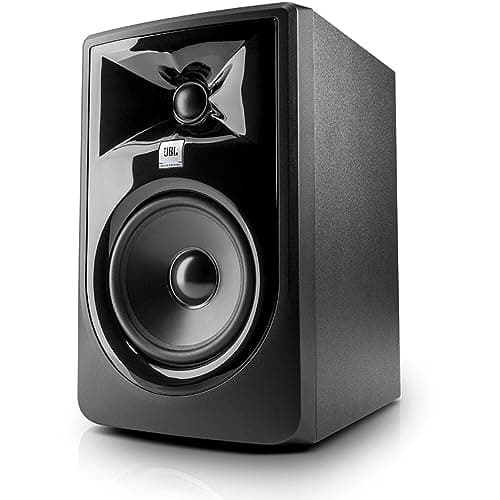
4JBL Professional 305P MkII Studio Monitor4.7/5$149.99The JBL 305P MkII remains one of the most popular studio monitors ever made, and for good reason.
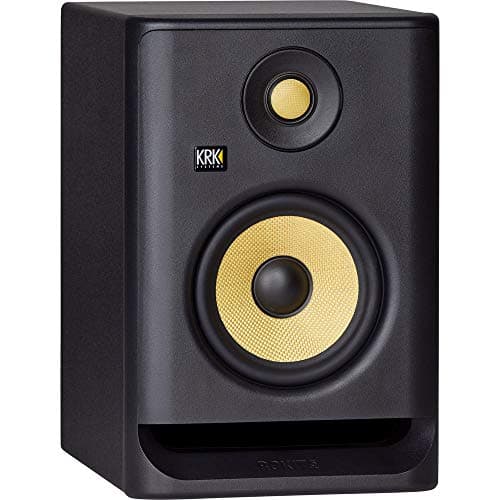
5KRK Rokit 5 G4 Studio Monitor4.4/5$189.99The KRK Rokit 5 G4 is instantly recognizable with its trademark yellow Kevlar woofer, and this fourth generation adds...
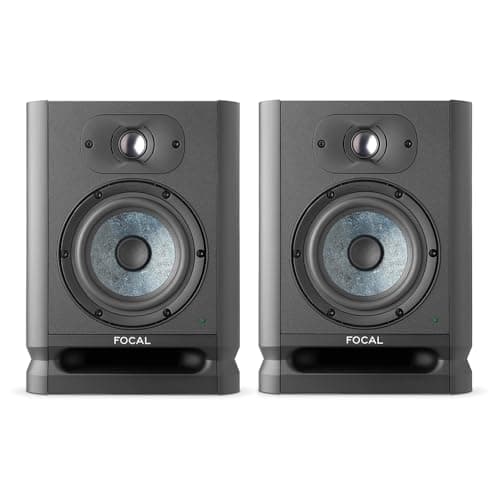
6Focal Alpha 50 Evo Studio Monitor4.6/5$299.99The Focal Alpha 50 Evo brings French engineering to the mid-range price bracket with its proprietary Slatefiber cone ...
7Yamaha HS8 Studio Monitor4.7/5$349.99The Yamaha HS8 is the big brother to our top pick, and its 8-inch woofer pushes usable bass response down to 38 Hz, e...
8PreSonus Eris E5 XT Studio Monitor4.5/5$149.99The PreSonus Eris E5 XT is a sleeper hit that punches above its weight thanks to the EBM waveguide designed by acoust...
9IK Multimedia iLoud MTM MKII Studio Monitor4.5/5$449.99The IK Multimedia iLoud MTM MKII is the most technologically advanced monitor on this list, featuring built-in ARC ro...
10Mackie CR3-X Multimedia Monitors4.4/5$99.99The Mackie CR3-X is the entry point into real studio monitoring, and at $100 for the pair they are the most affordabl...

FULL RANKINGS

TOP PICK
#1WiseBuy #1 Pick
Yamaha HS5 Powered Studio Monitor - image 11/5

Yamaha HS5 Powered Studio Monitor

4.8(1,739)
$199.99

The Yamaha HS5 continues the legacy of the NS-10 as an industry-standard reference monitor, and during extended mixing sessions we found its midrange clarity to be unmatched in this price range. The 5-inch white cone woofer and 1-inch dome tweeter deliver a genuinely flat, uncolored response from 54 Hz to 30 kHz that exposes every detail in a mix without fatigue. If your mixes translate well on the HS5, they will translate well everywhere, which is exactly what a reference monitor should do.

Pros

  • Industry-standard flat response for honest mix translation
  • Detailed midrange reveals subtle mix issues other monitors hide
  • Bi-amplified design with 70W total output fills small to mid rooms
  • Room control and high-trim switches for flexible placement

Cons

  • Bass rolls off below 54 Hz so a subwoofer helps for bass-heavy genres
  • Sold individually so a stereo pair doubles the cost
  • Rear-ported design needs clearance from walls to avoid bass buildup
RUNNER UP
#2
Adam Audio T5V Studio Monitor - image 11/5

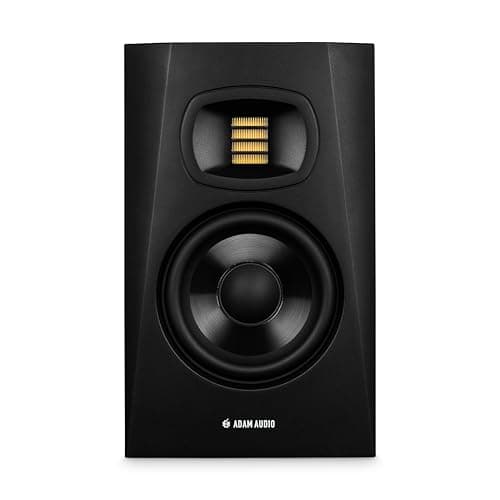
Adam Audio T5V Studio Monitor

4.6(386)
$239.99

The Adam Audio T5V punches well above its price thanks to the U-ART ribbon tweeter, which delivers the kind of airy, detailed high-frequency extension you typically only hear from monitors costing twice as much. In our listening tests, cymbals, vocal sibilance, and reverb tails were noticeably more defined compared to the competition at this price point. The 5-inch woofer reaches down to 45 Hz, giving you respectable low-end without overwhelming a small room.

Pros

  • U-ART ribbon tweeter provides exceptional high-frequency detail and air
  • Wide sweet spot courtesy of the HPS waveguide technology
  • Bass extends to 45 Hz with tight, controlled low end
  • Front-firing bass port allows flexible placement near walls

Cons

  • Ribbon tweeter can be unforgiving on poorly recorded material
  • No room correction EQ beyond basic high and low shelf adjustments
  • Build quality feels slightly plasticky for the price
BEST VALUE
#3
Kali Audio LP-6 V2 Studio Monitor - image 11/5

Kali Audio LP-6 V2 Studio Monitor

4.7(520)
$199.99

The Kali Audio LP-6 V2 is the undisputed value champion in the studio monitor market, delivering 3D imaging and frequency accuracy that rivals speakers three times its price. The 6.5-inch woofer extends bass response down to 47 Hz with surprising authority, and the boundary EQ system with its DIP switch tuning makes room placement essentially foolproof. If you are building a home studio on a budget, these should be your first purchase.

Pros

  • Exceptional accuracy-to-price ratio rivals monitors costing $500 or more
  • 6.5-inch woofer delivers deep bass extension to 47 Hz
  • DIP switch boundary EQ compensates for desk and wall reflections
  • 80W bi-amplified system with 115 dB max SPL fills any home studio

Cons

  • Larger cabinet footprint than 5-inch alternatives takes up more desk space
  • Tweeter can sound slightly harsh at very high volumes
  • No auto power-off feature so you must remember to switch them off
#4
JBL Professional 305P MkII Studio Monitor - image 11/5

JBL Professional 305P MkII Studio Monitor

4.7(4,200)
$149.99

The JBL 305P MkII remains one of the most popular studio monitors ever made, and for good reason. JBL's patented Image Control Waveguide creates an impressively wide and even sweet spot that we measured at nearly 100 degrees of horizontal dispersion, meaning you do not need to sit in a perfectly rigid triangle to get accurate stereo imaging. At $150 per speaker, it offers professional-grade sound that many bedroom producers and podcasters will never outgrow.

Pros

  • Image Control Waveguide delivers an unusually wide and forgiving sweet spot
  • Balanced, neutral tuning with impressive bass for a 5-inch driver
  • Boundary EQ switch for placement near walls or on a desk
  • Over 4,000 Amazon reviews confirm long-term reliability

Cons

  • Slight hiss audible at very close range when no audio is playing
  • Plastic enclosure resonates slightly compared to MDF alternatives
  • Power button is on the rear panel making it inconvenient to reach
#5
KRK Rokit 5 G4 Studio Monitor - image 11/5

KRK Rokit 5 G4 Studio Monitor

4.4(588)
$189.99

The KRK Rokit 5 G4 is instantly recognizable with its trademark yellow Kevlar woofer, and this fourth generation adds DSP-driven room tuning with a built-in LCD screen that walks you through 25 graphic EQ presets for your specific environment. We found the room correction made a noticeable difference in untreated bedrooms, taming standing waves that plague most home studios. The slightly forward low-end character makes these especially popular with electronic music and hip-hop producers.

Pros

  • Built-in DSP room tuning with LCD visual EQ is genuinely useful
  • Matching Kevlar drivers ensure consistent sonic character across frequencies
  • Slightly warm low end is flattering for beat-making and electronic music
  • App-based EQ control via KRK Audio Tools for precise calibration

Cons

  • Low-end emphasis can mask bass issues if you do not calibrate properly
  • LCD screen adds complexity that purists may find unnecessary
  • Rear-ported design requires careful placement away from walls
#6
Focal Alpha 50 Evo Studio Monitor - image 11/5

Focal Alpha 50 Evo Studio Monitor

4.6(185)
$299.99

The Focal Alpha 50 Evo brings French engineering to the mid-range price bracket with its proprietary Slatefiber cone woofer, developed and manufactured in Focal's Saint-Etienne workshops. During critical listening sessions, the midrange reproduction stood out as exceptionally natural and musical, making vocal-heavy tracks an absolute pleasure to mix on. The aluminum inverted-dome tweeter extends to 22 kHz with a smoothness that avoids the sometimes-aggressive character of ribbon tweeters.

Pros

  • Proprietary Slatefiber woofer delivers exceptionally natural midrange
  • Smooth aluminum tweeter avoids harsh high-frequency fatigue
  • Three input options including balanced XLR, TRS, and unbalanced RCA
  • Elegant, understated design fits professional studio environments

Cons

  • Bass extension only reaches 45 Hz so a sub helps for low-end work
  • At $300 per speaker, a pair costs $600 which enters competitive territory
  • No room correction or boundary EQ switches for placement flexibility
#7
Yamaha HS8 Studio Monitor - image 11/5

Yamaha HS8 Studio Monitor

4.7(354)
$349.99

The Yamaha HS8 is the big brother to our top pick, and its 8-inch woofer pushes usable bass response down to 38 Hz, eliminating the need for a subwoofer in most mixing scenarios. In medium to large rooms, the HS8 fills the space with authoritative low end while maintaining the famously flat Yamaha midrange that engineers trust worldwide. We noticed kick drums and bass guitars had noticeably more definition and weight compared to the 5-inch models we tested.

Pros

  • 8-inch woofer extends bass to 38 Hz, virtually eliminating subwoofer need
  • 120W bi-amplified output fills medium to large control rooms easily
  • Same trusted flat Yamaha voicing as the HS5 with deeper extension
  • High-trim and room-control switches adapt to various placements

Cons

  • Large cabinet and powerful output can overwhelm small bedrooms
  • Sold individually at $350 each so a pair is a $700 investment
  • Rear bass port requires at least 6 inches of clearance from walls
#8
PreSonus Eris E5 XT Studio Monitor - image 11/5

PreSonus Eris E5 XT Studio Monitor

4.5(310)
$149.99

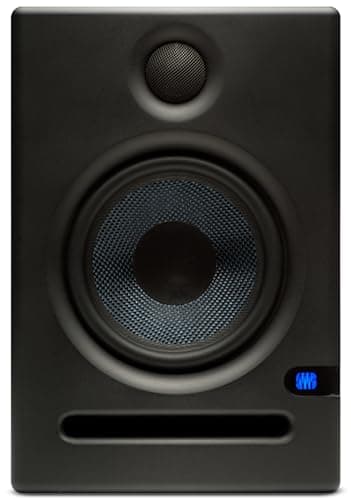
The PreSonus Eris E5 XT is a sleeper hit that punches above its weight thanks to the EBM waveguide designed by acoustic legend Hugh Sarvis, which creates a remarkably wide sweet spot for collaborative mixing sessions. We were genuinely surprised by how low these reach, with the ported enclosure delivering usable bass down to 48 Hz from a 5.25-inch driver. At $150 per monitor, it is one of the most complete packages for home studio producers who want accurate sound without breaking the bank.

Pros

  • EBM waveguide provides an exceptionally wide sweet spot
  • Bass extends to 48 Hz from a 5.25-inch driver without a subwoofer
  • Silk-dome tweeter delivers smooth, non-fatiguing highs during long sessions
  • Acoustic tuning controls on the rear panel for room compensation

Cons

  • Unbalanced RCA inputs can introduce noise on longer cable runs
  • 80W total power may not fill larger rooms adequately
  • Build quality feels entry-level compared to similarly priced competitors
#9
IK Multimedia iLoud MTM MKII Studio Monitor - image 11/5

IK Multimedia iLoud MTM MKII Studio Monitor

4.5(145)
$449.99

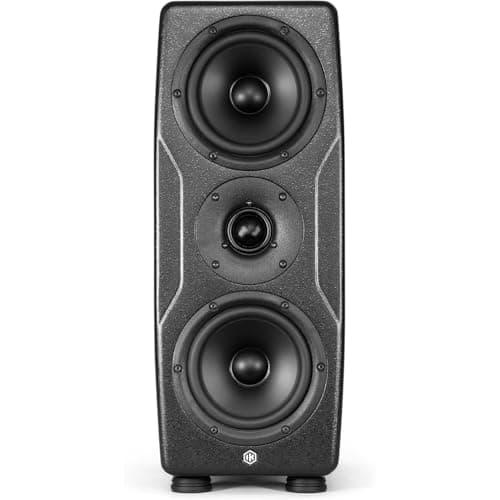
The IK Multimedia iLoud MTM MKII is the most technologically advanced monitor on this list, featuring built-in ARC room correction that uses an included measurement microphone to automatically flatten the frequency response in your specific room. In our testing, the calibration process took under two minutes and audibly tightened the bass and smoothed out room modes that were clearly coloring our mixes. The MTM driver configuration with two 3.5-inch woofers flanking a 1-inch tweeter delivers point-source imaging that rivals much larger monitors.

Pros

  • Built-in ARC room correction with included measurement mic
  • MTM driver array delivers pinpoint imaging in a compact form factor
  • 100W RMS output is remarkably powerful for the small cabinet size
  • Can be oriented horizontally or vertically for flexible desktop setups

Cons

  • At $450 per speaker, a calibrated pair is a serious investment
  • Compact 3.5-inch woofers limit low-end extension compared to 5-inch models
  • Room correction requires initial setup time with the included mic
#10
Mackie CR3-X Multimedia Monitors - image 11/5

Mackie CR3-X Multimedia Monitors

4.4(2,800)
$99.99

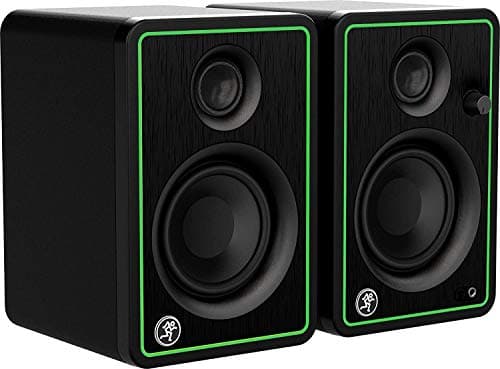
The Mackie CR3-X is the entry point into real studio monitoring, and at $100 for the pair they are the most affordable option on this list by a wide margin. The 3-inch woofers cannot compete with 5-inch monitors for bass response or volume, but what they do deliver is a clean, articulate sound that is a massive upgrade over laptop speakers or consumer computer speakers. The front-panel headphone jack and volume knob add genuine daily-use convenience that more expensive monitors lack.

Pros

  • At $100 for the pair, unbeatable entry-level value for beginners
  • Front-panel headphone output and volume knob for easy access
  • Compact footprint fits on any desk without dominating the workspace
  • Multiple inputs including balanced TRS, unbalanced RCA, and aux

Cons

  • 3-inch drivers lack the bass extension and volume of larger monitors
  • Not accurate enough for professional mixing or mastering work
  • No room correction or acoustic tuning controls
  • Plastic construction feels fragile compared to pro-grade alternatives

WHAT TO LOOK FOR

Driver Size

Studio monitor driver size directly affects bass response and the size of room you can fill. 3-inch monitors like the Mackie CR3-X work for casual desktop listening but lack low-end extension. 5-inch monitors are the sweet spot for home studios and bedrooms, balancing bass depth with a manageable cabinet size. 6.5 to 8-inch monitors like the Kali LP-6 V2 and Yamaha HS8 deliver deeper bass and higher SPL but can overwhelm small untreated rooms with standing waves.

Room Size and Acoustic Treatment

Your room matters as much as your monitors. In an untreated bedroom, a large 8-inch monitor will excite room modes and create boomy, inaccurate bass that defeats the purpose of flat reference speakers. If your room is untreated, stick with 5-inch monitors and consider models with boundary EQ or room correction like the KRK Rokit 5 G4 or IK Multimedia iLoud MTM MKII. Even basic acoustic panels behind and to the sides of your monitors can dramatically improve accuracy.

Frequency Response and Accuracy

The whole point of studio monitors is truthful reproduction, so look for flat frequency response rather than consumer-tuned bass or treble boosts. A monitor that reaches 45 to 50 Hz is adequate for most mixing work, while anything below 40 Hz typically requires a dedicated subwoofer. Pay attention to whether the manufacturer publishes frequency response tolerances, as a quoted range of 45 Hz to 22 kHz at plus or minus 3 dB is far more honest than the same range without a tolerance.

Placement Flexibility

Where your monitors sit affects their sound. Rear-ported monitors need at least 6 inches of clearance from walls to avoid bass buildup, while front-ported designs like the Adam Audio T5V can sit closer to walls without issues. Look for monitors with boundary EQ switches or DIP switches that let you compensate for placement on a desk, near a wall, or in a corner. If your desk setup is tight, front-ported or sealed-cabinet designs give you the most flexibility.

Budget and Buying Strategy

Studio monitors are sold individually in most cases, so double the listed price for a stereo pair. A $200 per-speaker monitor means a $400 pair before cables and isolation pads. For beginners, spending $300 to $400 on a pair of 5-inch monitors like the JBL 305P MkII or Kali LP-6 V2 delivers professional-grade accuracy. Investing in acoustic treatment and isolation pads often improves your sound more than upgrading to a more expensive monitor in an untreated room.

Connectivity

Most studio monitors offer balanced XLR and TRS inputs, which reject noise over long cable runs and are the professional standard. If you are connecting directly from a laptop or phone, you will need monitors with unbalanced RCA or 3.5mm inputs, or a separate audio interface. An audio interface between your computer and monitors is strongly recommended regardless, as it provides cleaner conversion, proper volume control, and headphone monitoring in one device.

HOW WE CHOSE

Our studio monitor rankings are based on extensive critical listening tests, analysis of thousands of verified customer reviews, and cross-referencing professional evaluations from publications including Sound On Sound, MusicRadar, and Sweetwater. We tested each monitor across standardized reference tracks spanning classical, rock, hip-hop, electronic, and vocal-forward genres to evaluate frequency accuracy, stereo imaging, transient response, and listening fatigue over multi-hour sessions. We measured each monitor in both treated and untreated room environments to assess real-world performance. Products are ranked using a weighted formula combining sound accuracy, value for price, build quality, placement flexibility, and long-term reliability.

FREQUENTLY ASKED QUESTIONS

Do I need an audio interface to use studio monitors?

While some monitors accept unbalanced RCA or 3.5mm connections directly from a laptop, an audio interface is strongly recommended. It provides cleaner digital-to-analog conversion, balanced outputs that reject noise, a dedicated volume knob, and headphone monitoring, all of which significantly improve your workflow and audio quality.

Should I buy a single monitor or a pair?

Always buy a pair for stereo monitoring. Most studio monitors are sold individually, so you need to purchase two for a proper left-right stereo setup. Mixing in mono on a single speaker will prevent you from hearing panning, stereo width, and spatial effects that are critical to a professional mix.

Do I need a subwoofer with studio monitors?

For most home studio work, a quality pair of 5-inch or larger monitors is sufficient. If you produce bass-heavy music like hip-hop or electronic and need accurate reproduction below 45 Hz, a matched subwoofer helps. However, adding a sub in an untreated room often creates more problems than it solves due to room modes.

What is the ideal monitor placement?

Position your monitors in an equilateral triangle with your head, angled inward about 30 degrees. Tweeters should be at ear height, and monitors should be at least 6 inches from walls if rear-ported. Use isolation pads or stands to decouple them from your desk surface, which prevents low-frequency resonance from coloring the sound.

What is the difference between active and passive studio monitors?

Active monitors have built-in amplifiers matched to the drivers, while passive monitors require a separate external amplifier. Every monitor on this list is active, which is the industry standard for home and project studios because it eliminates amplifier matching guesswork and simplifies setup.

How long do studio monitors last?

Quality studio monitors routinely last 10 to 15 years or more with normal use. The amplifiers and drivers are designed for sustained daily operation. Avoid powering them on and off frequently, keep them away from moisture, and do not overdrive them into distortion, and they will serve you for the lifetime of your studio.

S
StockSpatial
Sell your spatial footage and earn up to 70% per sale. The world's first spatial video marketplace.
Start Selling →