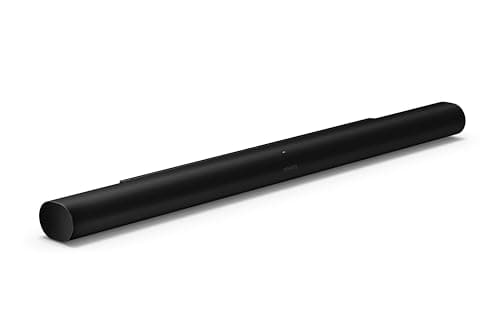
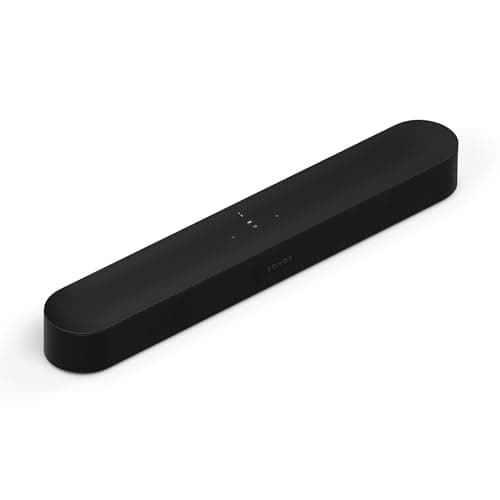
This is the most debated question on r/hometheater. A dedicated AV receiver with bookshelf speakers and a subwoofer will almost always outperform a soundbar at the same price in terms of raw audio quality and true surround separation. However, soundbars win decisively on convenience, aesthetics, and simplicity. Reddit's consensus is that soundbars are the right choice if you want a significant upgrade from TV speakers without running speaker wire, drilling into walls, or dedicating shelf space to multiple components. If you are willing to invest time and space in a proper setup, a receiver-based system starting around $500-600 total will outperform most soundbars under $1,000. The Sennheiser Ambeo Max at $1,999 is the one soundbar Reddit says genuinely challenges mid-range receiver setups.
It depends on your room. Soundbars with up-firing Atmos drivers (like the Samsung Q990D, Klipsch CORE 200, and JBL Bar 1000MK2) bounce sound off your ceiling to create the illusion of overhead audio. Reddit users report the effect works best with flat, hard ceilings between 8 and 10 feet high. If you have vaulted ceilings, cathedral ceilings, or heavy acoustic treatments on the ceiling, the bounce effect is significantly diminished. Bars without physical up-firing drivers (like the Sonos Beam Gen 2) use psychoacoustic processing to simulate height, which is less convincing. The r/hometheater community generally agrees that soundbar Atmos is noticeable and enjoyable, but not comparable to real ceiling-mounted or overhead speakers.
Very important, according to Reddit. Built-in bass drivers on soundbars are physically limited by the bar's slim enclosure - they simply cannot move enough air to produce deep, impactful bass. A wireless subwoofer is the single biggest upgrade you can make to a soundbar's performance. Reddit users report that adding a subwoofer transforms the experience more than any other single improvement, making action movies feel cinematic and music sound full. Our list includes multiple options with included wireless subs (Samsung Q990D, Q800D, B750D, JBL Bar 1000MK2, and Polk Signa S4D), while the Sonos Arc Ultra is notable for delivering impressive bass without one. If your soundbar does not include a sub, Reddit strongly recommends budgeting for one.
HDMI eARC (Enhanced Audio Return Channel) is the connection standard that allows your TV to send high-quality audio to your soundbar over a single HDMI cable. The key difference from regular ARC is bandwidth: eARC supports lossless audio formats like Dolby TrueHD and DTS-HD Master Audio, while standard ARC compresses audio to lossy Dolby Digital or Dolby Digital Plus. If you watch 4K Blu-rays or stream Atmos content, eARC ensures you receive the full-quality audio track. Reddit users in r/hometheater strongly recommend connecting your soundbar via eARC rather than optical, as optical cables cannot carry Atmos metadata at all. All soundbars on our list ranked 1-6 support eARC. The Samsung HW-B750D (rank 7) only supports standard ARC, which is one trade-off of its budget pricing.
Reddit's general guidance is to match the soundbar width to your TV width for the best aesthetic and acoustic result. For small to medium rooms (under 200 square feet), a compact bar like the Sonos Beam Gen 2 or Polk Signa S4D is more than sufficient - a massive 11.1.4 system would overpower the space. For medium to large rooms (200-400 square feet), the Samsung Q800D or Klipsch CORE 200 hit the sweet spot of performance and room-filling capability. For large open-concept living rooms (over 400 square feet), Reddit recommends the full surround systems like the Samsung Q990D or JBL Bar 1000MK2 with rear speakers to ensure sound reaches every seating position. The Sennheiser Ambeo Max is powerful enough to fill very large rooms from a single bar, but at 49 inches wide it requires adequate shelf or wall space.
It depends on how you use your home theater. Reddit users who primarily watch Atmos-encoded movies and premium streaming content report that the jump from 5.1 to 7.1.4 or 11.1.4 is substantial and immediately noticeable - overhead sounds like rain, helicopters, and ambient effects create a three-dimensional bubble that 5.1 simply cannot replicate. However, for users who mostly watch standard broadcast TV, sports, or casual streaming, the improvement is marginal because most of that content is mixed in stereo or basic 5.1. The r/Soundbars community recommends upgrading to Atmos-capable channels if at least 30% of your viewing involves Atmos content (most Netflix, Disney+, and Apple TV+ originals now support it). If you are on a budget, Reddit says a great 5.1 soundbar like the Samsung HW-B750D will outperform a mediocre 7.1.4 system every time - channel count is not everything.

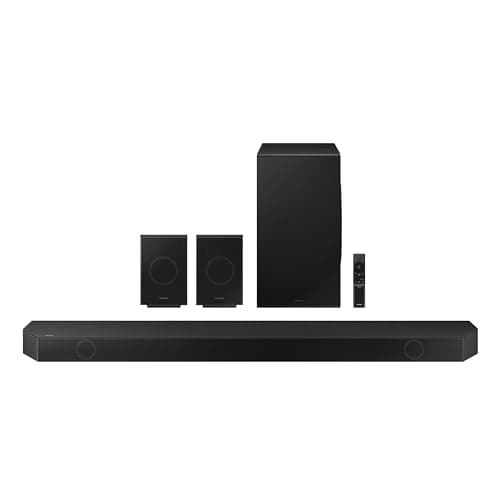 1/5
1/5