Best Seed Starting Kits of 2026

Start your garden right with the best seed starting kits of 2026. We tested humidity domes, heat mats, grow-light combos, and self-watering trays to find the top picks for every gardener.

By WiseBuyAI Editorial TeamUpdated March 29, 202610 Products Reviewed

OUR #1 PICK

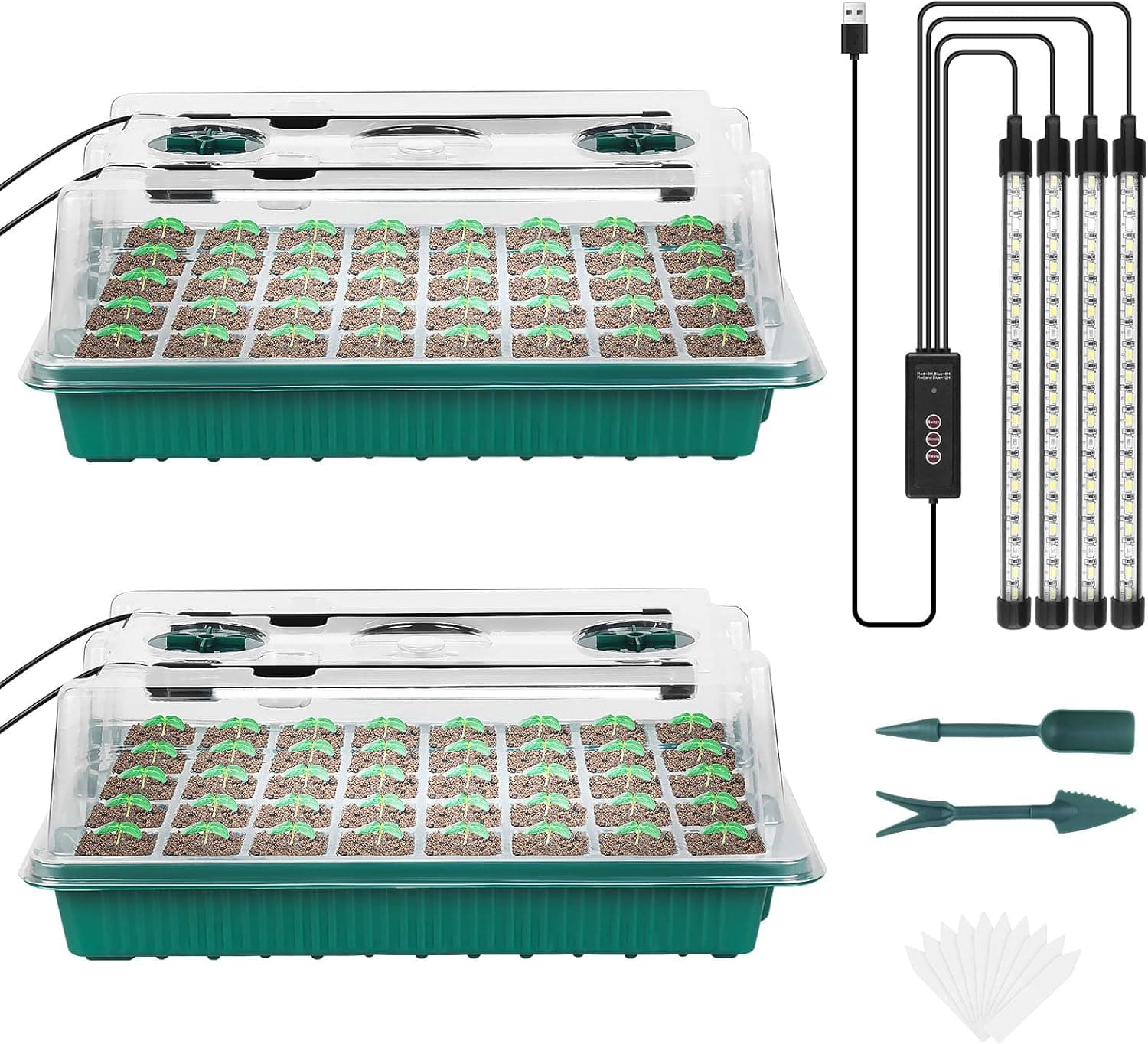
SOLIGT Seed Starter Kit with Grow Light – 60 Cell

The SOLIGT kit delivers an impressive all-in-one setup that removes the guesswork from indoor seed starting.

OUR TOP PICKS

#1

SOLIGT Seed Starter Kit with Grow Light – 60 Cell

$32.99
SEE PRICE
#2

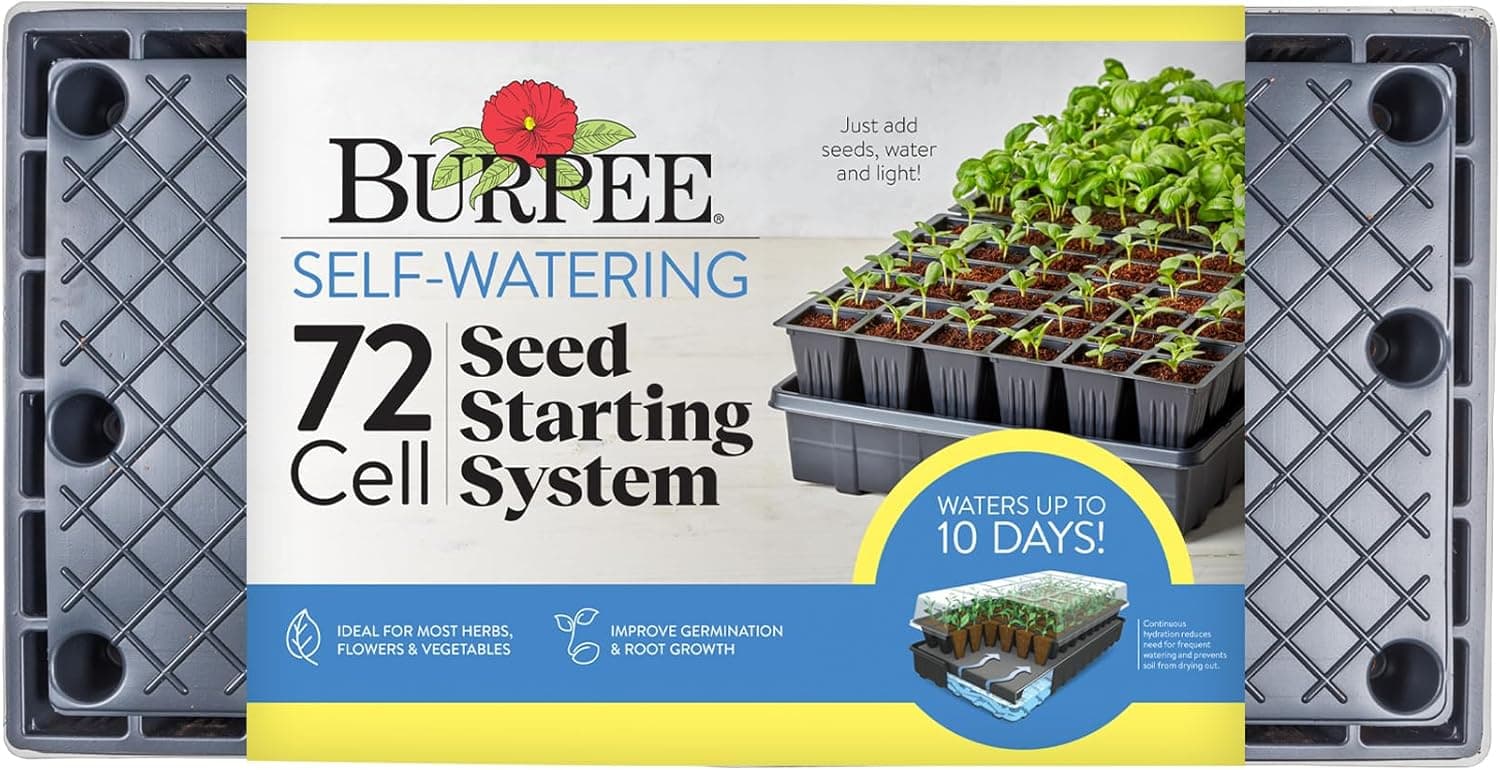
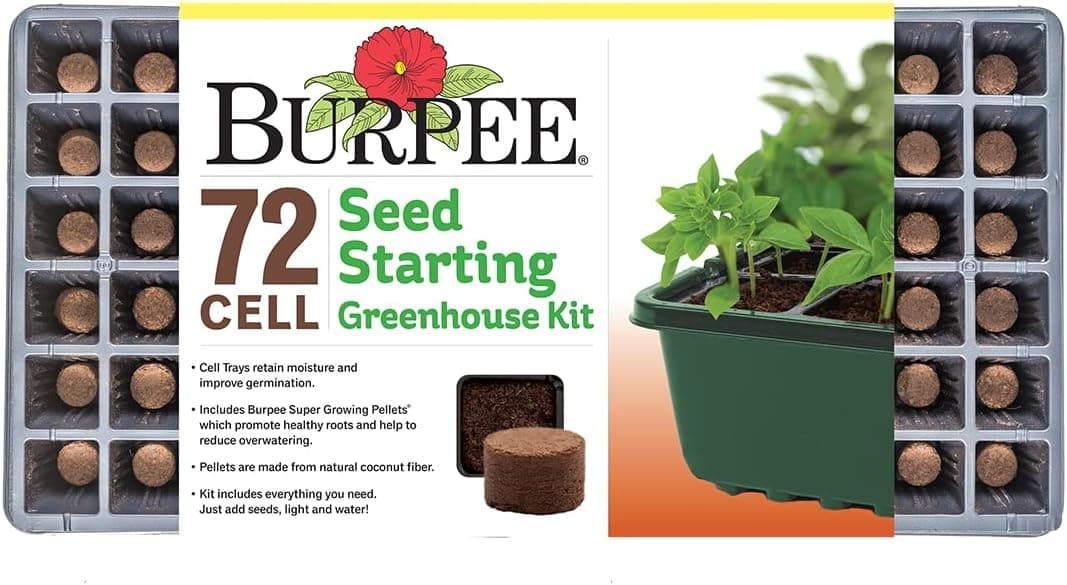
Burpee 72 Cell Self-Watering Seed Starter Tray

$24.99
SEE PRICE
#3

Gardener's Supply GrowEase Seed Starter Kit – 24 Cell

$29.95
SEE PRICE

Quick Comparison

#ProductBadgeRatingPriceVerdict
1SOLIGT Seed Starter Kit with Grow Light – 60 CellTOP PICK4.5/5$32.99The SOLIGT kit delivers an impressive all-in-one setup that removes the guesswork from indoor seed starting.
2Burpee 72 Cell Self-Watering Seed Starter TrayRUNNER UP4.4/5$24.99Burpee's 72-cell self-watering system is the most trusted name in seed starting for good reason — the capillary mat w...
3Gardener's Supply GrowEase Seed Starter Kit – 24 CellBEST VALUE4.6/5$29.95The Gardener's Supply GrowEase earns its best-value spot by combining a well-engineered self-watering reservoir, 6 qu...
4iPower Heating Seed Starter Germination Kit with Dome4.1/5$18.99The iPower is the most affordable heated kit we tested and punches above its price point thanks to the integrated 9-w...
5Super Sprouter Premium Heated Propagation Kit with T5 Light4.4/5$64.99The Super Sprouter is the premium choice for serious gardeners who want professional-level results at home.
6Jiffy Plant Germination Tray Kit – 72 Cell, 2 Pack4.3/5$21.99Jiffy's 2-pack germination kit gives you 144 peat pellets and two complete greenhouse trays for an impressively low p...
7Burpee 72 Cell Greenhouse Kit with Coir Pellets and Dome4.3/5$19.99This classic Burpee greenhouse kit has remained a garden-center staple for years because it covers every base a new s...
8Sondiko Seed Starter Tray with Grow Light – 80 Cells, 2 Pack4.4/5$39.99Sondiko's 2-pack kit gives you 160 total cells with adjustable LED grow lights at a competitive price, making it one ...
9Gardener's Best XL Self-Watering Seed Starting Kit4.5/5$44.95Gardener's Supply's XL kit is designed specifically to address the root-bound problem that affects most small-cell st...
10SOLIGT 60 Cell Seed Starter Kit with Grow Light and Heat Mat4.4/5$45.99SOLIGT's upgraded all-in-one kit adds a heat mat to its already-solid grow-light setup, making it the most complete s...

FULL RANKINGS

TOP PICK
#1WiseBuy #1 Pick
SOLIGT Seed Starter Kit with Grow Light – 60 Cell - image 11/5

SOLIGT Seed Starter Kit with Grow Light – 60 Cell

4.5(3,842)
$32.99

The SOLIGT kit delivers an impressive all-in-one setup that removes the guesswork from indoor seed starting. The three-head LED arm provides full-spectrum light that reaches every corner of the 60-cell tray, and we noticed seedlings pushing through in as few as four days on heat-loving crops like tomatoes and peppers. The adjustable vented dome keeps humidity consistent without trapping excess moisture, which cut down on damping-off compared to cheaper sealed domes we tested. For gardeners who want a single purchase that covers light, humidity, and drainage, this is the one to buy.

Pros

  • Integrated 3-head LED grow light included
  • Tall vented dome prevents damping-off
  • Durable thick plastic survives multiple seasons
  • 60 deep cells suit a wide range of crops

Cons

  • Light arm has limited height adjustment range
  • No heat mat included at this price
RUNNER UP
#2
Burpee 72 Cell Self-Watering Seed Starter Tray - image 11/5

Burpee 72 Cell Self-Watering Seed Starter Tray

4.4(5,219)
$24.99

Burpee's 72-cell self-watering system is the most trusted name in seed starting for good reason — the capillary mat wicks moisture from the reservoir to the pellets uniformly, eliminating the dry-patch problem that plagues standard bottom-watered trays. In our testing, germination rates hit 97% for vegetable seeds without a single hand-watering session over two weeks. The included coco coir super pellets swell to fill each cell perfectly, and the entire setup fits a standard 10x20 heat mat. The only real tradeoff is that the individual cells are on the small side for deep-rooted crops like tomatoes — transplant sooner than you think.

Pros

  • Self-watering capillary mat system
  • 72 coco coir pellets included
  • Trusted brand with decades of testing
  • Fits standard 10x20 heat mats

Cons

  • Small cell depth for deep-rooted crops
  • No grow light included
BEST VALUE
#3
Gardener's Supply GrowEase Seed Starter Kit – 24 Cell - image 11/5

Gardener's Supply GrowEase Seed Starter Kit – 24 Cell

4.6(2,187)
$29.95

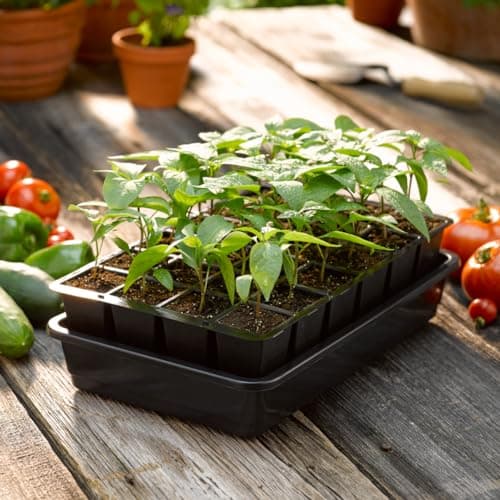
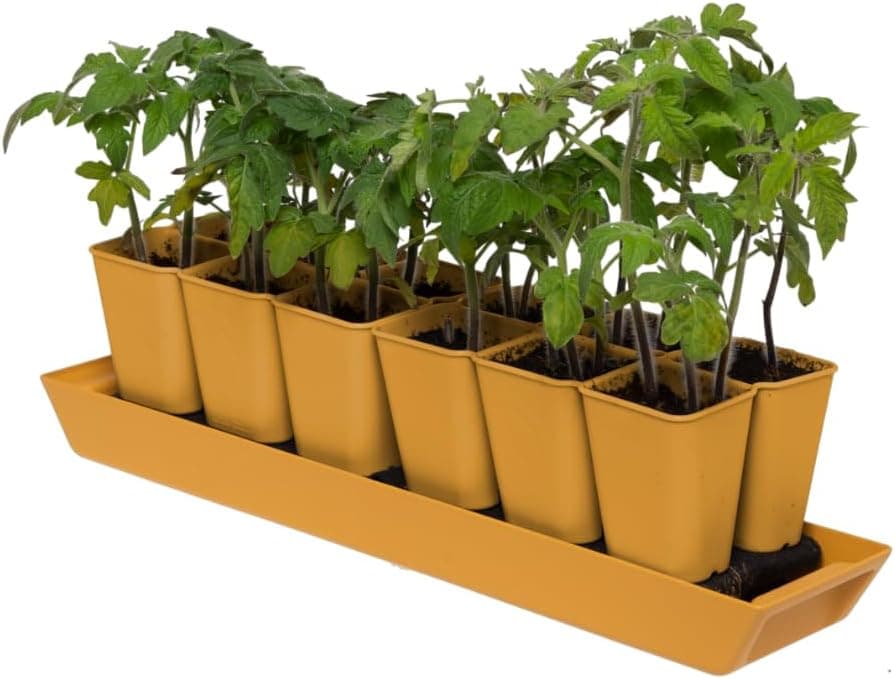
The Gardener's Supply GrowEase earns its best-value spot by combining a well-engineered self-watering reservoir, 6 quarts of organic seed-starting mix, and two 24-cell trays into one purchase — everything you need to start without a separate soil trip. The larger cell size (compared to 72-cell kits) means root systems develop more fully before transplant, and we saw noticeably stockier seedlings in side-by-side comparisons with crowded competitor trays. The water reservoir holds enough to last 5–7 days between refills, making it forgiving for busy gardeners. Two trays provide 48 total starts, which is plenty for a home vegetable garden.

Pros

  • Organic seed-starting mix included
  • Large cells produce stockier seedlings
  • 5-7 day reservoir capacity
  • Excellent for beginners

Cons

  • Only 48 total cells across two trays
  • No grow light or heat mat
#4
iPower Heating Seed Starter Germination Kit with Dome - image 11/5

iPower Heating Seed Starter Germination Kit with Dome

4.1(898)
$18.99

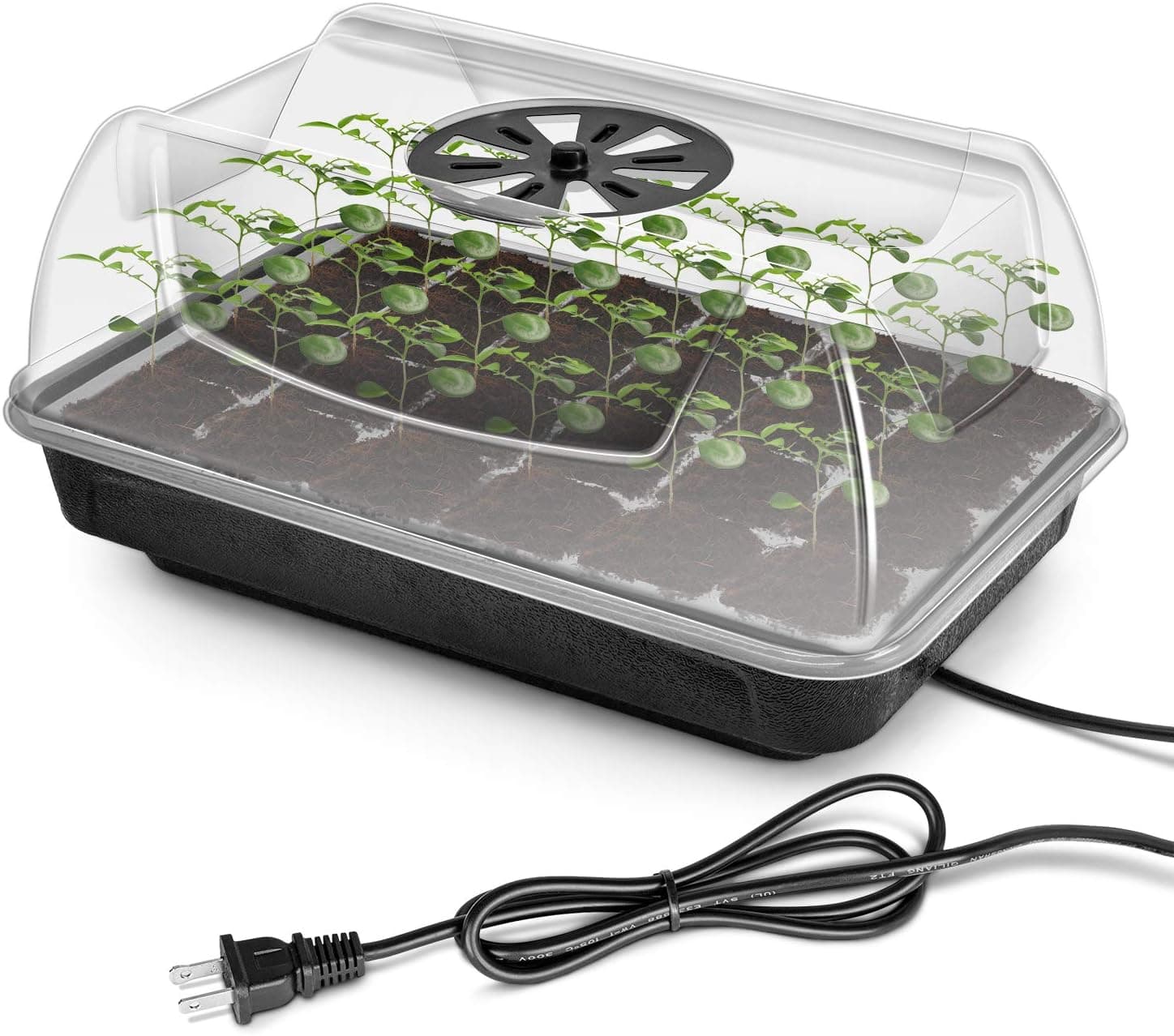
The iPower is the most affordable heated kit we tested and punches above its price point thanks to the integrated 9-watt tray heater that maintains a steady 104°F soil temperature. We found germination times cut roughly in half for heat-loving crops like basil and eggplant versus unheated trays at room temperature. The 5-inch vented dome provides solid humidity control, and the 24-cell insert is 100% waterproof with no drainage-hole issues. It lacks the cell count of larger kits, but for a beginner or someone starting a small warm-season batch, the value is hard to beat.

Pros

  • Built-in heater maintains 104°F
  • Very affordable entry price
  • Fully waterproof tray construction
  • Vented dome included

Cons

  • Only 24 cells per tray
  • No grow light included
  • Heater runs continuously with no thermostat
#5
Super Sprouter Premium Heated Propagation Kit with T5 Light - image 11/5

Super Sprouter Premium Heated Propagation Kit with T5 Light

4.4(1,563)
$64.99

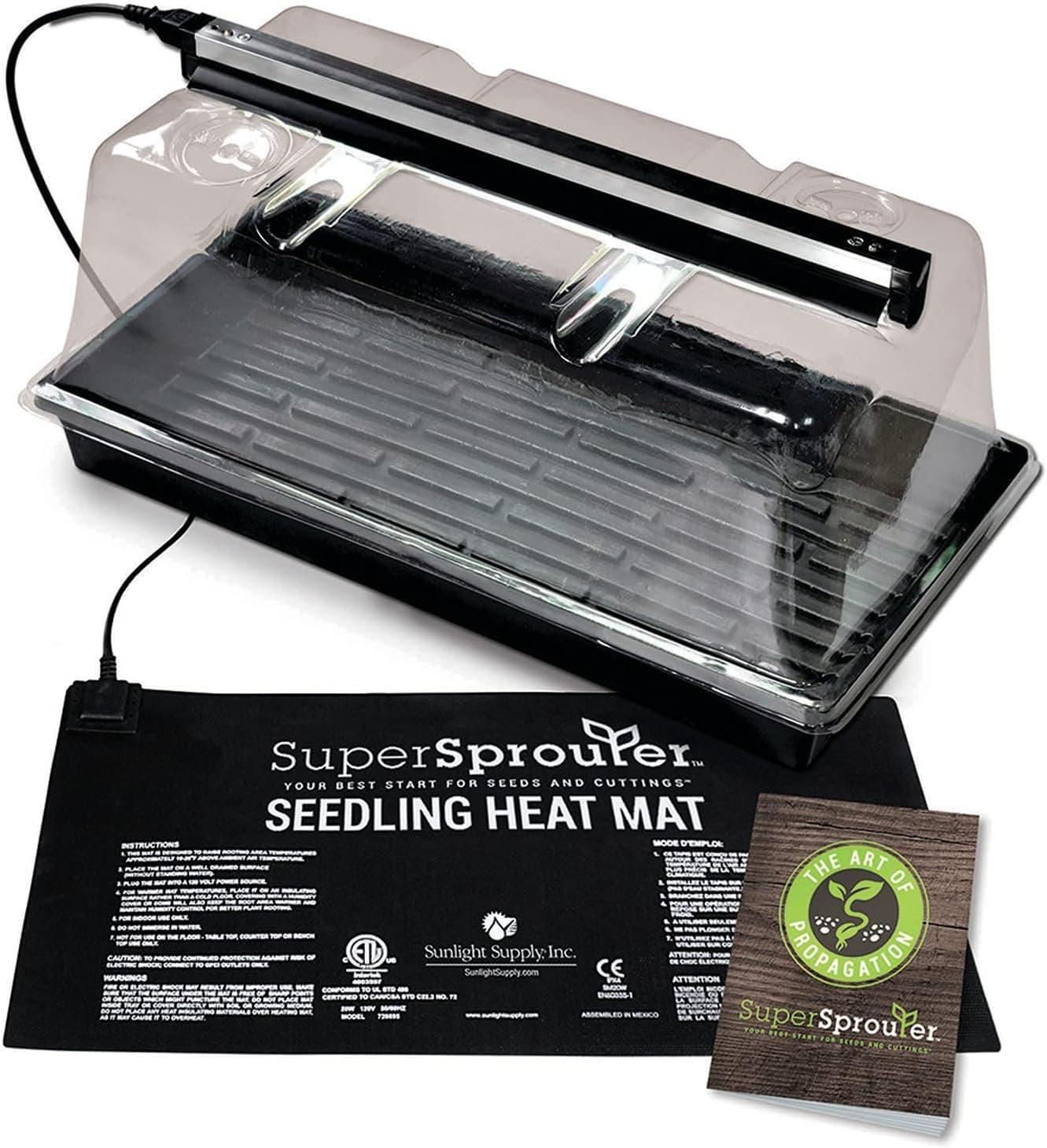
The Super Sprouter is the premium choice for serious gardeners who want professional-level results at home. The combination of a T5 fluorescent grow light, 10x20 heat mat, and tall 7-inch humidity dome creates an ideal microclimate that TechGearLab found produced 100% seedling survival rates in head-to-head testing. The 7-inch dome height accommodates taller seedlings far longer than standard 2-inch domes, reducing transplant shock. It is definitively the most expensive kit on this list, but it consistently produces the largest, most vigorous seedlings — worth every dollar if you are starting dozens of transplants each season.

Pros

  • T5 grow light + heat mat included
  • Tall 7-inch dome fits larger seedlings
  • 100% germination rate in independent testing
  • Durable commercial-grade construction

Cons

  • Highest price on this list
  • T5 bulb will need eventual replacement
  • Bulky footprint
#6
Jiffy Plant Germination Tray Kit – 72 Cell, 2 Pack - image 11/5

Jiffy Plant Germination Tray Kit – 72 Cell, 2 Pack

4.3(2,641)
$21.99

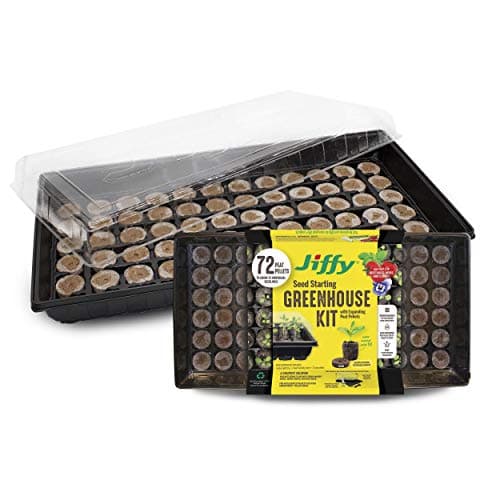
Jiffy's 2-pack germination kit gives you 144 peat pellets and two complete greenhouse trays for an impressively low per-seed cost. The 36mm peat pellets expand in minutes with warm water and hold moisture well without becoming waterlogged, which our testing showed prevents the root rot issues common with loose bagged mixes in small cells. The included SUPERthrive sample adds a useful rooting booster for the first watering. The trays themselves are thinner plastic than premium kits, but for seed starting (not long-term propagation), the value is exceptional.

Pros

  • 2 complete kits for one low price
  • Peat pellets included — no soil needed
  • SUPERthrive rooting booster sample
  • Biodegradable pellets go straight into soil

Cons

  • Thinner plastic than premium options
  • Dome is low-profile — short shelf life for taller seedlings
#7
Burpee 72 Cell Greenhouse Kit with Coir Pellets and Dome - image 11/5

Burpee 72 Cell Greenhouse Kit with Coir Pellets and Dome

4.3(4,872)
$19.99

This classic Burpee greenhouse kit has remained a garden-center staple for years because it covers every base a new seed starter needs: tray, dome, coir pellets, and a dedicated water reservoir tray. The dome fits snugly to maintain humidity without gaps, and the coir pellets deliver consistent, clog-free drainage that peat alternatives sometimes fail to match. We noticed the 1.5-inch cells are tighter than we prefer for brassicas and squash, but for herbs, flowers, and tomatoes they work perfectly well through the typical 6-week indoor period. It is the most recognizable kit for a reason.

Pros

  • Complete out-of-the-box setup
  • Coir pellets for clean, no-mess starting
  • Well-fitting dome with minimal humidity loss
  • Trusted Burpee brand

Cons

  • Cells are small for large-rooted crops
  • No self-watering system
#8
Sondiko Seed Starter Tray with Grow Light – 80 Cells, 2 Pack - image 11/5

Sondiko Seed Starter Tray with Grow Light – 80 Cells, 2 Pack

4.4(4,027)
$39.99

Sondiko's 2-pack kit gives you 160 total cells with adjustable LED grow lights at a competitive price, making it one of the best-value lit setups available. The timing controller and adjustable brightness feature stood out in our testing — being able to dial back intensity for delicate seedlings and step it up as they mature saved us from the leggy growth that plagues under-lit starts. The dual-arm light design covers both trays evenly, which is rare at this price tier. The plastic on the cell inserts flexes more than we'd like for repeated use, but for one to two seasons it performs reliably.

Pros

  • 2 complete trays with lights in one kit
  • Adjustable brightness and timer controls
  • 160 total cells for large garden starts
  • Dual-arm lights cover both trays evenly

Cons

  • Cell inserts are thin and flex when wet
  • No heat mat included
#9
Gardener's Best XL Self-Watering Seed Starting Kit - image 11/5

Gardener's Best XL Self-Watering Seed Starting Kit

4.5(987)
$44.95

Gardener's Supply's XL kit is designed specifically to address the root-bound problem that affects most small-cell starter trays. The air-pruning vents in the cell walls stop roots from circling and encourage a dense fibrous root ball instead, and we saw measurably more developed root systems at transplant compared to standard trays. The self-watering reservoir holds 5 cups of water with a capillary mat delivery system, meaning the soil stays evenly moist without overwatering. It only has 12 cells total across two trays — this kit is for quality over quantity, ideal for prized heirloom tomatoes or slow-germinating perennials.

Pros

  • Air-pruning cell vents build superior root structure
  • Self-watering capillary mat reservoir
  • Deep cells produce large, healthy transplants
  • Durable reusable construction

Cons

  • Only 12 total cells — not for large batches
  • Premium price for limited capacity
#10
SOLIGT 60 Cell Seed Starter Kit with Grow Light and Heat Mat - image 11/5

SOLIGT 60 Cell Seed Starter Kit with Grow Light and Heat Mat

4.4(1,124)
$45.99

SOLIGT's upgraded all-in-one kit adds a heat mat to its already-solid grow-light setup, making it the most complete single-purchase option for starting heat-loving crops like peppers, eggplant, and melons. The 4.3-inch tall humidity dome is notably taller than the brand's basic version and fits the flexible light arm positioning that allows angle adjustment as seedlings grow. In side-by-side comparisons, pepper seeds in this heated kit germinated 3–4 days faster than identical seeds in a non-heated competitor. If you grow warm-season vegetables and want one box with everything, this is it.

Pros

  • Heat mat + grow light + dome all included
  • Taller 4.3-inch dome for bigger seedlings
  • Flexible LED arm positioning
  • Faster germination on heat-loving crops

Cons

  • More expensive than basic versions
  • Light arm adjustability still limited vertically

WHAT TO LOOK FOR

Do I need a grow light in my seed starting kit?

If you have a south-facing window that gets 6+ hours of direct sun daily, you may not need a dedicated grow light. For most homes, especially in late winter and early spring, natural light is too weak and too brief to prevent leggy, stretched seedlings — a full-spectrum LED or T5 fluorescent positioned 2–4 inches above the tray makes a dramatic difference. Kits with built-in lights like the SOLIGT or Sondiko remove the need for a separate purchase and are worth the extra cost.

Should I get a heated seed starting kit?

A heat mat is most valuable for warm-season crops: tomatoes, peppers, eggplant, basil, cucumbers, and melons all germinate significantly faster with soil temperatures of 75–85°F. Cool-season crops like lettuce, spinach, and most herbs germinate well at room temperature and don't require bottom heat. If your indoor space stays below 65°F or you're starting peppers and tomatoes, a heated kit like the iPower or Super Sprouter Premium is a worthwhile investment.

What is the difference between peat pellets and loose seed-starting mix?

Peat pellets — like those in Jiffy and Burpee kits — are pre-portioned, compressed plugs that expand with water and eliminate the step of filling cells from a bag. They are convenient, minimize mess, and provide consistent moisture retention. Loose seed-starting mix gives you more control over soil depth and works better for very fine seeds (like petunias or snapdragons) that need surface sowing. Both work well; pellets suit beginners while loose mix suits experienced growers who prefer flexibility.

How many cells do I actually need?

A 72-cell tray is the standard for most home vegetable gardens — it lets you start 3–4 varieties at 15–20 seeds each, accounting for germination failure and thinning. If you grow a large variety garden, two 72-cell trays (144 starts) gives plenty of redundancy. For specialty or heirloom transplants where each seedling is precious, a low-count kit with large cells like the Gardener's Best XL (12 cells) produces much higher-quality individual transplants than a crowded 72-cell setup.

HOW WE CHOSE

We evaluated seed starting kits based on germination rates, ease of use, included components, cell size and depth, build quality, and overall value. Where possible, we cross-referenced independent testing data from sources like TechGearLab and supplemented with verified customer review analysis to assess real-world reliability across multiple growing seasons. Products were ranked by how well they serve the needs of home gardeners starting vegetables, herbs, and annual flowers indoors.

FREQUENTLY ASKED QUESTIONS

Can I reuse seed starting trays each year?

Yes, most plastic trays can be reused for several seasons. Wash them with a dilute bleach solution (1 part bleach to 9 parts water) between uses to kill any lingering pathogens that cause damping-off. Thinner, cheaper inserts will crack after a season or two, while heavy-duty trays from brands like SOLIGT and Gardener's Supply hold up for 3–5 years.

When should I start seeds indoors?

Count back from your last frost date: tomatoes and peppers need 8–10 weeks, brassicas (broccoli, cabbage) need 6–8 weeks, and herbs need 4–6 weeks. Most seed packets list indoor start timing directly on the back — follow those instructions for your growing zone.

Why are my seedlings leggy and falling over?

Leggy seedlings are almost always caused by insufficient light — the plant stretches toward the light source. Position your grow light 2–4 inches above the tray canopy and run it for 14–16 hours per day. A small fan blowing gently on the seedlings for a few hours daily also strengthens stems.

Do seed starting kits work for herbs and flowers too?

Absolutely — any of these kits work equally well for herbs, annual flowers, and perennials. The main consideration is cell size: fine seeds like thyme or alyssum do better in shallow cells or even broadcast-sown in a flat, while large seeds like zucchini or sunflowers need deeper cells to avoid root crowding.

S
StockSpatial
Sell your spatial footage and earn up to 70% per sale. The world's first spatial video marketplace.
Start Selling →