Research shows resistance bands can stimulate similar muscle growth to free weights when used with adequate resistance and proper progressive overload. The key difference is that bands provide accommodating resistance — tension increases as the band stretches — which changes the strength curve compared to constant-load dumbbells. For beginners and intermediate trainees, bands are highly effective. For advanced lifters, bands work best as a supplement to free weights rather than a complete replacement.
Start with a band where you can perform 12-15 reps of your target exercise with proper form but feel genuinely challenged by the final 3-4 reps. Most beginners should start with light or medium resistance — roughly 10-25 lbs — and progress to heavier bands once they can comfortably complete 15-20 reps with good form. For pull-up assistance, start with a heavy band that lets you do 5-8 assisted reps and progress to lighter bands as your strength improves.
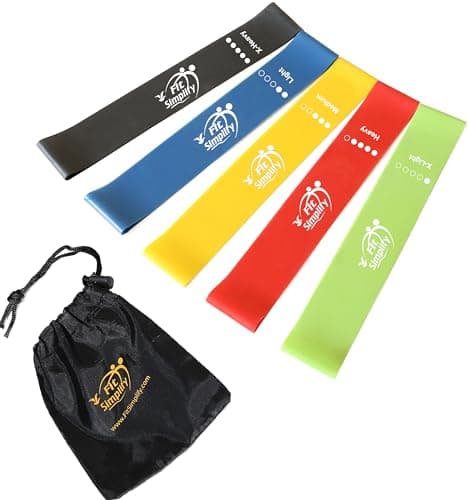
Quality natural latex bands from reputable brands like Serious Steel, Fit Simplify, and WOD Nation typically last 1-3 years with regular use if stored properly. Keep bands out of direct sunlight and away from heat sources, which degrade latex, and avoid contact with oils or lotions before use. Cheap single-dip molded bands may crack or snap within weeks of regular use. Fabric bands generally outlast latex bands in terms of surface integrity but can lose elasticity in the inner latex layer over time.
Yes — a complete tube band kit with handles, door anchor, and ankle straps can replicate nearly every cable machine exercise in a commercial gym, covering chest press, rows, lat pulldowns, shoulder press, bicep curls, tricep extensions, and leg work. Power loop bands add pull-up assistance, hip hinges, and squats to the mix. For a truly comprehensive home workout, a stackable tube band kit like Bodylastics combined with a loop band set covers the full spectrum of resistance training exercises.
Fabric bands are better specifically for lower-body exercises — squats, hip thrusts, lateral walks, and glute bridges — because they don't roll, slide, or pinch skin the way latex bands do. However, fabric bands can't be used for pull-up assistance, deadlift accommodation, or any exercise requiring a long band. For versatility, latex beats fabric, but for dedicated glute and leg activation work, the fabric bands are a meaningfully better experience.
Mini bands are short loop bands (typically 9-13 inches) designed for lower-body activation, rehabilitation, and warm-up exercises. They are placed around the ankles or just above the knees. Power bands (or superbands) are long 41-inch loops used for pull-up assistance, barbell accommodating resistance, and full-range mobility drills. Most home gym setups benefit from having both — mini bands for activation work and at least one or two power bands for heavier training applications.

 1/5
1/5


