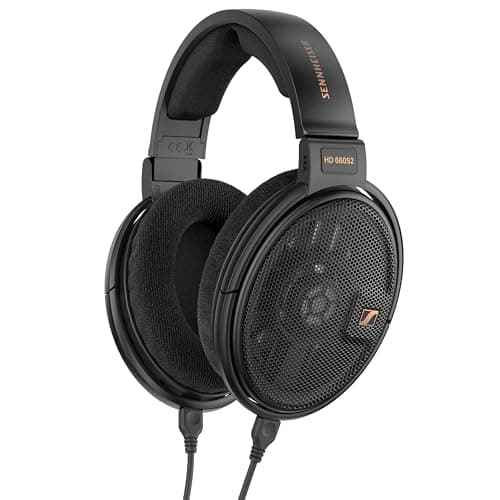
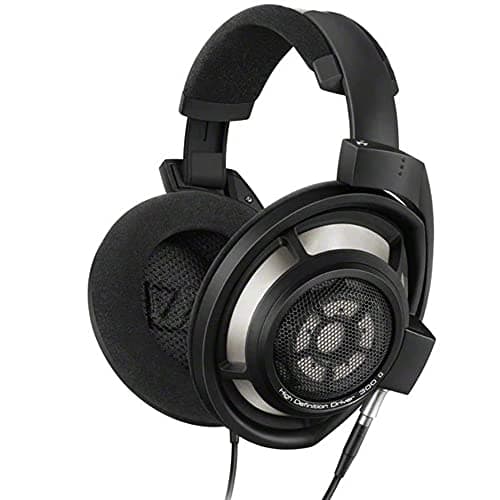
Open-back headphones primarily use two driver technologies, each with distinct characteristics. Dynamic drivers are the traditional technology found in headphones like the Sennheiser HD 800 S and Beyerdynamic DT 1990 Pro, using a voice coil attached to a diaphragm that moves within a magnetic field. They tend to deliver more natural-sounding bass with physical impact and slam. Planar magnetic drivers, found in the HIFIMAN Sundara and Edition XS, use a thin diaphragm suspended between magnets, which responds to the audio signal across its entire surface simultaneously. This results in faster transient response, lower distortion, and often more linear bass extension, though the bass can feel less visceral than dynamic drivers. Neither technology is inherently superior — they offer different presentations, and your preference will depend on the music you listen to and what qualities you prioritize.
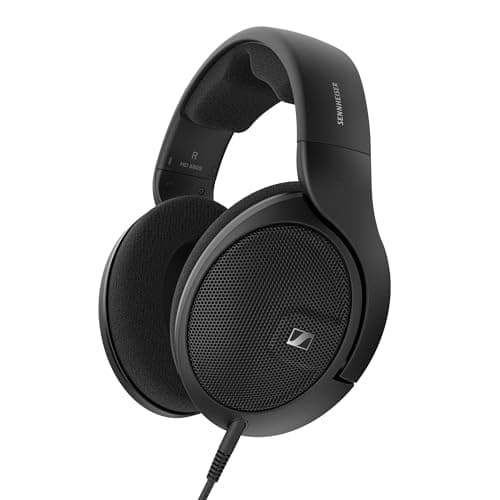
Open-back headphones vary dramatically in how much power they need to sound their best. Low-impedance models like the Sennheiser HD 560S (120 ohms) and Beyerdynamic DT 900 PRO X (48 ohms) can be driven adequately by a phone or laptop headphone jack, though they still benefit from a dedicated amplifier. High-impedance headphones like the Sennheiser HD 600 (300 ohms) and Audio-Technica ATH-R70x (470 ohms) absolutely require a dedicated headphone amplifier or DAC/amp combo to reach adequate volume and deliver their full dynamic range. Budget $100-$200 for a quality desktop DAC/amp if you are buying a high-impedance headphone — without proper amplification, you are hearing perhaps 60-70% of what these headphones are capable of.
One of the primary reasons listeners choose open-back headphones is for their superior soundstage — the sense of space and dimensionality in the music. However, soundstage varies significantly between models. The Sennheiser HD 800 S and HIFIMAN Edition XS offer expansive, room-like presentations where instruments feel spread out in three-dimensional space. The Sennheiser HD 660S2 and HD 600, by contrast, present a more intimate soundstage that places you closer to the performers. Imaging refers to how precisely you can locate individual instruments within the soundstage. Wide soundstage and precise imaging do not always go hand in hand — some headphones have a large soundstage but vague instrument placement, while others have a smaller stage with razor-sharp positioning. Consider what matters more for your use case: mixing engineers often prefer precise imaging, while casual listeners may prefer an expansive soundstage.
Open-back headphones are typically used for extended listening sessions, making comfort a critical factor. Key variables include weight (the ATH-R70x at 210 grams versus the HIFIMAN Edition XS at over 400 grams), clamping force (Beyerdynamic headphones tend to clamp firmly out of the box and loosen over time), ear pad material (velour breathes better than leather or pleather for long sessions), and headband design. Look for models with replaceable ear pads since cushions inevitably compress and degrade after 1-2 years of daily use, and replacement pads from Beyerdynamic and Sennheiser are readily available and affordable. Build quality ranges from the tank-like metal construction of the Beyerdynamic DT 1990 Pro MKII to the lighter plastic builds of the Sennheiser HD 560S, and more expensive does not always mean more durable.
Your primary use case should guide your purchase decision. For pure audiophile music listening, prioritize tonal accuracy and musicality — the Sennheiser HD 660S2 and HD 600 excel here with their natural midrange and engaging presentation. For studio mixing and mastering, look for analytical accuracy and detail retrieval — the Beyerdynamic DT 1990 Pro MKII and Audio-Technica ATH-R70x are designed specifically for critical evaluation of recordings. For gaming, wide soundstage and precise imaging matter most for positional audio — the Sennheiser HD 560S and HD 800 S both excel at placing in-game sounds in accurate spatial positions. Some headphones like the Beyerdynamic DT 900 PRO X are versatile enough to serve all three roles competently, making them excellent all-rounders for listeners who refuse to pick a lane.
Open-back headphone pricing spans from under $150 to well over $1,500, and the diminishing returns curve is steep. The most dramatic leap in quality happens between $100 and $300, where headphones like the Sennheiser HD 560S at $150 and the HIFIMAN Sundara at $229 deliver performance that would have required spending $500 or more just a few years ago. The $250-$500 range is the sweet spot for most serious listeners, offering models like the Beyerdynamic DT 900 PRO X, Sennheiser HD 660S2, and AKG K712 Pro that provide genuinely reference-grade performance. Above $500, the Sennheiser HD 800 S and Beyerdynamic DT 1990 Pro MKII offer measurable improvements in detail retrieval and soundstage, but the incremental gains per dollar diminish significantly. Do not forget to budget for amplification — a $300 headphone with a $150 amp will almost always outperform a $450 headphone driven directly from a laptop.

 1/4
1/4