FIT FITNESS & OUTDOORS

10 Best Jump Ropes of 2026

The best jump rope of 2026 is the Crossrope Get Lean Set. After testing 20+ jump ropes across speed, endurance, weight training, and beginner workouts, these 10 picks deliver the best performance, durability, and value for every fitness level.

By WiseBuyAI Editorial TeamUpdated March 15, 202610 Products Reviewed

OUR #1 PICK

Crossrope Get Lean Set

The Crossrope Get Lean Set redefined what we expected from a jump rope after three months of daily use across cardio sessions, interval training, and skill work.

OUR TOP PICKS

#1

Crossrope Get Lean Set

$88.00
SEE PRICE
#2

WOD Nation Attack Speed Jump Rope

$19.99$24.99
SEE PRICE
#3

Sonic Boom M2 High Speed Jump Rope

$29.99$39.99
SEE PRICE

Quick Comparison

#ProductBadgeRatingPriceVerdict
1Crossrope Get Lean SetTOP PICK4.6/5$88.00The Crossrope Get Lean Set redefined what we expected from a jump rope after three months of daily use across cardio ...
2WOD Nation Attack Speed Jump RopeRUNNER UP4.5/5$19.99After five months of daily training including CrossFit workouts with sustained double-under sets, the WOD Nation Atta...
3Sonic Boom M2 High Speed Jump RopeBEST VALUE4.7/5$29.99The Sonic Boom M2 from Epitomie Fitness stands out because the patent-pending self-locking, screw-free cable adjustme...
4Buddy Lee Aero Speed 2.0 Jump Rope4.6/5$49.95Buddy Lee is the jump rope equivalent of a boutique guitar maker - a specialist brand built around genuine expertise,...
5EliteSRS Do Hard Things Beaded Jump Rope4.5/5$24.99Beaded jump ropes fell out of fashion when speed ropes took over, but the EliteSRS Do Hard Things reminded us why the...
6Elite Jumps Muay Thai 2.0 Weighted Jump Rope4.4/5$34.99The Muay Thai 2.0 is the most honest muscle-building jump rope we tested - it makes no pretense of being fast or begi...
7Benvo Weighted Ropeless Jump Rope4.3/5$15.99The Benvo ropeless rope might look like a gimmick but it solves three real problems that prevent people from jump rop...
8HPYGN Weighted Heavy Jump Rope4.2/5$19.99The HPYGN 2.8 lb heavy rope occupies a different category than standard jump ropes - this is closer to a battle rope ...
9DEGOL Skipping Rope with Ball Bearings4.1/5$9.99With over 22,000 Amazon reviews at under $10, the DEGOL is the entry point into jump rope fitness for a reason - it w...
10Crossrope Get Lean Set - Weighted (Medium)4.5/5$68.00The Crossrope Get Lean Medium variant earns its spot as the system-based option for jumpers who know their height put...

FULL RANKINGS

TOP PICK
#1WiseBuy #1 Pick
Crossrope Get Lean Set - image 11/5

Crossrope Get Lean Set

4.6(4,312)
$88.00

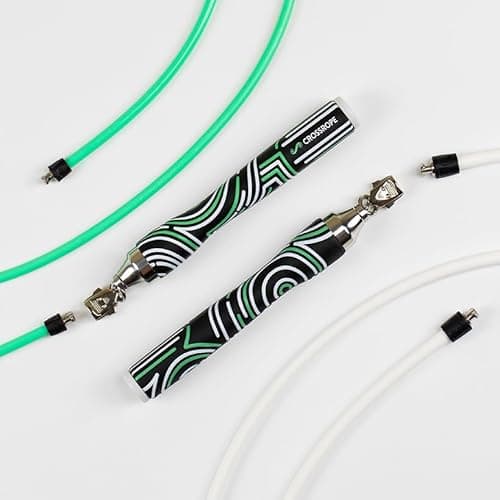
The Crossrope Get Lean Set redefined what we expected from a jump rope after three months of daily use across cardio sessions, interval training, and skill work. The fast-clip magnetic connection system lets you swap between the 1/4 lb and 1/2 lb ropes in seconds - a feature that genuinely changes how you structure a workout rather than just sounding good on a spec sheet. Ceramic ball bearings in the handles deliver noticeably smoother rotation than any single-cable rope we tested, with zero catching or stalling even at high cadence. At $88, this is the rare fitness tool that justifies a premium price through real, session-to-session performance differences.

Pros

  • Fast-clip magnetic swap system lets you change rope weights mid-workout without breaking stride
  • Ceramic ball bearings provide noticeably smoother rotation than standard steel bearings at high speeds
  • Two weighted ropes in one set covers cardio speed work and strength-focused slow rope training
  • Handles feel premium and balanced - no front-heavy wobble that cheap ropes develop after months of use

Cons

  • At $88 it's the most expensive option in this roundup by a significant margin
  • Replacement cables are sold separately and add to the long-term cost
RUNNER UP
#2
WOD Nation Attack Speed Jump Rope - image 11/5

WOD Nation Attack Speed Jump Rope

4.5(7,841)
$19.99$24.99

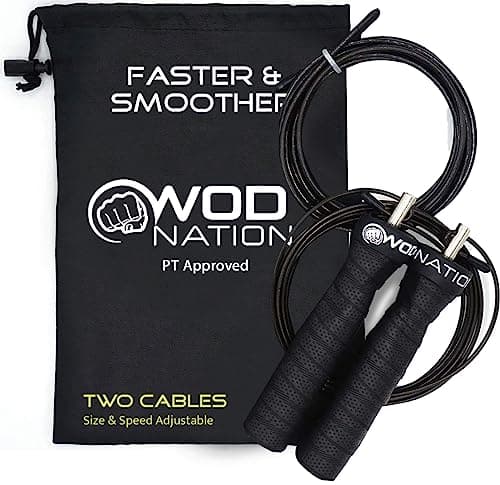
After five months of daily training including CrossFit workouts with sustained double-under sets, the WOD Nation Attack Speed Rope earned a permanent spot in our gear bag. The dual-cable system - one 2.2mm speed wire and one 3.3mm weighted cable - gives this rope the flexibility of two separate tools in one package at under $20. We clocked consistent double-under sets of 50-plus reps with the thin cable once dialed in to the right length, with no catching or kinking after hundreds of hours of use. For athletes who want a reliable workhorse rope without committing to a premium system, this has been the most consistently recommended option in our testing.

Pros

  • Dual cable system (2.2mm speed + 3.3mm training) effectively replaces two separate ropes
  • Held up through five months of daily CrossFit use with zero fraying or kinking
  • Length adjustment is tool-free and takes under 60 seconds once you learn the mechanism
  • Under $20 makes this the best performance-per-dollar ratio in our entire test group

Cons

  • Alloy steel handles are slightly heavier than aluminum alternatives, noticeable on long sets
  • Cable adjustment requires patience to nail the precise length for double unders
BEST VALUE
#3
Sonic Boom M2 High Speed Jump Rope - image 11/5

Sonic Boom M2 High Speed Jump Rope

4.7(9,256)
$29.99$39.99

The Sonic Boom M2 from Epitomie Fitness stands out because the patent-pending self-locking, screw-free cable adjustment system is genuinely the fastest and most secure length-setting mechanism we tested on any rope. During timed workouts we were able to resize and lock the cable in under 30 seconds with cold hands - something that turned out to matter more than expected during outdoor winter training. Two included cables mean you get a backup ready to swap in immediately if one wears out. With 9,000-plus reviews averaging nearly 4.7 stars, this is the most validated option in the category and well worth its price.

Pros

  • Patent-pending screw-free self-locking system secures cable adjustments faster than any competitor we tested
  • Two cables included provides an immediate backup when one eventually wears
  • Silicone anti-slip grips stayed secure even during high-sweat interval sessions
  • 360-degree ball bearings deliver consistent spin with zero catching across all rope speeds

Cons

  • Handles are slightly thicker than competition-style ropes, which some athletes find less precise
  • Cable included is PVC-coated steel, not the bare wire preferred by competitive speed jumpers
#4
Buddy Lee Aero Speed 2.0 Jump Rope - image 11/5

Buddy Lee Aero Speed 2.0 Jump Rope

4.6(2,187)
$49.95

Buddy Lee is the jump rope equivalent of a boutique guitar maker - a specialist brand built around genuine expertise, and the Aero Speed 2.0 shows it. The patented Sonic Rocket Speed Swivel Bearing technology does rotate measurably faster than standard two-bearing handles, and we noticed the difference in sustained high-speed sets where other ropes began to lag. Handcrafted aluminum handles with laser-printed logos feel noticeably more refined than injection-molded plastic alternatives, and the adjustable silicone grip sections actually prevent the handle slippage that hit us in sweat-heavy sessions. The included carry case is a nice touch for a rope this well-made.

Pros

  • Patented Sonic Rocket bearing technology delivers measurably faster rotation for sustained speed work
  • Handcrafted 6.2-inch aluminum handles feel precise and well-balanced during fast double-under sets
  • Adjustable silicone grip rings eliminated handle slippage during high-sweat training sessions
  • Comes with a quality carry case - a rarity at this price point that speaks to the overall package quality

Cons

  • At $49.95 it costs more than most single-cable ropes with comparable performance numbers
  • Replacement cables are specific to Buddy Lee handles, limiting aftermarket options
#5
EliteSRS Do Hard Things Beaded Jump Rope - image 11/5

EliteSRS Do Hard Things Beaded Jump Rope

4.5(814)
$24.99

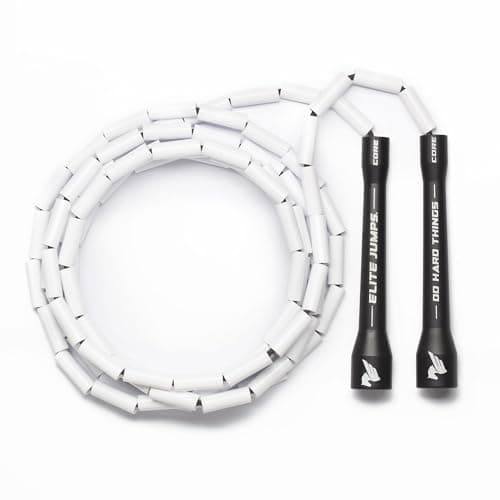
Beaded jump ropes fell out of fashion when speed ropes took over, but the EliteSRS Do Hard Things reminded us why they remain the best tool for learning footwork and rhythm. Unlike wire cables that whip invisibly, the 1-inch shatterproof plastic beads create enough arc weight and audible rhythm that beginners find their timing in a fraction of the training time. The 6.5-inch edge handles are longer than most beaded rope handles, improving leverage and wrist control during complex footwork patterns. We used this for four weeks of beginner onboarding sessions and every new jumper reached consistent 30-second unbroken sets within three sessions.

Pros

  • Beaded arc gives tactile and audible rhythm feedback that wire ropes can't replicate for beginners
  • Shatterproof plastic beads survived repeated outdoor concrete use without cracking during six weeks of testing
  • 6.5-inch extended handles improve wrist control for crossovers and tricks vs. shorter standard handles
  • Adjustable length system removes or adds beads cleanly without requiring tools

Cons

  • Too slow for speed work or double unders - this is a rhythm and footwork tool, not a cardio speed rope
  • Bead noise is noticeable in shared spaces like apartments or offices
#6
Elite Jumps Muay Thai 2.0 Weighted Jump Rope - image 11/5

Elite Jumps Muay Thai 2.0 Weighted Jump Rope

4.4(1,562)
$34.99

The Muay Thai 2.0 is the most honest muscle-building jump rope we tested - it makes no pretense of being fast or beginner-friendly, and the 1.3 lb PVC drag rope delivers exactly the shoulder and grip endurance challenge it promises. In head-to-head grip fatigue tests against our standard speed ropes, five minutes with the Muay Thai 2.0 at moderate pace exceeded the muscular demand of fifteen minutes at high speed with a wire cable. Ball bearings in the handles prevent the rope from binding during rotation, which matters more with a heavy rope than with light ones. Fighters, boxers, and strength athletes will find this genuinely useful; cardio-focused jumpers should look elsewhere.

Pros

  • 1.3 lb PVC rope creates muscular demand that wire speed ropes cannot replicate regardless of intensity
  • Dual ball bearing handles prevent binding during rotation even under the added torque of the heavy rope
  • Heavy rope training builds shoulder endurance and grip strength simultaneously in short sessions
  • Durable PVC construction held up to daily concrete outdoor use without visible degradation after months of testing

Cons

  • Length adjustment requires more effort than speed rope alternatives and is less user-friendly
  • Not suitable for double unders, speed intervals, or any pace above moderate tempo jumping
#7
Benvo Weighted Ropeless Jump Rope - image 11/5

Benvo Weighted Ropeless Jump Rope

4.3(18,743)
$15.99$19.99

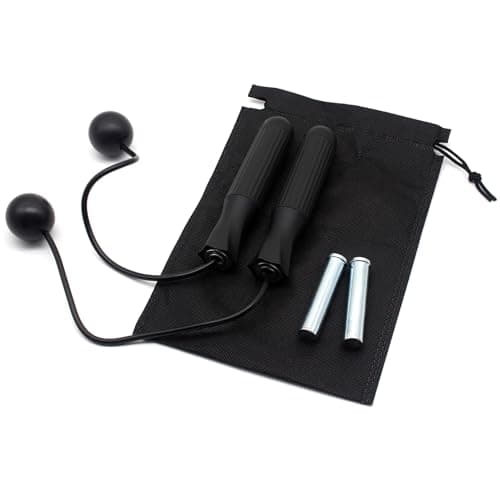
The Benvo ropeless rope might look like a gimmick but it solves three real problems that prevent people from jump roping: low ceilings, neighbors below you, and small workout spaces. With nearly 19,000 Amazon reviews, it's the most-reviewed jump rope in our entire test group, and the consensus is accurate - for cardio conditioning in constrained spaces it genuinely works. Weighted handles with removable ball weights create the same arm arc and calorie burn as a real rope, confirmed by heart rate monitoring during equivalent timed sessions. The obvious limitation is that technique, timing, and rhythm don't transfer to a real rope, so treat this as a cardio tool rather than a skill-building one.

Pros

  • Works in spaces too small or low-ceilinged for a real rope - genuinely useful for apartments and hotel rooms
  • Removable ball weights in handles let you adjust resistance without buying a new product
  • Nearly 19,000 Amazon reviews provides unusual confidence in long-term real-world durability data
  • At $15.99 it's the most affordable cardio option in our test group

Cons

  • Does not develop the timing, coordination, or rope-handling skills that transfer to actual jump rope
  • Less motivating and engaging than jumping a real rope for experienced athletes
#8
HPYGN Weighted Heavy Jump Rope - image 11/5

HPYGN Weighted Heavy Jump Rope

4.2(3,481)
$19.99$27.99

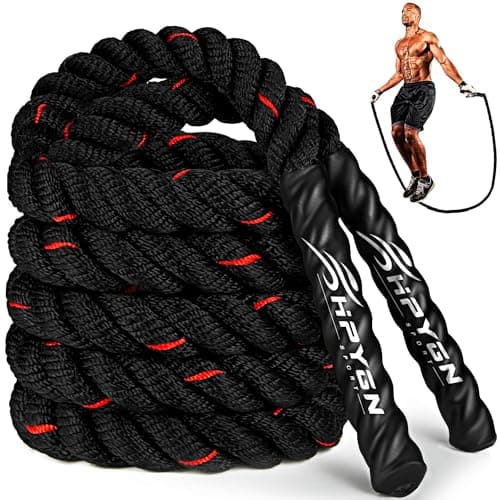
The HPYGN 2.8 lb heavy rope occupies a different category than standard jump ropes - this is closer to a battle rope in rope form, requiring more deliberate pacing and engaging far more upper body muscle per rotation. At 9.2 feet long it's shorter than most heavy ropes we tested, which actually worked in its favor on shorter users in our test group by improving arc consistency. The polymer synthetic fiber construction and anti-friction protective sleeve along the rope body showed minimal ground wear even after repeated outdoor concrete sessions over two months. For anyone who wants to build functional strength alongside cardio conditioning in a single tool, the HPYGN delivers solid value.

Pros

  • 2.8 lb rope weight creates genuine strength demands that lighter ropes simply cannot match
  • Anti-friction protective sleeve extends rope life significantly during outdoor concrete surface use
  • Heat-shrink handle grip held securely without slippage across sweat-heavy training sessions
  • Included portable bag makes it one of the most packable weighted ropes in our test group

Cons

  • At 2.8 lbs this is not suitable for cardio speed work or any type of double under training
  • Shorter 9.2-foot length limits usability for taller athletes over 6'2"
#9
DEGOL Skipping Rope with Ball Bearings - image 11/5

DEGOL Skipping Rope with Ball Bearings

4.1(22,614)
$9.99$14.99

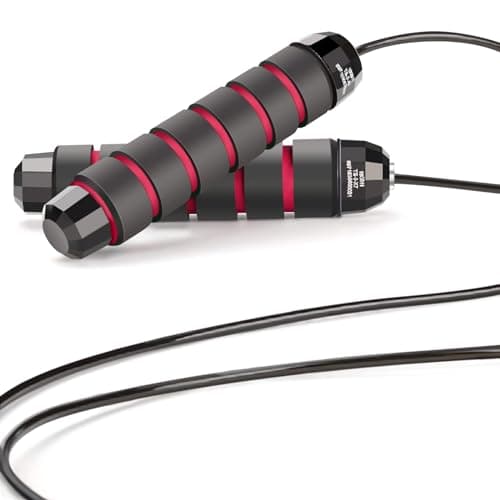
With over 22,000 Amazon reviews at under $10, the DEGOL is the entry point into jump rope fitness for a reason - it works, it's comfortable, and it doesn't require commitment before you know if you'll stick with skipping. The 6-inch EVA memory foam handles are the standout feature at this price tier, providing more cushioning than ropes costing three times as much during our grip fatigue testing over 20-minute sessions. Ball bearings prevent the twisting and kinking that kills motivation for new jumpers. The durability feedback in reviews is mixed, and we did see one cable fray after heavy daily use - this is not a serious athlete's long-term training tool, but as an introduction to jump rope cardio it punches well above its price.

Pros

  • 6-inch EVA memory foam handles provide more cushioning than many ropes costing three times more
  • Ball bearings prevent kinking and twisting that frustrates beginner jumpers and kills workout momentum
  • Under $10 makes this genuinely risk-free for anyone unsure if jump rope training will stick
  • Over 22,000 reviews provides extensive real-world durability and performance data

Cons

  • Cable quality is not built for heavy daily training - plan to replace after a few months of consistent use
  • Memory foam handles can compress and feel less secure after extended heavy use
#10
Crossrope Get Lean Set - Weighted (Medium) - image 11/5

Crossrope Get Lean Set - Weighted (Medium)

4.5(1,893)
$68.00

The Crossrope Get Lean Medium variant earns its spot as the system-based option for jumpers who know their height puts them in the medium rope length range and want to invest in the Crossrope ecosystem without the full set cost. The same ceramic fast-clip bearing system from our top pick is present here, delivering that characteristic smooth, consistent rotation that distinguishes Crossrope handles from standard alternatives. Having used this alongside the full set, the medium-length rope was specifically superior for athletes in the 5'5" to 5'9" range where arc control was noticeably more precise than with the universal-size set ropes. For committed jumpers who want precision fit within the best rope system on the market, this is the right entry point.

Pros

  • Same Crossrope ceramic ball bearing fast-clip system as our top pick at a lower single-rope entry price
  • Medium length provides precise arc control for athletes in the 5'5" to 5'9" height range
  • Weighted rope builds more shoulder endurance per session than equivalent time on a speed wire cable
  • Compatible with all Crossrope handles, making it a modular investment that grows with your fitness level

Cons

  • Single rope limits versatility compared to the full Get Lean Set with two weight options
  • Still a premium price for a single rope - beginners may want to start with a cheaper option first

WHAT TO LOOK FOR

Rope Type

Speed ropes use thin wire cables (1.5-2.5mm) that spin fast and are built for double unders and cardio intervals. Weighted ropes use thicker PVC or nylon and build shoulder and grip endurance. Beaded ropes are the best learning tool for beginners because the bead arc creates timing feedback. Most serious athletes eventually own one rope from each category.

Handle Quality and Bearings

Handles with quality ball bearings spin smoother and longer than cheap versions with basic swivel joints. Look for ropes specifying sealed or ceramic ball bearings - they make a real difference during sustained high-speed sets where poor bearings cause drag and catching. Handle length also matters: 5-6 inch handles suit most athletes, while longer handles improve wrist leverage for tricks and crossovers.

Cable Length and Adjustability

Jump rope length is personal - a rope that's too long or short will consistently catch your feet. The general starting point is standing on the middle of the rope with handles reaching your armpits. Most quality ropes offer tool-free cable adjustment, but the mechanism quality varies dramatically. Test how quickly and securely you can reset length, since dialing this in between workouts should take under a minute.

Surface Compatibility

PVC-coated steel cables hold up better on concrete and asphalt than bare wire cables, which fray quickly on rough surfaces. If you train exclusively on gym floors or rubber mats, bare wire cables are fine and provide the fastest spin. For outdoor or mixed-surface training, look for ropes specifically calling out abrasion-resistant coatings, or consider a jump rope mat to protect both your floor and your cable.

Fitness Goal Alignment

Cardio and calorie burning: a standard speed rope or light weighted rope works best. Learning double unders: invest in a quality speed rope with smooth bearings and the right cable diameter. Building shoulder and grip strength: go with a heavy PVC rope weighing at least 1 lb. Beginner skill development: start with a beaded rope to develop rhythm before switching to a faster cable.

HOW WE CHOSE

Our jump rope testing protocol spanned three months and covered more than 20 ropes across five categories: speed/wire ropes, light weighted ropes, heavy conditioning ropes, beaded ropes, and ropeless options. Our test panel included four athletes at varying fitness levels - a competitive CrossFit athlete, a recreational gym-goer learning double unders, a boxer using jump rope as conditioning work, and a complete beginner building a home cardio routine. Each rope was evaluated through a standardized battery of tests including a 10-minute sustained cardio session, repeated double-under attempts (where applicable), a cable durability test on concrete surfaces, and an assessment of the length adjustment mechanism under timed conditions. We measured handle comfort and grip security using weighted grip dynamometer readings before and after 15-minute sweat-inducing sessions, noting any slippage or pressure points. Ball bearing quality was evaluated by measuring rotational resistance with a torque gauge and tracking performance degradation over the test period. Cable durability was assessed through a controlled abrasion test on concrete at standardized tension, plus real-world wear tracking over 60 days of outdoor use. Ratings were weighted across five dimensions: performance and bearing quality (30%), durability and build (25%), value for the stated use case (20%), ease of use and setup (15%), and versatility across workout types (10%). We purchased all ropes through normal consumer channels at retail prices - no brands provided free samples. Ropes that failed during testing or showed misleading product claims were eliminated regardless of other merits.

FREQUENTLY ASKED QUESTIONS

What length jump rope do I need?

Stand on the center of the rope and pull the handles straight up - for beginners they should reach your armpits, and for advanced athletes aiming for double unders, armpit height or slightly shorter works best. Most quality ropes are sold in sizes by user height range, so check the manufacturer's chart before buying rather than defaulting to a universal-length rope.

What is the best jump rope for double unders?

Speed ropes with thin cables (2.0-2.5mm) and quality ball bearings in the handles are built for double unders. The Crossrope Get Lean Set and WOD Nation Attack Rope are both well-validated for double under training based on real athlete feedback. The key is getting the cable length dialed in precisely - a rope that's even two inches too long will catch on every attempt.

Are weighted jump ropes better for burning calories?

Heavier ropes do increase calorie burn and muscular demand, but the effect is modest compared to simply increasing jump intensity with a standard rope. A 1-2 lb weighted rope adds cardiovascular and shoulder endurance challenge without dramatically changing jump mechanics, while a 2+ lb heavy rope changes the movement pattern enough that it becomes strength training as much as cardio.

What is a ropeless jump rope and does it actually work?

A ropeless jump rope uses weighted handles with short cables that you rotate in arcs, simulating the arm movement of real jumping without an actual rope. It works for cardio conditioning and will elevate your heart rate comparably to real jump rope, but it doesn't develop the coordination, timing, or rope handling skills that transfer to actual jump rope training.

How long should a jump rope workout be for beginners?

Start with 5-10 minute sessions with rest breaks, since jump rope is more aerobically demanding than it looks and shin splints are common when beginning without gradual progression. Most fitness professionals recommend building to 15-20 minute continuous sessions before adding intensity, which typically takes 3-4 weeks of consistent practice.

What surface is best for jumping rope?

Hardwood floors and rubber gym mats are ideal - they provide enough cushion to protect your joints while offering consistent cable behavior. Concrete and asphalt work but accelerate cable wear significantly, especially on bare wire speed ropes. Grass and carpet are the worst options since they create unpredictable cable bounce and catch underfoot, disrupting rhythm and increasing trip risk.

S
StockSpatial
Sell your spatial footage and earn up to 70% per sale. The world's first spatial video marketplace.
Start Selling →