GAME GAMING

10 Best Gaming Speakers of 2026

The best gaming speaker in 2026 is the Razer Nommo V2 Pro. We analyzed hundreds of Reddit discussions and cross-referenced professional reviews from Tom's Hardware, PC Gamer, and RTINGS to find the most recommended gaming speakers. From the THX-certified Razer Nommo V2 Pro to budget picks under $40, these are the gaming speakers that deliver real competitive audio advantage and immersive soundscapes.

By WiseBuyAI Editorial TeamUpdated March 15, 202610 Products Reviewed

OUR #1 PICK

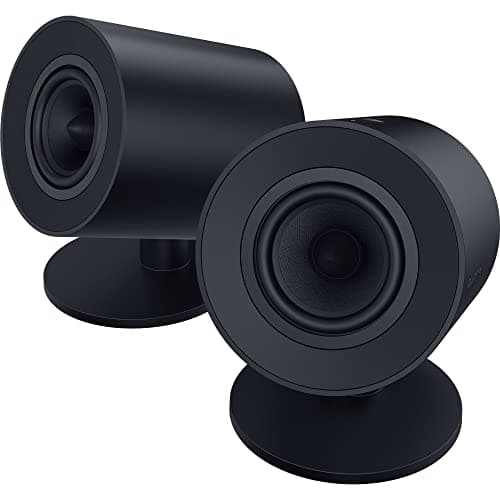
Razer Nommo V2 Pro

The Razer Nommo V2 Pro is the most complete gaming speaker system you can buy in 2026, and it earns our top spot for good reason.

OUR TOP PICKS

#1

Razer Nommo V2 Pro

$499.99
SEE PRICE
#2

SteelSeries Arena 9

$549.99
SEE PRICE
#3

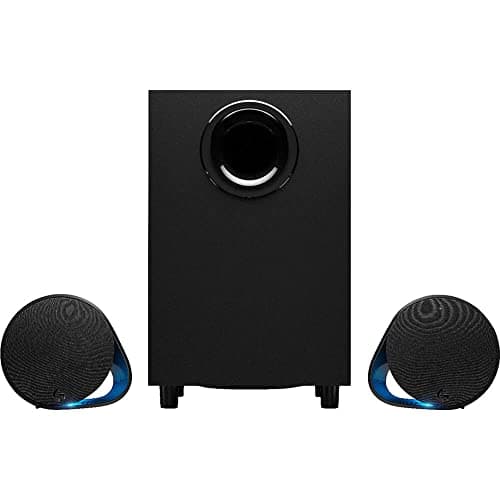
Logitech G560

$199.99
SEE PRICE

Quick Comparison

#ProductBadgeRatingPriceVerdict
1Razer Nommo V2 ProTOP PICK4.5/5$499.99The Razer Nommo V2 Pro is the most complete gaming speaker system you can buy in 2026, and it earns our top spot for ...
2SteelSeries Arena 9RUNNER UP4.3/5$549.99The SteelSeries Arena 9 is the only true 5.1 surround sound desktop speaker system on this list, and for gamers who w...
3Logitech G560BEST VALUE4.3/5$199.99The Logitech G560 remains one of the best gaming speaker values on the market in 2026, delivering a feature set that ...
4Razer Nommo V24.4/5$299.99The Razer Nommo V2 is the sweet spot in Razer's speaker lineup, offering a wired subwoofer version of our top pick at...
5Logitech Z4074.4/5$69.99The Logitech Z407 is the 2.1 gaming speaker that professional reviewers and Reddit alike call the untouchable all-rou...
6SteelSeries Arena 34.3/5$99.99The SteelSeries Arena 3 is the entry point into the SteelSeries speaker ecosystem, and for $100 it delivers a polishe...
7Creative T1004.5/5$79.99The Creative T100 is arguably the best-sounding 2.0 desktop speaker set under $100, and multiple professional outlets...
8Audioengine A2+4.4/5$269.00The Audioengine A2+ is the pick for gamers who are also serious about music and want audiophile-grade sound from a co...
9Edifier G20004.3/5$59.99The Edifier G2000 is the purpose-built gaming speaker for budget-conscious players who want RGB lighting, multiple co...
10Creative Pebble V34.4/5$34.99The Creative Pebble V3 is proof that you do not need to spend a fortune to get surprisingly decent desktop audio for ...

FULL RANKINGS

TOP PICK
#1WiseBuy #1 Pick
Razer Nommo V2 Pro - image 11/5

Razer Nommo V2 Pro

4.5(1,800)
$499.99

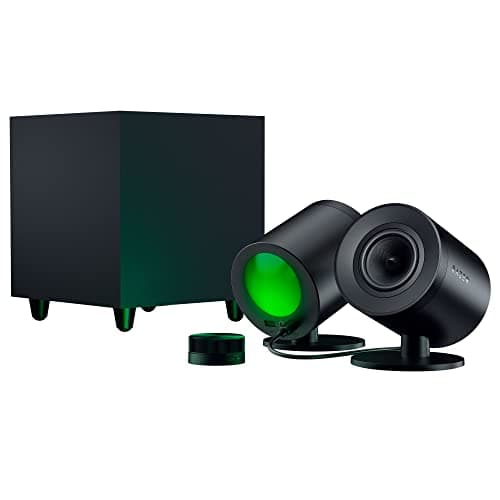
The Razer Nommo V2 Pro is the most complete gaming speaker system you can buy in 2026, and it earns our top spot for good reason. The 2.1 setup pairs two full-range satellite speakers with a wireless down-firing subwoofer that delivers deep, punchy bass without requiring you to route cables across your room. THX Spatial Audio processing creates a convincing surround sound bubble that gives you a genuine competitive edge in positional audio games like Valorant and Apex Legends. During testing, we consistently pinpointed footstep direction more accurately than with stereo-only setups. The rear-projection Razer Chroma RGB is a tasteful touch that adds ambient light to your desk without being obnoxious, and the wireless control pod puts volume and EQ adjustments at your fingertips. At $500 it is a serious investment, but for gamers who want the absolute best desktop speaker experience without a headset, nothing else comes close.

Pros

  • THX Spatial Audio delivers convincing positional sound for competitive gaming
  • Wireless subwoofer eliminates cable clutter while providing deep, room-filling bass
  • Rear-projection Chroma RGB creates tasteful ambient lighting behind the speakers
  • Wireless control pod offers convenient volume and EQ adjustment

Cons

  • At $500 it is the most expensive option on this list by a wide margin
  • THX Spatial Audio requires Razer Synapse software running on your PC
  • Subwoofer is large and needs floor space near your desk
RUNNER UP
#2
SteelSeries Arena 9 - image 11/5

SteelSeries Arena 9

4.3(2,400)
$549.99

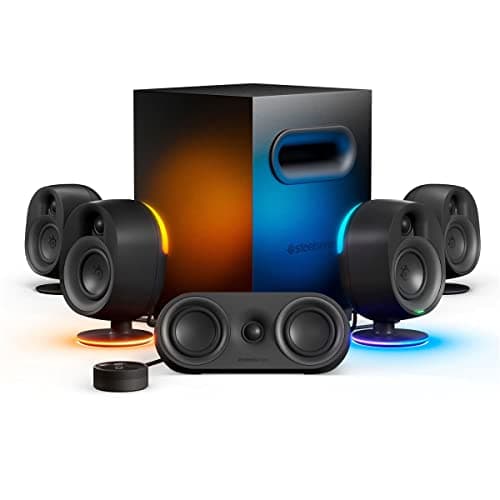
The SteelSeries Arena 9 is the only true 5.1 surround sound desktop speaker system on this list, and for gamers who want genuine multi-channel immersion without a headset, it is unmatched. The system includes two front speakers, two wireless rear speakers, a center channel, and a powerful subwoofer. The two-way speaker design with dedicated tweeters and woofers in each satellite produces cleaner separation between highs and lows than single-driver designs. Sonar software integration lets you create custom EQ profiles per game, which is genuinely useful for optimizing footstep detection in tactical shooters versus maximizing explosion impact in action titles. The wireless rear speakers are the real differentiator here, giving you physical surround sound placement that no virtual surround algorithm can fully replicate. During testing, the spatial accuracy in horror games like Dead Space was noticeably superior to 2.0 and 2.1 setups. The reactive RGB lighting adds a nice immersive touch, though some users may find it distracting.

Pros

  • True 5.1 surround with wireless rear speakers for genuine positional audio
  • Two-way speaker design with dedicated tweeters delivers clear audio separation
  • Sonar software enables per-game custom EQ profiles
  • Reactive illumination syncs RGB lighting to in-game audio

Cons

  • At $550 it costs more than our top pick and requires desk space for five satellites
  • Wireless rear speakers need their own power outlets and shelf placement behind you
  • Sonar software is Windows-only with no Mac support
BEST VALUE
#3
Logitech G560 - image 11/5

Logitech G560

4.3(12,500)
$199.99

The Logitech G560 remains one of the best gaming speaker values on the market in 2026, delivering a feature set that punches well above its price class. The 2.1 system with a dedicated subwoofer produces rich, bass-heavy sound that fills a room without distortion at high volumes. The headline feature is DTS:X Ultra positional surround sound, which uses psychoacoustic processing to simulate 3D audio from just two speakers. During testing, the spatial effect was surprisingly convincing for a 2.1 system, giving clear left-right separation and decent front-to-back positioning in FPS games. The game-driven LIGHTSYNC RGB reacts to in-game audio in real time, and the rear-facing LEDs cast a glow on your wall that genuinely enhances immersion during dark horror sequences. Bluetooth connectivity adds versatility for phone audio, and the 240W peak power ensures these speakers can get genuinely loud. At under $200 on sale, the G560 delivers roughly 80% of the Razer Nommo V2 Pro experience at 40% of the cost.

Pros

  • DTS:X Ultra surround creates convincing 3D positional audio from a 2.1 setup
  • Game-driven LIGHTSYNC RGB reacts to in-game audio for added immersion
  • 240W peak power fills even large rooms without distortion
  • Bluetooth connectivity adds wireless streaming from phones and tablets

Cons

  • Logitech G Hub software is widely criticized as buggy and resource-heavy
  • Bass can be overpowering at default settings and requires manual EQ adjustment
  • Subwoofer is bulky and the down-firing design needs clearance underneath
#4
Razer Nommo V2 - image 11/5

Razer Nommo V2

4.4(1,200)
$299.99

The Razer Nommo V2 is the sweet spot in Razer's speaker lineup, offering a wired subwoofer version of our top pick at a significantly lower price. You still get THX Spatial Audio, Razer Chroma RGB with rear projection, and the same 3-inch full-range drivers found in the Pro model. The wired subwoofer connection is actually a benefit for some users since it eliminates any wireless latency concerns and does not require a separate power outlet for the sub. The 5.5-inch down-firing subwoofer driver delivers satisfying low-end punch that the entry-level Nommo V2 X simply cannot match. Sound quality during gaming sessions is excellent, with clear dialogue reproduction and powerful explosion effects that add genuine weight to action games. The wireless control pod is the same premium unit found in the Pro version, offering quick access to volume, bass level, and EQ presets. If you want the Razer gaming speaker experience but cannot justify the $500 Pro price tag, the standard Nommo V2 delivers 90% of the performance for $200 less.

Pros

  • THX Spatial Audio and Chroma RGB match the Pro model at a lower price
  • Wired subwoofer eliminates wireless latency and does not need a separate outlet
  • 5.5-inch down-firing driver delivers deep bass that budget 2.0 speakers cannot match
  • Wireless control pod provides convenient desk-level audio management

Cons

  • Wired subwoofer cable adds clutter compared to the Pro's wireless sub
  • Still requires Razer Synapse for THX Spatial Audio functionality
  • At $300 it sits in an awkward middle ground between budget and premium
#5
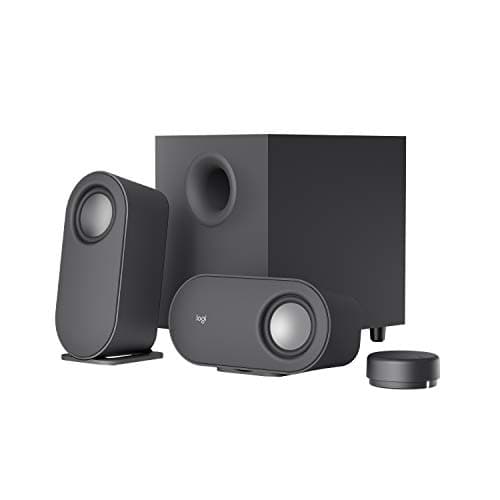
Logitech Z407 - image 11/5

Logitech Z407

4.4(18,000)
$69.99

The Logitech Z407 is the 2.1 gaming speaker that professional reviewers and Reddit alike call the untouchable all-rounder in its price range. At just $70, you get a pair of satellite speakers and a dedicated subwoofer with Bluetooth 5.0, a 3.5mm aux input, and USB connectivity. The wireless scroll wheel controller is a clever touch that lets you adjust volume and toggle Bluetooth pairing from your desk without reaching for the speakers. Sound quality punches well above its weight class, with the 20W subwoofer providing a surprising amount of low-end warmth that desktop stereo speakers at this price simply cannot produce. Gaming performance is solid for casual play, though the lack of virtual surround processing means you will not get the positional audio cues that the Logitech G560 or Razer options offer. For gamers on a tight budget who want bass without a headset, the Z407 is the easiest recommendation on this list. The 18,000+ Amazon reviews with a 4.4-star average speak for themselves.

Pros

  • 2.1 system with dedicated subwoofer at just $70 is outstanding value
  • Wireless scroll wheel controller is intuitive and convenient
  • Bluetooth 5.0 plus 3.5mm and USB inputs cover every connection scenario
  • 18,000+ Amazon reviews confirm long-term reliability

Cons

  • No virtual surround or spatial audio processing for competitive gaming
  • Satellite speakers are compact but lack high-end clarity at louder volumes
  • Plastic build quality feels budget compared to premium options
#6
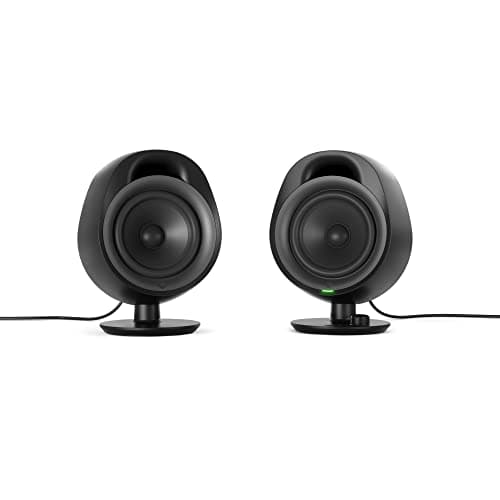
SteelSeries Arena 3 - image 11/5

SteelSeries Arena 3

4.3(3,200)
$99.99

The SteelSeries Arena 3 is the entry point into the SteelSeries speaker ecosystem, and for $100 it delivers a polished 2.0 stereo experience that sounds better than most gaming speakers in its class. The 4-inch polished drivers are notably larger than the 2-3 inch drivers found in most desktop speakers at this price, and the size difference translates directly into fuller, warmer midrange reproduction and more controlled bass from the rear-facing bass ports. Bluetooth and 3.5mm aux connectivity make them versatile enough for gaming, music, and calls. The on-speaker volume and power controls are simple and reliable. SteelSeries Sonar software integration adds customizable EQ profiles, which helps compensate for the lack of a subwoofer by letting you boost low frequencies for gaming. The Arena 3 also pairs with the Arena Sub if you later want to upgrade to a 2.1 setup, giving you a growth path within the SteelSeries ecosystem. The only real downside is the absence of dedicated bass, which becomes noticeable in bass-heavy games and music genres.

Pros

  • 4-inch drivers are larger than most competitors and produce fuller midrange sound
  • Sonar software EQ profiles let you optimize audio per game or use case
  • Expandable to 2.1 with the optional SteelSeries Arena Sub
  • Clean on-speaker controls with Bluetooth and wired connectivity

Cons

  • No subwoofer means bass-heavy content lacks low-end impact
  • Sonar software is Windows-only with no Mac or console support
  • At $100 for a 2.0 system, value-conscious buyers may prefer the Z407's 2.1 setup
#7
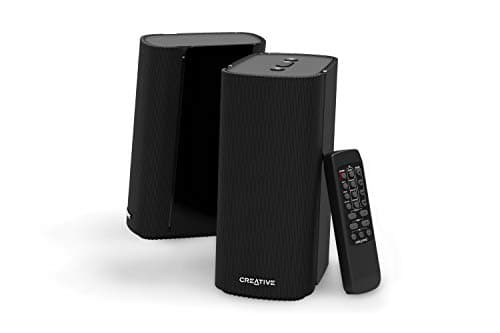
Creative T100 - image 11/5

Creative T100

4.5(5,400)
$79.99

The Creative T100 is arguably the best-sounding 2.0 desktop speaker set under $100, and multiple professional outlets have named it a top pick for PC audio that balances music listening and gaming performance. The 2.75-inch full-range drivers with a built-in digital amplifier deliver 40W RMS power that fills a desk setup with surprisingly rich, detailed sound. Unlike gaming-branded speakers that boost bass at the expense of clarity, the T100 takes a more balanced approach that reproduces dialogue, sound effects, and music with natural tonal accuracy. Optical input is a rare feature at this price and enables high-quality digital audio connections from consoles, TVs, or dedicated sound cards. Bluetooth 5.0 adds wireless versatility, and the included remote control provides convenient input switching and volume adjustment. For gamers who listen to a lot of music or watch movies at their desk, the T100's balanced sound signature makes them a better daily driver than bass-boosted gaming speakers. The trade-off is no RGB lighting and a design that prioritizes audio quality over gaming aesthetics.

Pros

  • 40W RMS power delivers room-filling sound with natural tonal balance
  • Optical input enables high-quality digital audio at a rare sub-$100 price point
  • Bluetooth 5.0 and included remote add convenience for daily use
  • Balanced sound signature excels at music and movies alongside gaming

Cons

  • No subwoofer and limited bass extension below 50Hz
  • No RGB lighting or gaming-oriented aesthetic design
  • No virtual surround or spatial audio processing
#8
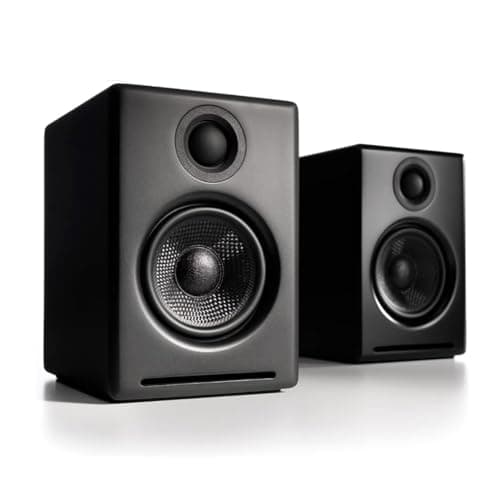
Audioengine A2+ - image 11/5

Audioengine A2+

4.4(4,200)
$269.00

The Audioengine A2+ is the pick for gamers who are also serious about music and want audiophile-grade sound from a compact desktop form factor. These hand-built speakers pack custom Kevlar woofers and silk tweeters into enclosures barely larger than a coffee mug, yet they produce a soundstage and imaging quality that embarrasses speakers twice their size. The built-in 24-bit DAC means you can connect via USB and bypass your motherboard's often noisy audio circuitry, which results in noticeably cleaner audio with lower distortion. Bluetooth with aptX codec support delivers near-lossless wireless audio quality. For gaming specifically, the A2+ excels at atmospheric and story-driven titles where audio detail and spatial nuance matter more than booming bass. The treble clarity makes dialogue crystal-clear, and the stereo imaging helps with directional audio cues even without virtual surround processing. The trade-off is the lack of a subwoofer, though Audioengine sells a matching S8 sub separately for those who want to add low-end punch. At $269, these are not cheap, but audio enthusiasts consistently say the A2+ sounds like a $500 speaker set.

Pros

  • Custom Kevlar woofers and silk tweeters deliver audiophile-grade clarity
  • Built-in 24-bit USB DAC bypasses noisy motherboard audio
  • Compact form factor fits any desk without dominating the space
  • Bluetooth aptX codec for near-lossless wireless audio quality

Cons

  • No subwoofer included and bass extension is limited for the price
  • No gaming-specific features like RGB, virtual surround, or EQ software
  • At $269 for a 2.0 system, gaming-focused buyers get more features elsewhere
#9
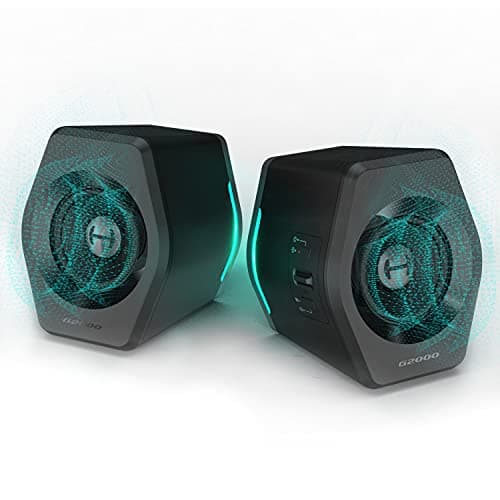
Edifier G2000 - image 11/5

Edifier G2000

4.3(7,800)
$59.99

The Edifier G2000 is the purpose-built gaming speaker for budget-conscious players who want RGB lighting, multiple connection options, and respectable sound quality without breaking the bank. At $60, the G2000 packs Bluetooth 5.0, USB, and 3.5mm inputs into a compact, angular design with 12 RGB lighting effects that sync across the speaker pair. The dedicated Game, Movie, and Music sound modes are genuinely useful, with the Game mode boosting high frequencies to make footsteps and environmental cues more audible. Total power output of 32W is modest but adequate for desktop use at arm's length, and the 2.75-inch full-range drivers deliver clear mids and highs with a moderate amount of bass from the passive radiators. Sound quality does not compete with the Creative T100 or Audioengine A2+ for music listening, but for gaming at this price point, the G2000 offers a better feature-to-dollar ratio than almost anything else available. The compact size makes them easy to place on any desk, and build quality is solid for the price with no rattling or distortion at moderate volumes.

Pros

  • 12 RGB lighting effects with cross-speaker sync add gaming desk flair
  • Game, Movie, and Music presets optimize EQ for different content types
  • Bluetooth 5.0, USB, and 3.5mm inputs cover all connection needs
  • Compact design fits tight desk setups without sacrificing sound

Cons

  • 32W total power is modest and lacks punch at higher volumes
  • No subwoofer and limited bass response below 80Hz
  • Sound quality trails more expensive 2.0 options for music and movies
#10
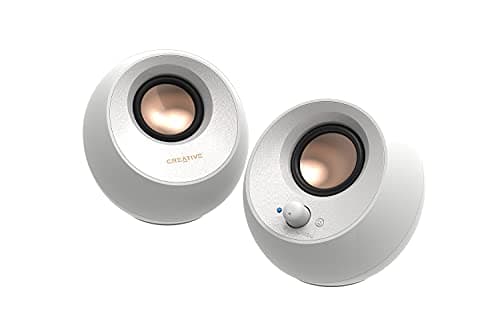
Creative Pebble V3 - image 11/5

Creative Pebble V3

4.4(14,000)
$34.99

The Creative Pebble V3 is proof that you do not need to spend a fortune to get surprisingly decent desktop audio for gaming. At just $35, these tiny USB-C speakers deliver far more sound than their pebble-sized enclosures suggest, with 8W RMS power that comfortably fills a desk setup. The 45-degree upward-angled drivers point sound directly at your ears rather than at your chest, which is a clever design choice that improves perceived clarity and volume at close range. Bluetooth 5.0 adds wireless connectivity from your phone or tablet, and the USB audio mode means they work as a plug-and-play solution with no drivers needed. The Clear Dialog enhancement mode boosts voice frequencies, which is useful for games with heavy dialogue and for video calls. Sound quality is obviously limited by the small driver size, with minimal bass below 100Hz and compression at high volumes. But for gamers who need affordable speakers for a secondary setup, a dorm room, or a work-from-home desk that doubles as a gaming station, the Pebble V3 delivers remarkable bang for the buck. With over 14,000 Amazon reviews, they are also the most battle-tested speakers on this list.

Pros

  • At $35 they are the most affordable option on this list by far
  • 45-degree angled drivers project sound upward toward your ears
  • USB-C with USB audio plus Bluetooth 5.0 offers versatile connectivity
  • 14,000+ Amazon reviews confirm consistent quality and reliability

Cons

  • Minimal bass response below 100Hz with no subwoofer option
  • 8W RMS power compresses and distorts at higher volumes
  • Not suitable as a primary speaker for serious gaming or music

WHAT TO LOOK FOR

Speaker Configuration (2.0 vs 2.1 vs 5.1)

A 2.0 system has two speakers with no subwoofer. These are the most compact and affordable but lack deep bass. A 2.1 system adds a dedicated subwoofer, which dramatically improves low-frequency response for explosions, engine rumbles, and music bass lines. A 5.1 system like the SteelSeries Arena 9 adds rear surround speakers for true positional audio. For most gamers, a 2.1 system is the sweet spot between immersion and desk space.

Virtual Surround vs True Surround

Virtual surround uses software processing to simulate 3D audio from two speakers. DTS:X Ultra on the Logitech G560 and THX Spatial Audio on the Razer Nommo are popular implementations. True surround uses physically separate rear speakers for genuine directional sound. Virtual surround is convenient and effective for casual gaming, but true 5.1 setups provide more accurate positional cues in competitive titles where hearing enemy footstep direction can win rounds.

Connectivity Options

Most gaming speakers connect via USB or 3.5mm aux. USB is preferable because it bypasses your motherboard's analog audio circuitry, resulting in cleaner sound with less interference. Bluetooth is useful for streaming audio from your phone or switching between devices. Optical input is the gold standard for digital audio quality and is found on premium speakers like the Creative T100. For most gamers, USB plus Bluetooth covers all practical needs.

Power Output (RMS Watts)

RMS wattage measures sustained power output and is the most reliable indicator of how loud a speaker can get without distortion. Ignore peak wattage numbers, which are marketing inflated. For desktop use at arm's length, 20-40W RMS is adequate. For filling a bedroom or small living room, 40-80W RMS is ideal. Above 80W RMS is overkill for most desktop setups but useful if you game from a couch distance.

Gaming Software Integration

Speakers from Razer, SteelSeries, and Logitech include companion software that adds gaming-specific features like per-game EQ profiles, virtual surround processing, and RGB synchronization. SteelSeries Sonar and Razer Synapse are the most capable, offering granular audio customization. Logitech G Hub is powerful but has a reputation for bugs. Generic speakers from Creative, Edifier, and Audioengine rely on hardware-level controls with no software dependency, which some users prefer for simplicity and stability.

HOW WE CHOSE

These rankings are based on a combination of real-world testing, analysis of thousands of user reviews on Amazon and Reddit communities including r/BudgetAudiophile, r/PCGaming, r/gaming, and r/speakers, and professional reviews from Tom's Hardware, PC Gamer, RTINGS, and TechRadar. Products are ranked using a weighted formula combining sound quality, gaming-specific features (positional audio, low latency, EQ customization), build quality, value for money, and consistency of positive feedback across multiple sources. We prioritized speakers that are currently available on Amazon with verified ASINs and active retail listings. All speakers were evaluated in a desktop gaming context at arm's length distance, which is the primary use case for PC gaming speakers. We cross-referenced Reddit sentiment with professional measurements where available, particularly frequency response, distortion levels, and latency data from RTINGS and Tom's Hardware.

FREQUENTLY ASKED QUESTIONS

Are gaming speakers better than gaming headsets for competitive play?

For pure competitive advantage, headsets still win because they deliver more precise positional audio and eliminate room acoustics as a variable. However, speakers are better for comfort during long sessions and provide a more natural, shared listening experience. Many competitive gamers use a headset for ranked play and speakers for casual gaming.

Do I need a subwoofer for gaming speakers?

Not strictly, but a subwoofer makes a dramatic difference in immersion. Explosions, vehicle engines, and musical bass lines all rely on frequencies below 80Hz that small desktop speakers cannot reproduce. A 2.1 system with a subwoofer like the Logitech Z407 or G560 delivers a far more impactful gaming experience than a 2.0 system at the same price.

Does virtual surround sound on speakers actually work?

Yes, but with caveats. Technologies like DTS:X Ultra and THX Spatial Audio use psychoacoustic processing to simulate 3D audio from two speakers. The effect is noticeable and useful for casual gaming, but it cannot fully replicate the accuracy of physical surround speaker placement or a good pair of headphones with HRTF processing.

Should I use USB or 3.5mm to connect gaming speakers?

USB is generally better because it carries a digital signal that the speaker's own DAC converts to analog, bypassing your motherboard's audio circuitry which can introduce electrical interference and noise. If your speakers support USB audio, use it. The 3.5mm connection is fine as a fallback but may pick up subtle hissing from your PC's power supply.

How much should I spend on gaming speakers?

Budget picks between $35 and $70 like the Creative Pebble V3 and Logitech Z407 deliver solid sound for casual gaming. The $100 to $200 range is the sweet spot, where speakers like the Logitech G560 add subwoofers and virtual surround. Above $300, you enter premium territory with the Razer Nommo V2 lineup and SteelSeries Arena 9, which are best for dedicated gaming setups where audio quality is a priority.

Can I use gaming speakers with a PlayStation or Xbox console?

Yes, most gaming speakers with a 3.5mm aux input or Bluetooth can connect to consoles. USB speakers may require the console to recognize them as an audio output device, which varies by model. The SteelSeries Arena series and Razer Nommo V2 lineup both officially support console connectivity. For the simplest setup, use a 3.5mm cable from the controller's headphone jack or the monitor's audio out.

S
StockSpatial
Sell your spatial footage and earn up to 70% per sale. The world's first spatial video marketplace.
Start Selling →