No - every exercise bike on this list works as a standalone cycling machine without any subscription. You can adjust resistance manually and ride as long as you want. However, bikes like the Peloton, NordicTrack S22i, and Bowflex VeloCore are designed around their subscription platforms (Peloton All-Access, iFIT, JRNY), and without the subscription you are essentially paying for a touchscreen you can barely use. If you want to avoid subscriptions entirely, the Keiser M3i, Schwinn IC4, JOROTO X2Pro, and Sunny Health bikes deliver excellent standalone experiences.
Magnetic resistance uses magnets positioned near the flywheel to create resistance without physical contact, resulting in near-silent operation and zero maintenance. Friction resistance uses felt or leather pads pressed against the flywheel, which creates noise over time and requires periodic pad replacement. We strongly recommend magnetic resistance bikes for home use because they are quieter, smoother, and require almost no upkeep. The only friction bike on our list is the YOSUDA, which earns its place through exceptional value at its ultra-low price point.
In terms of ride quality, the Schwinn IC4 is remarkably close to the Peloton Bike. Both use magnetic resistance with smooth belt drives, and the IC4 actually offers more granular resistance control with 100 levels versus Peloton's 100. Where Peloton wins is the integrated touchscreen experience, instructor ecosystem, and community features. Where the IC4 wins is flexibility - it connects to Peloton Digital, Zwift, Kinomap, and other apps, giving you more choices. If you value the all-in-one Peloton experience, the Peloton Bike is worth the premium. If you want similar ride quality with more app freedom and significant cost savings, the IC4 is the smarter buy.
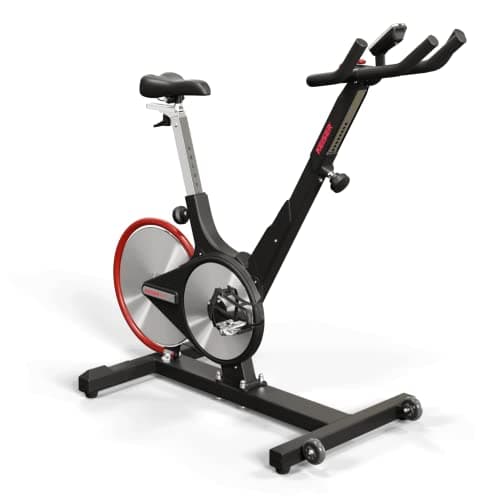
Budget ($200-$450): Bikes like the YOSUDA and Sunny Health deliver solid ride quality for casual to moderate use. Expect basic features and some compromises in ride smoothness and connectivity. Mid-range ($500-$1,500): This is the sweet spot for most home riders. The Schwinn IC4, JOROTO X2Pro, and Echelon EX-15 offer magnetic resistance, app connectivity, and durable construction. Premium ($1,500+): Bikes like the Keiser M3i, Peloton, and Wahoo KICKR Bike offer commercial-grade build quality, advanced features, and the best ride feel. These are worth it if you ride 4+ times per week and plan to use the bike for years.
Yes. The Peloton app (now called Peloton App One at $12.99/month or Peloton App+ at $24/month) works on any phone, tablet, or smart TV. You can follow Peloton classes on any bike. However, you will not get real-time resistance callouts that automatically adjust your bike, nor will you appear on the leaderboard with accurate output metrics. Bikes with Bluetooth power meter compatibility - like the Schwinn IC4, Keiser M3i, and JOROTO X2Pro - can transmit cadence data to the Peloton app for a more integrated experience.
Magnetic resistance bikes are extremely quiet - typically under 50 decibels during intense riding, which is about the level of a normal conversation. You can comfortably ride while watching TV, on a phone call, or while someone sleeps in the next room. Friction resistance bikes are noticeably louder, especially at higher resistance levels. Among our picks, the Keiser M3i and Schwinn IC4 are the quietest, followed closely by the Peloton and Wahoo KICKR Bike. The YOSUDA with felt pad resistance is the loudest on our list but still acceptable for apartment use at moderate intensity.

 1/4
1/4


