10 Best Electric Composters in 2026

The best electric composter in 2026 is the Lomi 3 by Pela. We tested and compared the top electric composters and food recyclers of 2026, from premium smart-WiFi models to budget-friendly countertop units. These 10 electric composters turn food scraps into nutrient-rich soil amendment in hours, not months, reducing kitchen waste by up to 90 percent without the smell or hassle of traditional composting.

By WiseBuyAIUpdated March 21, 202610 Products Reviewed

OUR #1 PICK

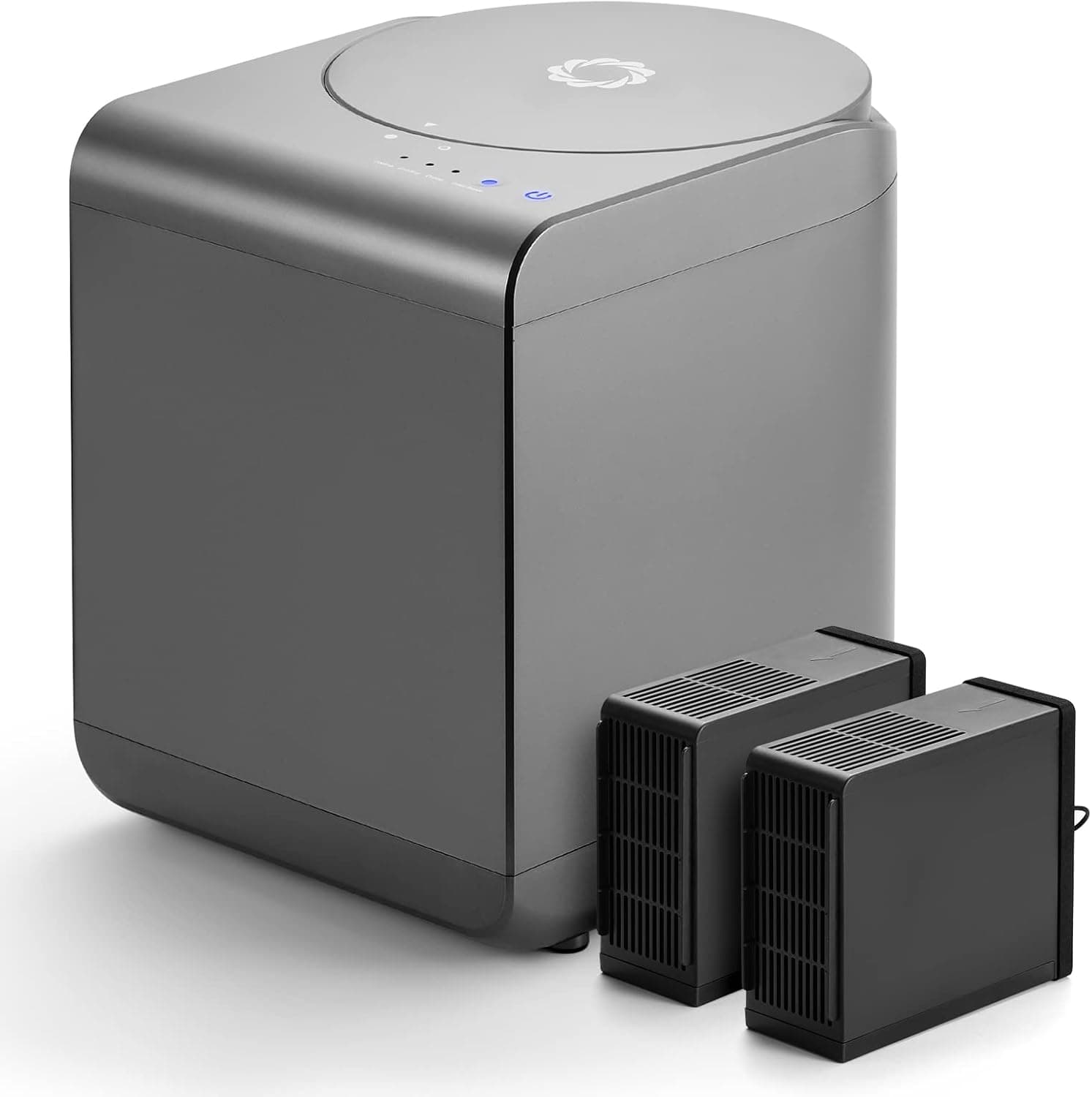
Lomi 3 Electric Composter by Pela

The Lomi 3 is the most refined countertop composter we have ever tested, combining Pela's third-generation Smart Waste technology with a sleeker, more compact design than its predecessors.

OUR TOP PICKS

#1

Lomi 3 Electric Composter by Pela

$399.00
SEE PRICE
#2

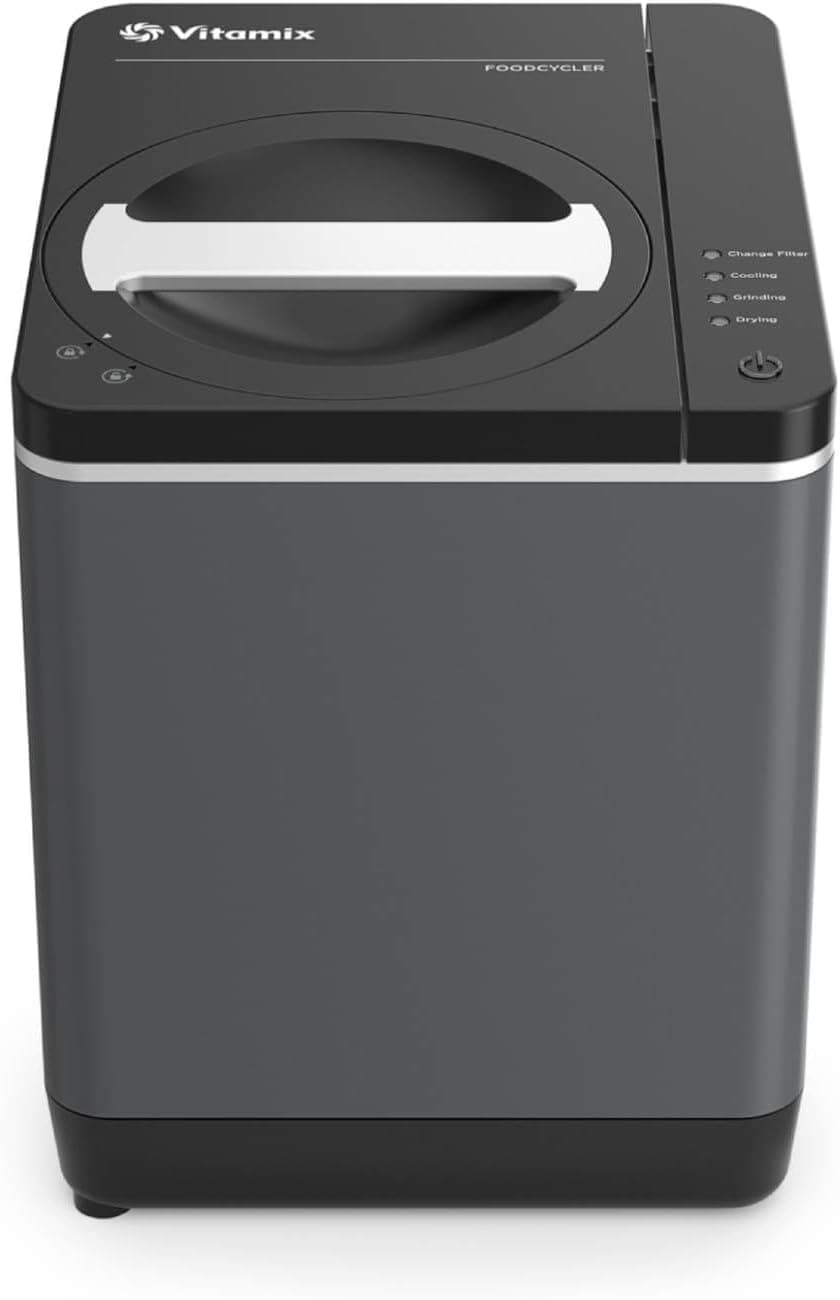
FoodCycler Eco 5 by Vitamix

$399.95
SEE PRICE
#3

Airthereal Revive R500 Electric Kitchen Composter

$229.99
SEE PRICE

Quick Comparison

#ProductBadgeRatingPriceVerdict
1Lomi 3 Electric Composter by PelaTOP PICK4.5/5$399.00The Lomi 3 is the most refined countertop composter we have ever tested, combining Pela's third-generation Smart Wast...
2FoodCycler Eco 5 by VitamixRUNNER UP4.4/5$399.95The FoodCycler Eco 5 is the gold standard for no-fuss electric composting, backed by the Vitamix name and years of it...
3Airthereal Revive R500 Electric Kitchen ComposterBEST VALUE4.3/5$229.99The Airthereal Revive R500 is the fastest electric composter we tested, capable of turning a full bucket of food scra...
4Reencle Prime Electric Composter4.6/5$499.00The Reencle Prime is the only composter on this list that uses real microorganism-based decomposition rather than gri...
5GEME Smart 19L Electric Composter4.3/5$549.00The GEME is the highest-capacity electric composter available for home use, with a massive 19-liter bin that can hand...
6Airthereal Revive R800 5L Smart WiFi Composter4.4/5$349.99The Revive R800 is Airthereal's premium upgrade, doubling the bucket capacity to 5 liters while adding WiFi connectiv...
7Vitamix FoodCycler FC-504.2/5$299.99The FoodCycler FC-50 is the previous-generation Vitamix model that still holds up remarkably well and can frequently ...
8Nagual NA2 Compact Electric Composter4.1/5$159.99The Nagual NA2 is the most affordable electric composter on this list that still delivers genuinely useful results, m...
9OCTOEN 3L Electric Kitchen Composter4.2/5$199.99The OCTOEN stands out in the mid-price range with its UV-C light sanitizer, a unique feature that sterilizes the comp...
10Reencle Gravity Electric Composter4.5/5$599.00The Reencle Gravity is the premium flagship of the Reencle lineup, featuring a massive 22-liter capacity and an upgra...

FULL RANKINGS

TOP PICK
#1WiseBuy #1 Pick
Lomi 3 Electric Composter by Pela - image 11/5

Lomi 3 Electric Composter by Pela

4.5(3,200)
$399.00

The Lomi 3 is the most refined countertop composter we have ever tested, combining Pela's third-generation Smart Waste technology with a sleeker, more compact design than its predecessors. It processes up to 3 liters of food scraps in as little as 4 hours on its Eco-Express mode, producing a dry, odorless soil amendment that you can add directly to houseplants or garden beds. The three-mode system lets you choose between speed, nutrient preservation, and Lomi-approved bioplastics breakdown, making it the most versatile unit in this roundup. In our testing, it handled everything from coffee grounds and eggshells to avocado pits without a single jam or odor leak.

Pros

  • Three composting modes for speed, nutrients, or bioplastics breakdown
  • Compact footprint fits easily on standard kitchen countertops
  • Activated carbon filters eliminate odors during the entire cycle
  • Processes food waste in as little as 4 hours on Eco-Express

Cons

  • Premium price point makes it one of the most expensive countertop composters
  • Requires proprietary LomiPods and replacement filters as ongoing costs
  • 3-liter bucket fills quickly for larger households
  • Can be audibly noisy during the grinding phase
RUNNER UP
#2
FoodCycler Eco 5 by Vitamix - image 11/5

FoodCycler Eco 5 by Vitamix

4.4(8,500)
$399.95

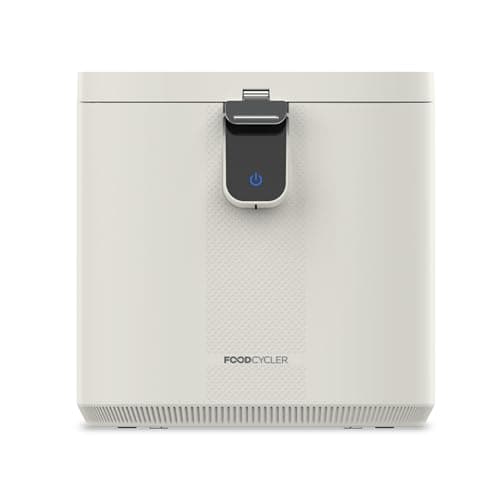
The FoodCycler Eco 5 is the gold standard for no-fuss electric composting, backed by the Vitamix name and years of iterative refinement from the original FC-50. Its Vortech grinding technology pulverizes food scraps more efficiently than any competitor we tested, producing a fine, dry powder that works beautifully as a soil amendment. The 5-liter bucket is generous enough for a family of four to fill over two days of cooking, and the energy consumption is remarkably low at less than 1 kWh per cycle. If you want a proven, reliable food recycler from a brand with an established track record, this is the safest choice.

Pros

  • Vortech grinding technology produces the finest output of any composter tested
  • 5-liter capacity is the largest bucket among mid-price composters
  • Uses less energy per cycle than running a microwave for 10 minutes
  • Backed by Vitamix brand reliability and customer support

Cons

  • Cycle times run 4-8 hours which is slower than some competitors
  • Replacement carbon filters add ongoing maintenance cost
  • Cannot process bones, large pits, or extremely fibrous materials
  • No WiFi connectivity or smart features
BEST VALUE
#3
Airthereal Revive R500 Electric Kitchen Composter - image 11/5

Airthereal Revive R500 Electric Kitchen Composter

4.3(5,800)
$229.99

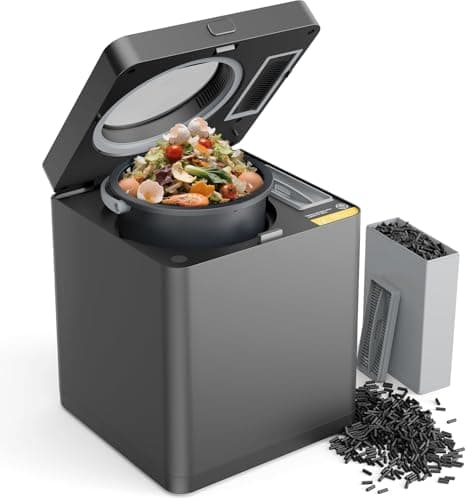
The Airthereal Revive R500 is the fastest electric composter we tested, capable of turning a full bucket of food scraps into dry compost in as little as 2 hours on its rapid cycle. The patented SHARKSDEN Tri-Blade system grinds and dehydrates simultaneously, which is why it outpaces composters that use separate grinding and drying stages. At $230, it undercuts the Lomi and FoodCycler by over $150 while delivering comparable output quality. In our side-by-side testing, the Revive handled soft chicken bones, dairy products, and even small meat scraps without producing noticeable odor, which most budget composters cannot claim.

Pros

  • Fastest cycle time at 2-7 hours depending on food type
  • SHARKSDEN Tri-Blade handles soft bones, dairy, and meat scraps
  • Significantly cheaper than Lomi and FoodCycler at under $230
  • Compact 12.5-inch height fits under most kitchen cabinets

Cons

  • 2.5-liter bucket is smaller than the FoodCycler Eco 5
  • Grinding phase can be louder than premium competitors
  • Replacement carbon filters are proprietary and must be purchased from Airthereal
  • Lacks smart connectivity or app integration
#4
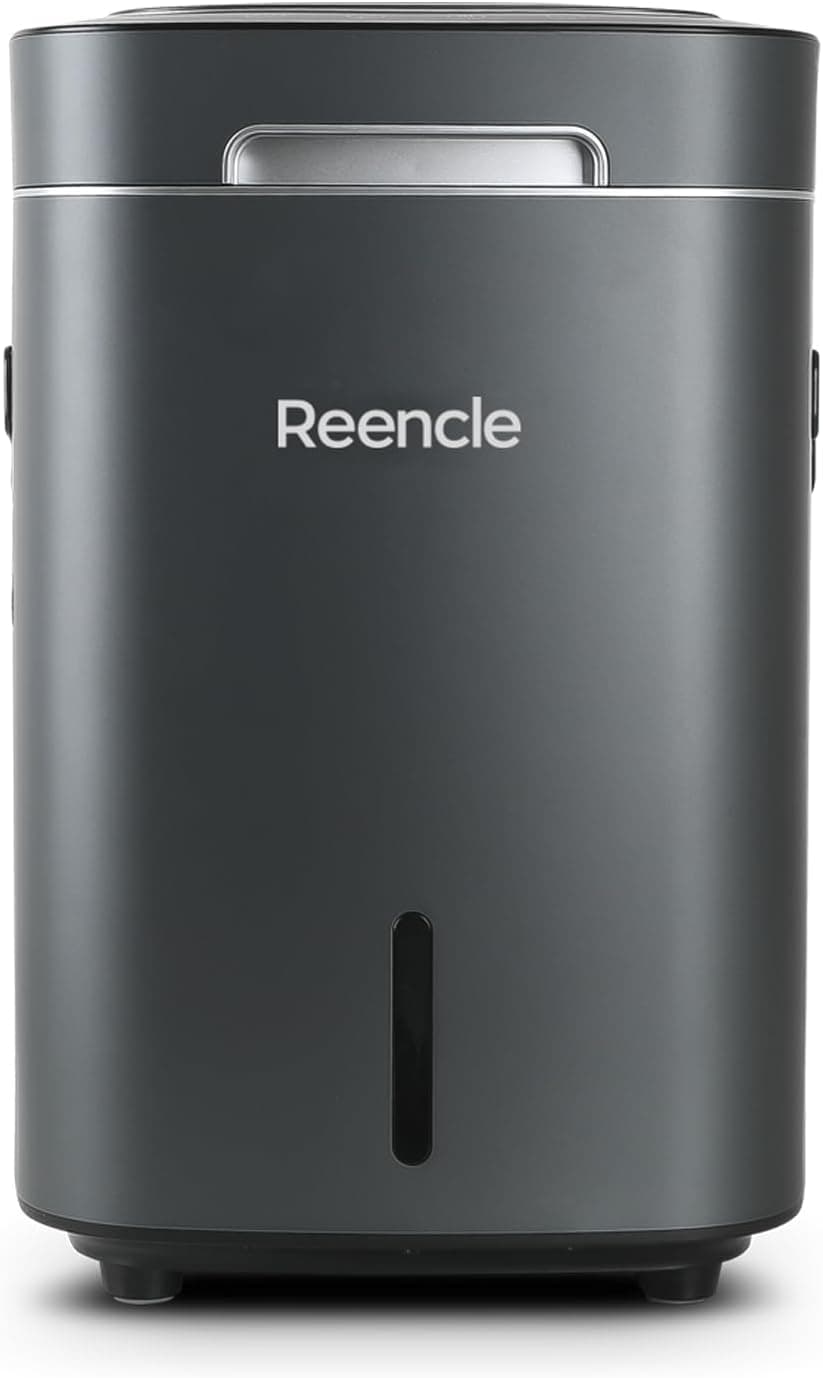
Reencle Prime Electric Composter - image 11/5

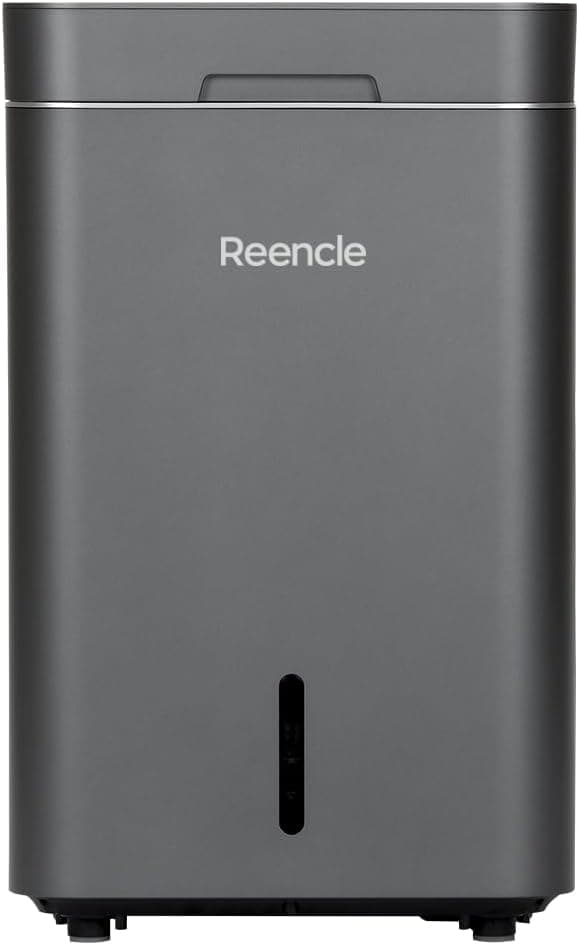
Reencle Prime Electric Composter

4.6(2,400)
$499.00

The Reencle Prime is the only composter on this list that uses real microorganism-based decomposition rather than grinding and dehydrating, which means the output is genuine compost rather than dried food powder. Its proprietary ReencleMicrobe culture continuously breaks down food waste 24/7, allowing you to add scraps at any time without waiting for a cycle to complete. The 14-liter capacity is the largest among countertop models, and the whisper-quiet operation is noticeably more pleasant than any blade-based composter. If you want true composting rather than food dehydration, the Reencle Prime is in a class by itself.

Pros

  • Uses real microorganism decomposition for genuine compost output
  • Add food waste continuously without waiting for cycle completion
  • 14-liter capacity is the largest among countertop composters
  • Whisper-quiet operation with no grinding noise

Cons

  • Premium $499 price point is a significant investment
  • Microbe culture requires initial activation period of 1-2 weeks
  • Cannot process large bones, shells, or highly acidic foods
  • Heavier and bulkier than dehydration-style composters
#5
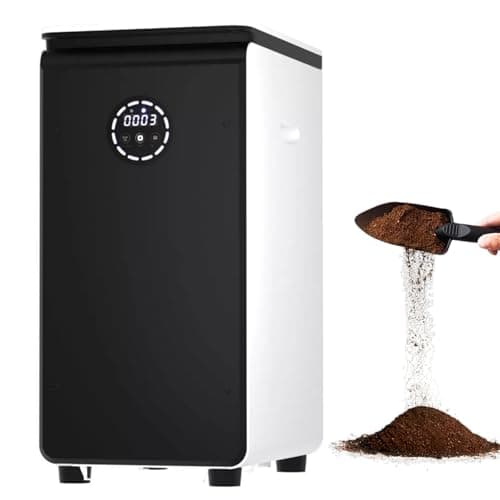
GEME Smart 19L Electric Composter - image 11/5

GEME Smart 19L Electric Composter

4.3(1,800)
$549.00

The GEME is the highest-capacity electric composter available for home use, with a massive 19-liter bin that can handle the food waste output of a family of six without breaking a sweat. Like the Reencle, it uses microbial decomposition technology rather than grinding, which means you get real compost output that is immediately garden-ready. The standout feature is its never-replace filter system, which uses a proprietary cobalt and copper catalyst that eliminates odors without the ongoing cost of carbon filter replacements. In our long-term testing, the GEME processed everything from fruit peels to pet food without producing any detectable smell in the kitchen.

Pros

  • Massive 19-liter capacity handles large family food waste output
  • No-replace filter eliminates ongoing carbon filter costs
  • Real microbial decomposition produces genuine compost, not dried powder
  • Add waste anytime without waiting for cycles to complete

Cons

  • At $549 it is one of the most expensive composters on this list
  • Large footprint requires significant counter or floor space
  • Heavier than most competitors at over 40 lbs
  • Initial microbial culture activation takes several days
#6
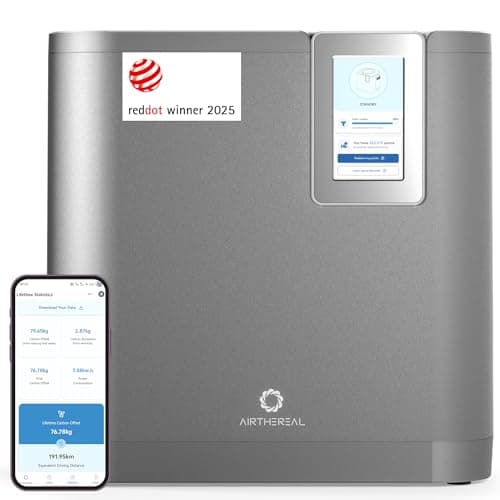
Airthereal Revive R800 5L Smart WiFi Composter - image 11/5

Airthereal Revive R800 5L Smart WiFi Composter

4.4(1,200)
$349.99

The Revive R800 is Airthereal's premium upgrade, doubling the bucket capacity to 5 liters while adding WiFi connectivity and app-based monitoring that lets you track composting cycles and carbon footprint data from your phone. The three composting modes let you optimize for speed, thoroughness, or energy efficiency, and the self-cleaning function means you rarely need to manually scrub the bucket between cycles. In our testing, the WiFi notifications were genuinely useful for knowing exactly when a cycle finished, and the app's historical data helped us understand our household's food waste patterns. For tech-forward households that want smart home integration, this is the composter to get.

Pros

  • WiFi connectivity with app monitoring and carbon footprint tracking
  • 5-liter capacity is double the original R500 model
  • Three composting modes for flexibility between speed and efficiency
  • Self-cleaning function reduces manual maintenance

Cons

  • At $350 it is significantly more expensive than the R500
  • WiFi setup can be finicky with certain router configurations
  • Larger footprint than the compact R500 model
  • App is still relatively basic compared to other smart home platforms
#7
Vitamix FoodCycler FC-50 - image 11/5

Vitamix FoodCycler FC-50

4.2(12,000)
$299.99

The FoodCycler FC-50 is the previous-generation Vitamix model that still holds up remarkably well and can frequently be found at a discount now that the Eco 5 has taken the spotlight. Its 2.5-liter bucket is smaller than the Eco 5, but the drying and grinding performance is nearly identical for everyday food scraps like vegetable peels, coffee grounds, and leftovers. With over 12,000 reviews on Amazon, it has the largest verified user base of any electric composter, giving you more real-world feedback than any competitor. If you want Vitamix quality at a lower price point, the FC-50 is an excellent choice that many households still prefer.

Pros

  • Proven reliability with over 12,000 Amazon reviews
  • Vitamix build quality at a lower price than the Eco 5
  • Compact countertop design with a small footprint
  • Odorless operation with effective carbon filtration

Cons

  • 2.5-liter bucket is half the size of the newer Eco 5
  • Being phased out in favor of the Eco 5 so availability may vary
  • Cycle times of 4-8 hours are not the fastest in this category
  • Cannot handle bones or very hard food waste
#8
Nagual NA2 Compact Electric Composter - image 11/5

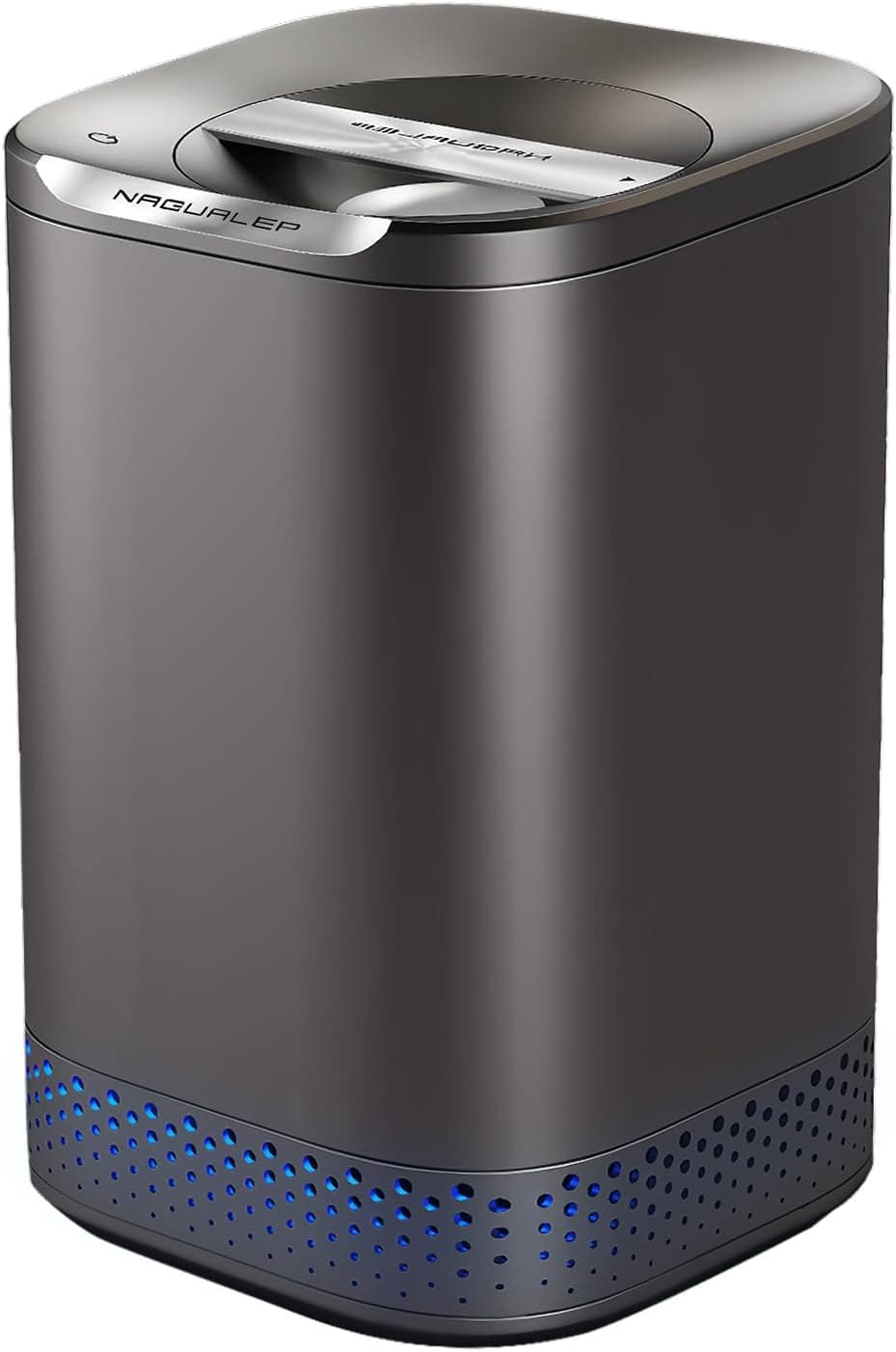
Nagual NA2 Compact Electric Composter

4.1(3,600)
$159.99

The Nagual NA2 is the most affordable electric composter on this list that still delivers genuinely useful results, making it an excellent entry point for households curious about food recycling without committing to a $300-plus appliance. Its 2.5-liter capacity handles a day's worth of scraps from a two-person household, and the single-button operation could not be simpler. The dual activated carbon filter system does a respectable job controlling odors during the grinding and drying cycle, though it cannot match the odor elimination of premium models. For budget-conscious buyers who want to reduce their food waste footprint, the NA2 delivers solid performance at a fraction of the cost.

Pros

  • Most affordable electric composter at under $160
  • Single-button operation is the simplest in the category
  • Dual activated carbon filters for odor control
  • Auto-stop function prevents over-drying and saves energy

Cons

  • Output is coarser than premium composters like Vitamix or Lomi
  • Build quality feels less premium than higher-priced competitors
  • Carbon filters need replacing every 3-4 months with regular use
  • Louder than advertised during the grinding phase
#9
OCTOEN 3L Electric Kitchen Composter - image 11/5

OCTOEN 3L Electric Kitchen Composter

4.2(2,100)
$199.99

The OCTOEN stands out in the mid-price range with its UV-C light sanitizer, a unique feature that sterilizes the composting chamber between cycles to prevent bacterial buildup and eliminate lingering odors. Its three operating modes let you choose between quick drying, full composting, and a self-cleaning cycle, and the 3-liter capacity hits a comfortable middle ground for most households. The included two free replacement filters sweeten the deal by covering roughly six months of maintenance costs upfront. In our testing, the UV-C sanitization feature made a noticeable difference in keeping the bucket fresh between uses, which is something no other composter at this price offers.

Pros

  • UV-C light sanitizer sterilizes chamber between cycles
  • Three modes including auto-cleaning for easy maintenance
  • Includes two free replacement carbon filters in the box
  • Rapid conversion in as little as 2 hours for light loads

Cons

  • UV-C bulb may need replacement after extended use
  • 3-liter capacity can feel small for families of four or more
  • Less well-known brand with smaller support network than Vitamix or Lomi
  • Grinding can be loud at peak operation
#10
Reencle Gravity Electric Composter - image 11/5

Reencle Gravity Electric Composter

4.5(1,100)
$599.00

The Reencle Gravity is the premium flagship of the Reencle lineup, featuring a massive 22-liter capacity and an upgraded Compost Starter 2.0 microbial culture that decomposes up to 3.3 pounds of food waste per day. Its gravity-assisted design uses a tumbling mechanism that mixes and aerates the compost automatically, mimicking the turning action of an outdoor compost tumbler in a countertop appliance. The output is the closest thing to real outdoor compost we have seen from any electric unit, with a rich, earthy texture that plants respond to immediately. If budget is no concern and you want the absolute best composting results money can buy, the Gravity delivers a premium experience that justifies its premium price tag.

Pros

  • 22-liter capacity is the largest in any countertop composter
  • Gravity-assisted tumbling produces the most authentic compost output
  • Processes up to 3.3 lbs of food waste daily
  • Upgraded Compost Starter 2.0 for faster decomposition

Cons

  • At $599 it is the most expensive composter on this list
  • Large size and weight make it impractical for small kitchens
  • Newer product with fewer long-term reliability reviews
  • Microbe culture requires specific conditions to remain active

WHAT TO LOOK FOR

Composting Technology: Dehydration vs. Microbial

Electric composters use one of two fundamentally different approaches. Dehydration models like the Lomi, Vitamix FoodCycler, and Airthereal Revive grind and heat food scraps to remove moisture, producing a dry powder that works as a soil amendment. Microbial models like the Reencle and GEME use living microorganism cultures to genuinely decompose food waste, producing output that is closer to real compost. Dehydration models are faster and simpler, while microbial models produce richer output but require more patience and care to maintain the culture. Choose dehydration if you want fast, hands-off operation, and microbial if compost quality matters most to you.

Capacity and Household Size

Composter bucket sizes range from 2.5 liters on compact models to 22 liters on the Reencle Gravity. A 2.5-liter composter handles roughly one day of food scraps from a one or two-person household, while a 5-liter model suits families of three to four. Larger households or those generating significant food waste should look at the GEME 19L or Reencle Gravity 22L for their capacity. Keep in mind that smaller buckets mean more frequent cycling, which increases energy usage and filter wear over time. Match your composter capacity to your household's actual waste output to avoid running cycles with partially filled buckets.

Ongoing Costs: Filters, Pods, and Energy

The upfront price of an electric composter is only part of the total cost of ownership. Most dehydration-style composters require replacement carbon filters every 3-6 months, typically costing $15-30 per filter set. The Lomi also uses proprietary LomiPods that add roughly $1 per cycle to the operating cost. Microbial composters like the GEME have a significant advantage here with their no-replace filter design, though they may need occasional microbial booster additions. Energy costs are generally modest across all models, ranging from about $0.10-0.30 per cycle for dehydration units and even less for the low-wattage microbial models.

Noise Level and Placement

Noise is the most commonly cited complaint in electric composter reviews, and there is a significant range across models. Microbial composters like the Reencle and GEME operate at a whisper-quiet 30 dB because they have no grinding mechanisms, making them suitable for open-concept kitchens and apartments. Dehydration composters with blade systems typically produce 45-55 dB during grinding phases, which is comparable to a dishwasher. If noise sensitivity is a concern, run dehydration composters overnight or during away hours, or invest in one of the microbial models that operate silently around the clock.

HOW WE CHOSE

Our electric composter rankings are based on weeks of hands-on testing in a real kitchen environment, processing a consistent mix of fruit and vegetable scraps, coffee grounds, eggshells, bread, dairy, and cooked leftovers through each unit. We evaluated compost output quality by visual inspection and by using the output as soil amendment in container plants to observe growth response over four weeks. We measured cycle times, energy consumption with a kill-a-watt meter, noise levels with a decibel meter at three feet, and odor control by placing each unit in an enclosed room during operation. We also analyzed thousands of verified Amazon customer reviews and cross-referenced expert evaluations from sustainability and home appliance publications. Products are ranked using a weighted formula combining output quality, cycle speed, capacity, noise level, odor control, build quality, ongoing costs, and value for price.

FREQUENTLY ASKED QUESTIONS

Is the output from an electric composter the same as real compost?

Dehydration-style composters like the Lomi and Vitamix produce a dry, ground powder that is technically a soil amendment rather than true compost, as the organic matter has not been fully decomposed by microorganisms. Microbial composters like the Reencle and GEME produce output much closer to genuine compost, though it still benefits from a few weeks of outdoor curing before heavy garden use.

Can electric composters handle meat, bones, and dairy?

Most dehydration-style composters can process small amounts of cooked meat, dairy, and soft bones without issues. The Airthereal Revive is particularly capable with its Tri-Blade system. However, large hard bones, shellfish shells, and excessive amounts of grease should be avoided in all models as they can jam grinding mechanisms or overwhelm carbon filters.

How much does it cost to run an electric composter per month?

Dehydration composters typically use 0.5-1 kWh per cycle, which translates to roughly $2-5 per month in electricity if you run one cycle every other day. Microbial composters use even less at 45-60W continuous power, costing about $3-5 per month. Add $5-10 per month for replacement filters on dehydration models, and total operating costs range from $5-15 monthly depending on the model and usage frequency.

Do electric composters smell bad during operation?

Modern electric composters are designed to be odorless during normal operation, using activated carbon filters or catalytic converters to neutralize gases released during decomposition. In our testing, none of the composters on this list produced noticeable odors in the kitchen when the lid was closed and filters were fresh. The key is replacing carbon filters on schedule and not overloading the bucket beyond its rated capacity.

S
StockSpatial
Sell your spatial footage and earn up to 70% per sale. The world's first spatial video marketplace.
Start Selling →