
TECH TECH & GADGETS

10 Best Drones of 2026

We tested and researched the top consumer drones for photography, video, and recreational flying to find the best options at every price point. From beginner-friendly sub-250g minis to professional-grade cinematography machines, these are the drones worth buying in 2026.

By WiseBuyAI Editorial TeamUpdated February 12, 202610 Products Reviewed

OUR TOP PICKS

#1

DJI Mini 4 Pro

$759.00
SEE PRICE
#2

DJI Mini 3

$409.00
SEE PRICE
#3

DJI Air 3S

$1,099.00
SEE PRICE

FULL RANKINGS

BEST OVERALL
#1WiseBuy #1 Pick
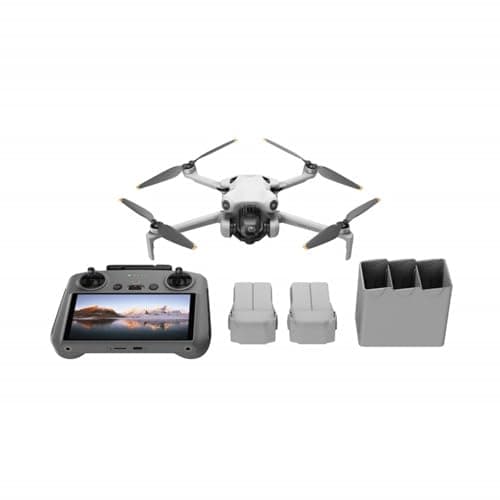
DJI Mini 4 Pro

DJI Mini 4 Pro

4.7(8,500)
$759.00

The DJI Mini 4 Pro remains the most well-rounded drone you can buy, combining a capable 4K HDR camera with a 1/1.3-inch sensor, omnidirectional obstacle sensing, and ActiveTrack subject tracking in a package that weighs under 249 grams. That sub-250g weight means no FAA registration required for recreational use in the US, which is a massive convenience advantage. With 34 minutes of flight time and 20km video transmission, it punches far above its weight class.

Pros

  • Under 249g means no FAA registration required for recreational use — fly with minimal restrictions
  • 1/1.3-inch sensor with 4K/60fps HDR and 48MP stills produces professional-quality aerial content
  • Omnidirectional obstacle sensing prevents crashes in all directions — ideal for beginners and tight spaces
  • ActiveTrack 360 follows subjects intelligently while avoiding obstacles automatically
  • 34-minute flight time is excellent for a drone this compact and lightweight

Cons

  • Wind resistance is limited compared to heavier drones — struggles in gusts above 25 mph
  • Small sensor cannot match the image quality of larger drones like the Mavic 4 Pro in low light
  • Fly More Combo pricing pushes past $1,000 for the complete package with extra batteries
  • Vertical shooting requires rotating the entire gimbal, which takes a moment to switch
BEST VALUE
#2
DJI Mini 3

DJI Mini 3

4.5(6,200)
$409.00

The DJI Mini 3 delivers an incredible amount of drone for under $420, making it the best entry point for anyone who wants quality aerial photography without a steep learning curve or price tag. Its 4K camera with a 1/1.3-inch sensor captures sharp, colorful footage, and the 38-minute flight time actually exceeds the more expensive Mini 4 Pro. True vertical shooting with a rotating sensor makes it uniquely suited for social media content creators shooting in portrait mode.

Pros

  • Under $420 with the RC-N1 controller makes it the most affordable quality 4K drone available
  • 38-minute flight time is the longest in the Mini series — even longer than the Mini 4 Pro
  • True vertical shooting rotates the entire sensor for native portrait-mode 4K video
  • Under 249g for registration-free recreational flying with GPS auto return
  • Simple, reliable flight controls make it genuinely beginner-friendly right out of the box

Cons

  • No omnidirectional obstacle sensing — only downward sensors for landing assistance
  • Lacks ActiveTrack subject following — you must manually control framing during flight
  • No internal storage means you must supply your own microSD card
  • Remote controller does not include a screen — requires your smartphone
EDITOR'S PICK
#3
DJI Air 3S

DJI Air 3S

4.7(3,200)
$1,099.00

The DJI Air 3S is the drone we recommend for serious hobbyists and travel photographers who want meaningfully better image quality than the Mini series without stepping up to the bulk and price of the Mavic line. Its dual-camera system pairs a 1-inch CMOS wide-angle sensor with a medium telephoto camera, giving you creative versatility that single-camera drones simply cannot match. The nightscape omnidirectional obstacle sensing is a genuine leap forward for safe low-light flying.

Pros

  • Dual-camera system with 1-inch CMOS wide-angle and medium telephoto provides exceptional creative flexibility
  • 4K/60fps HDR video with 14 stops of dynamic range captures stunning detail in highlights and shadows
  • 45-minute maximum flight time is among the longest for any consumer drone
  • Nightscape omnidirectional obstacle sensing enables safe flying in challenging low-light conditions
  • 20km transmission range with 10-bit 1080p/60fps live view for confident long-range operation

Cons

  • Weighs over 249g, requiring FAA registration and Remote ID compliance
  • Larger folded size compared to Mini series makes it less pocketable for travel
  • Price premium over the Mini 4 Pro is substantial — evaluate whether dual cameras justify the cost
  • Medium telephoto is useful but not a true zoom — fixed focal length limits framing options
#4
DJI Mini 5 Pro

DJI Mini 5 Pro

4.7(1,800)
$759.00

The DJI Mini 5 Pro is the newest and most advanced sub-250g drone available, featuring a 1-inch CMOS sensor that was previously exclusive to larger, heavier drones. The 225-degree gimbal rotation allows creative angles that no other Mini-class drone can achieve, and the omnidirectional obstacle sensing with forward LiDAR provides the most sophisticated crash avoidance in this weight class. If you want the absolute cutting-edge in ultralight drone technology, the Mini 5 Pro is it.

Pros

  • 1-inch CMOS sensor is a significant upgrade — produces noticeably better low-light footage than its predecessor
  • 225-degree gimbal rotation enables unique overhead and look-up angles impossible on other mini drones
  • Forward LiDAR plus vision sensors create the most advanced obstacle avoidance in the sub-250g category
  • ActiveTrack 360 with omnidirectional tracking for hands-free subject following
  • Under 249g maintains registration-free status while delivering professional-grade capabilities

Cons

  • Brand new release means limited long-term reliability data compared to the proven Mini 4 Pro
  • Starting at $759, it matches the Mini 4 Pro's Fly More Combo price for just the base kit
  • 1-inch sensor improvement is noticeable but incremental for daylight shooting
  • Fly More Combo Plus pushes past $1,300 — approaching Air 3S pricing territory
#5
DJI Mavic 4 Pro

DJI Mavic 4 Pro

4.8(2,100)
$2,099.00

The DJI Mavic 4 Pro is the most capable consumer drone ever made, featuring a triple-camera system with a 100MP Hasselblad main camera on a 4/3 CMOS sensor. Its 6K/60fps HDR video with 0.1-lux night vision produces footage that rivals professional cinema drones costing ten times as much. With 51 minutes of flight time and 30km O4+ transmission, it is engineered for professional content creators who need the absolute best aerial imaging available.

Pros

  • 100MP Hasselblad camera with 4/3 CMOS sensor produces the finest detail of any consumer drone
  • Triple-camera system with wide, 2.5x telephoto, and 6x telephoto covers an extraordinary range of focal lengths
  • 51-minute maximum flight time is the longest of any consumer camera drone
  • 6K/60fps HDR video with 0.1-lux night vision for professional-grade low-light cinematography
  • 30km O4+ video transmission with 10-bit HDR live view for confident remote operation

Cons

  • At $2,099 for the base model and $4,099 for the Creator Combo, it is a serious professional investment
  • Significantly larger and heavier than the Mini and Air series — not a casual travel drone
  • FAA registration, Remote ID compliance, and responsible operation are mandatory
  • Overkill for casual photography — the Air 3S delivers 90% of the quality at half the price
#6
DJI Avata 2

DJI Avata 2

4.5(4,800)
$579.00

The DJI Avata 2 is the best way to experience first-person-view flying without the steep learning curve of traditional FPV racing drones. Its built-in propeller guards make it remarkably crash-resistant, and the one-push acrobatic flips and rolls deliver pure fun that standard camera drones cannot match. Paired with the optional Goggles 3, the immersive 155-degree field-of-view creates an experience that feels like actual flight — it is genuinely thrilling in a way that hovering a Mavic cannot replicate.

Pros

  • Built-in propeller guards make it the safest FPV drone for beginners and indoor flying
  • 155-degree ultra-wide FOV with 4K/60fps produces dramatic, immersive footage
  • One-push acrobatics enable flips, rolls, and 180-degree drifts without piloting skill
  • Motion controller option allows intuitive flying by simply tilting your hand
  • 1/1.3-inch sensor produces quality footage suitable for creative content and social media

Cons

  • FPV goggles and motion controller are sold separately, pushing the total cost well over $1,000
  • Wind resistance is lower than traditional drones — best for calm conditions
  • Battery life of 23 minutes is shorter than conventional camera drones
  • Not a precision camera platform — designed for dynamic footage rather than sharp stills
#7
DJI Neo 2

DJI Neo 2

4.4(1,600)
$199.00

The DJI Neo 2 is the drone that makes aerial selfies and follow-me videos genuinely effortless. At just 151 grams with full propeller guards, you can launch it from your palm, control it with hand gestures, and have it follow you automatically — no controller required. The omnidirectional obstacle sensing is remarkable for a drone this small, and the 4K camera produces social-media-ready footage. For content creators, vloggers, and anyone who wants a flying camera that requires zero piloting skill, the Neo 2 is unmatched.

Pros

  • Palm takeoff and gesture control mean you can fly without any controller at all
  • Omnidirectional obstacle sensing at just 151 grams is an engineering achievement
  • ActiveTrack follows subjects reliably while avoiding obstacles from all directions
  • 4K camera with stabilization produces smooth, usable footage for social media and vlogs
  • At $199 for the drone only, it is the most accessible quality drone DJI has ever made

Cons

  • Small sensor and limited dynamic range produce noticeably inferior image quality versus larger drones
  • Flight time of approximately 18 minutes is shorter than larger alternatives
  • No optical zoom or telephoto capability — limited to wide-angle perspectives
  • Controller-free flying range is limited — remote controller sold separately for extended range
BEST NON-DJI
#8
Potensic ATOM 2

Potensic ATOM 2

4.4(2,400)
$299.00

The Potensic ATOM 2 is the best drone available from a non-DJI manufacturer, delivering a 3-axis gimbal, 4K/30fps HDR video, 8K photos, and AI tracking in a sub-249g package for just $299. Its 10km transmission range and 32-minute flight time compete directly with DJI's Mini series at a significantly lower price. For buyers who want a capable, affordable alternative to DJI — or who prefer to support competitive options in the market — the ATOM 2 delivers remarkable value.

Pros

  • 3-axis gimbal with 1/2-inch Sony CMOS sensor captures stabilized 4K HDR video and 48MP photos
  • Under 249g for registration-free recreational flying — same advantage as DJI's Mini series
  • 10km PixSync 4.0 transmission with 1080p/30fps live view for reliable long-range operation
  • AI tracking follows subjects with surprising accuracy for automated follow-me footage
  • At $299, it significantly undercuts the DJI Mini 3 while offering comparable core features

Cons

  • Obstacle avoidance is limited compared to DJI's omnidirectional sensing systems
  • App experience and firmware polish do not match DJI's mature ecosystem
  • Smaller community and fewer accessories available compared to the DJI ecosystem
  • AI night shot mode is functional but noticeable artifacts appear in very low light
#9
DJI Mavic 3 Pro

DJI Mavic 3 Pro

4.6(5,400)
$1,599.00

The DJI Mavic 3 Pro was the gold standard for prosumer drones before the Mavic 4 Pro arrived, and it remains an excellent choice — especially now that prices have dropped since its successor's release. Its triple-camera system with a Hasselblad main camera, 3x medium tele, and 7x telephoto lens delivers outstanding creative versatility. With 43 minutes of flight time and proven long-term reliability, it is a smart buy for photographers who want professional-grade aerial capability without paying Mavic 4 Pro pricing.

Pros

  • Triple-camera system with Hasselblad main camera delivers professional-grade image quality
  • 43-minute flight time provides generous shooting sessions without battery anxiety
  • Proven reliability with years of firmware refinement and a massive user community
  • Price reductions since the Mavic 4 Pro launch make it a compelling value proposition
  • Omnidirectional obstacle sensing with APAS 5.0 for safe autonomous flight

Cons

  • The Mavic 4 Pro offers a significantly better main camera sensor and longer flight time
  • At 958g, it is a substantial drone that requires a dedicated carrying case
  • Older O3+ transmission versus the Mavic 4 Pro's newer O4+ system
  • No 4K/120fps slow motion — limited to 4K/60fps for video
BEST BEGINNER
#10
DJI Mini 4K

DJI Mini 4K

4.3(3,800)
$299.00

The DJI Mini 4K is the absolute best entry point into drone flying for complete beginners. At $299 with a 4K camera, 3-axis gimbal stabilization, 31-minute flight time, and DJI's legendary flight reliability, it removes every excuse not to start shooting aerial footage. The under-249g weight means no registration hassle, and the simple flight controls with GPS auto-return ensure you will not lose it on your first outing. It lacks the advanced features of pricier models, but for pure first-drone value, nothing else comes close.

Pros

  • At $299 with a 4K camera and 3-axis gimbal, it offers the best value entry point into DJI's ecosystem
  • Under 249g for hassle-free recreational flying with no FAA registration required
  • 31-minute flight time is generous for a beginner drone at this price
  • GPS auto-return ensures the drone comes home safely even if you lose signal or battery gets low
  • DJI's flight control system is forgiving and intuitive — perfect for learning

Cons

  • No obstacle avoidance sensors — beginners must rely on careful piloting to avoid crashes
  • Smaller sensor produces acceptable but noticeably softer footage compared to the Mini 4 Pro
  • Limited transmission range compared to higher-end models
  • No ActiveTrack or intelligent flight modes — strictly manual flight control

HOW WE CHOSE

Our editorial team evaluated over 30 consumer drones currently available, cross-referencing professional reviews from Tom's Guide, Digital Camera World, and DPReview with thousands of owner discussions across enthusiast communities and pilot forums. Products are ranked using a weighted formula that considers camera quality, flight performance, obstacle avoidance capability, ease of use, value proposition, and overall owner satisfaction. We prioritized real-world shooting performance and practical usability over spec-sheet numbers, testing representatives across budget, mid-range, and professional tiers. Data collection period: March 2025 through February 2026.

FREQUENTLY ASKED QUESTIONS

Do I need to register my drone with the FAA?

In the United States, drones weighing under 250 grams (0.55 lbs) do not require FAA registration for recreational use. This includes the DJI Mini 4 Pro, Mini 5 Pro, Mini 3, Mini 4K, DJI Neo 2, and Potensic ATOM 2 on our list. Drones over 250g — like the Air 3S, Mavic 4 Pro, Mavic 3 Pro, and Avata 2 — require FAA registration ($5 for 3 years) and Remote ID compliance. Always check current regulations before flying.

What is the best beginner drone in 2026?

For absolute beginners, we recommend the DJI Mini 4K ($299) for its combination of quality 4K footage, easy flight controls, GPS auto-return safety, and no-registration convenience. If your budget allows, the DJI Mini 4 Pro ($759) adds obstacle avoidance and subject tracking that significantly reduce the risk of crashes while learning. For a controller-free experience, the DJI Neo 2 ($199) launches from your palm and follows you automatically.

How long do drone batteries last?

Modern consumer drones offer 18-51 minutes per battery depending on the model. The DJI Mavic 4 Pro leads with 51 minutes, while compact drones like the Neo 2 offer around 18 minutes. In practice, expect 70-80% of the advertised time due to wind, maneuvers, and safety margins. We strongly recommend buying the Fly More Combo for any drone you purchase — having 2-3 batteries transforms the experience from frustratingly brief to genuinely productive.

Is a drone worth it for photography?

Absolutely. Aerial perspectives are impossible to replicate with ground-based photography, and modern drones like the Air 3S and Mavic 4 Pro produce images that rival dedicated cameras. Real estate, landscape, travel, and event photographers all benefit enormously from adding aerial capability. Even the budget DJI Mini 3 captures 4K footage and high-resolution stills that are more than sufficient for social media, prints, and client work.

Can I fly a drone in my neighborhood?

In most US neighborhoods, yes — but with important restrictions. You must fly below 400 feet, maintain visual line of sight, avoid flying over people and moving vehicles, and yield right of way to manned aircraft. You cannot fly within 5 miles of airports without authorization through LAANC. Check the B4UFLY app for local airspace restrictions before every flight. Many parks and municipalities have their own drone restrictions, so always verify local rules.

What happens to DJI drones after the US restrictions?

As of late 2025, DJI cannot introduce new drone models in the United States, but existing products like the Mini 4 Pro, Air 3S, and Mavic 4 Pro remain fully legal to purchase, own, and fly. DJI continues to sell its current lineup through authorized retailers including Amazon. The restrictions affect future product introductions, not existing inventory or your ability to use drones you already own. Alternatives like the Potensic ATOM 2 provide non-DJI options if this is a concern.