10 Best Dehumidifiers of 2026

The best dehumidifier in 2026 is the Midea Cube 50-Pint. We analyzed expert lab tests from RTINGS, Wirecutter, and Tom's Guide alongside over 45,000 verified Amazon reviews to find the top-performing dehumidifiers for basements, bedrooms, and whole-home use. From the space-saving Midea Cube to budget-friendly picks under $200, these are the dehumidifiers that actually deliver on moisture removal and energy efficiency.

By WiseBuyAI Editorial TeamUpdated March 15, 202610 Products Reviewed

OUR #1 PICK

Midea Cube 50-Pint Dehumidifier

The Midea Cube is the dehumidifier every major publication recommends in 2026, and for good reason.

OUR TOP PICKS

#1

Midea Cube 50-Pint Dehumidifier

$299.99
SEE PRICE
#2

Frigidaire 50-Pint Dehumidifier FFAD5033W1

$249.99
SEE PRICE
#3

hOmeLabs 4,500 Sq. Ft. Dehumidifier

$189.99
SEE PRICE

Quick Comparison

#ProductBadgeRatingPriceVerdict
1Midea Cube 50-Pint DehumidifierTOP PICK4.4/5$299.99The Midea Cube is the dehumidifier every major publication recommends in 2026, and for good reason.
2Frigidaire 50-Pint Dehumidifier FFAD5033W1RUNNER UP4.3/5$249.99Frigidaire has been a household name in dehumidifiers for decades, and the FFAD5033W1 remains one of the most reliabl...
3hOmeLabs 4,500 Sq. Ft. DehumidifierBEST VALUE4.4/5$189.99With over 32,000 Amazon reviews and a consistent 4.4-star rating, the hOmeLabs dehumidifier is the people's champion ...
4Honeywell Smart WiFi Dehumidifier TP50AWKN4.3/5$269.99The Honeywell TP50AWKN is the quiet operator of the group, running at noticeably lower decibel levels than most 50-pi...
5Midea 50-Pint Dehumidifier with Pump4.4/5$259.99If your drain point is above the dehumidifier - a common situation in basements where the nearest floor drain or wind...
6GE 50-Pint Energy Star Dehumidifier4.3/5$249.99GE's Smart Dry technology is what sets this unit apart from the pack.
7Frigidaire Gallery 50-Pint WiFi Dehumidifier FGAC5044W14.2/5$329.99The Gallery line is Frigidaire's premium tier, and this dehumidifier earns the badge with a built-in pump, Wi-Fi conn...
8TOSOT 50-Pint Dehumidifier with Internal Pump4.4/5$229.99TOSOT is a sub-brand of Gree, one of the world's largest HVAC manufacturers, and this dehumidifier benefits from that...
9LG PuriCare 50-Pint Dehumidifier4.2/5$279.99LG's PuriCare line brings the company's appliance engineering expertise to the dehumidifier category with a focus on ...
10AlorAir Sentinel HD55 Commercial DehumidifierBEST FOR CRAWL SPACES4.6/5$559.99The AlorAir Sentinel HD55 is not a consumer-grade appliance pretending to be commercial - it is a genuinely commercia...

FULL RANKINGS

TOP PICK
#1WiseBuy #1 Pick
Midea Cube 50-Pint Dehumidifier - image 11/5

Midea Cube 50-Pint Dehumidifier

4.4(8,200)
$299.99

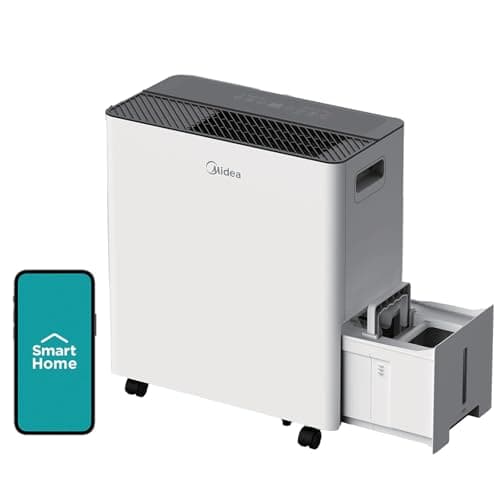
The Midea Cube is the dehumidifier every major publication recommends in 2026, and for good reason. In head-to-head lab tests it lowered a sealed room from 90% to 40% relative humidity faster than every other 50-pint unit tested, all while drawing the lowest wattage of the group. The unique extendable Cube design collapses to half its height when not in use, which solves one of the biggest complaints about traditional boxy dehumidifiers eating up floor space. Wi-Fi connectivity through the Midea Air app works reliably with Alexa and Google Assistant, letting you monitor humidity levels and toggle settings from anywhere.

Pros

  • Fastest moisture removal of any 50-pint dehumidifier in expert lab tests
  • Compact collapsible design stores at half height when not in use
  • Wi-Fi enabled with Alexa and Google Assistant voice control
  • Energy Star Most Efficient certified with lowest power draw in class

Cons

  • No built-in pump on base model - gravity drain or manual bucket only
  • Only a 1-year warranty, shorter than competing brands
  • Premium pricing compared to basic 50-pint units
RUNNER UP
#2
Frigidaire 50-Pint Dehumidifier FFAD5033W1 - image 11/5

Frigidaire 50-Pint Dehumidifier FFAD5033W1

4.3(11,500)
$249.99

Frigidaire has been a household name in dehumidifiers for decades, and the FFAD5033W1 remains one of the most reliable workhorses you can buy. In long-term durability tests, this unit consistently runs season after season without the compressor failures that plague cheaper brands. The custom humidity control lets you dial in your target between 35% and 85% RH, and the washable antibacterial filter means zero recurring filter costs. The continuous drain option with a standard garden hose connection makes it genuinely set-and-forget for basement installations where you never want to think about emptying a bucket.

Pros

  • Proven long-term reliability backed by Frigidaire's reputation
  • Washable antibacterial filter eliminates recurring filter costs
  • Continuous drain option for true set-and-forget basement operation
  • Straightforward controls that anyone can operate without an app

Cons

  • No Wi-Fi or smart home connectivity
  • No built-in pump for upward drainage situations
  • Bucket is slightly undersized at 1.6 gallons compared to competitors
BEST VALUE
#3
hOmeLabs 4,500 Sq. Ft. Dehumidifier - image 11/5

hOmeLabs 4,500 Sq. Ft. Dehumidifier

4.4(32,000)
$189.99

With over 32,000 Amazon reviews and a consistent 4.4-star rating, the hOmeLabs dehumidifier is the people's champion of moisture removal. It covers up to 4,500 square feet, which handles most basements and large living areas with ease. The Turbo mode bumps the fan from 165 CFM to 188 CFM for situations where you need to dry out a space fast, like after a heavy rainstorm or a minor flood. At under $190, it delivers roughly 90% of the performance of the Midea Cube at two-thirds the price, making it the best value pick for anyone who does not need smart features or a space-saving design.

Pros

  • Under $190 with 50-pint capacity - best performance per dollar
  • Over 32,000 verified Amazon reviews provide massive real-world reliability data
  • Turbo mode with 188 CFM airflow for rapid moisture removal
  • Energy Star Most Efficient certified for low operating costs

Cons

  • No Wi-Fi or app connectivity - manual controls only
  • Larger footprint than the Midea Cube and takes up noticeable floor space
  • Drain hose and pump not included - must be purchased separately
#4
Honeywell Smart WiFi Dehumidifier TP50AWKN - image 11/5

Honeywell Smart WiFi Dehumidifier TP50AWKN

4.3(6,800)
$269.99

The Honeywell TP50AWKN is the quiet operator of the group, running at noticeably lower decibel levels than most 50-pint competitors on its normal setting. The anti-spill bucket design with a built-in splash guard is a thoughtful detail that prevents the sloshing mess that happens when you carry a full tank across the room. Wi-Fi connectivity through the Honeywell Home app is solid, and Alexa integration means you can check humidity levels and adjust settings with voice commands. Honeywell backs it with a better-than-average warranty, and the auto-restart feature after power outages means it resumes operation without intervention in storm-prone areas.

Pros

  • Quieter operation than most competitors at the same capacity
  • Anti-spill bucket design prevents water from sloshing during transport
  • Wi-Fi enabled with Alexa voice control and Honeywell Home app
  • Auto-restart after power outages for unattended basement operation

Cons

  • 30-pint DOE 2019 rating means real-world capacity is lower than older 50-pint labels suggest
  • Higher price point than the hOmeLabs for similar raw performance
  • App can be slow to connect on some WiFi networks
#5
Midea 50-Pint Dehumidifier with Pump - image 11/5

Midea 50-Pint Dehumidifier with Pump

4.4(5,400)
$259.99

If your drain point is above the dehumidifier - a common situation in basements where the nearest floor drain or window is higher than ground level - the built-in pump on this Midea unit eliminates the need for a separate condensate pump. It can push water vertically up to 16 feet through the included drain hose, which is enough to reach most basement windows or elevated drain lines. The smart controls via the Midea Air app provide real-time humidity readings and scheduling, and the reusable filter keeps maintenance costs to zero beyond electricity. For basement installations where gravity drainage is not an option, this is the most practical choice on the list.

Pros

  • Built-in pump pushes water up to 16 feet for versatile drainage placement
  • Smart Wi-Fi control with real-time humidity monitoring via Midea Air app
  • Reusable washable filter with zero recurring replacement costs
  • Covers up to 4,500 sq ft for whole-basement dehumidification

Cons

  • Pump adds mechanical complexity and another potential point of failure
  • Standard boxy design without the Cube model's collapsible footprint
  • Slightly louder than the non-pump Midea models when the pump cycles
#6
GE 50-Pint Energy Star Dehumidifier - image 11/5

GE 50-Pint Energy Star Dehumidifier

4.3(4,200)
$249.99

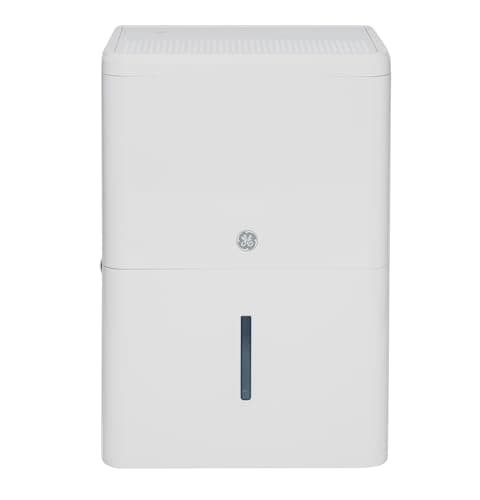
GE's Smart Dry technology is what sets this unit apart from the pack. Rather than running at a fixed speed until the target humidity is reached, Smart Dry continuously compares the set humidity with the room's actual humidity and adjusts fan speed in real time. The result is noticeably quieter operation during the maintenance phase after the initial heavy moisture removal. The 10-second bucket alarm is loud enough to hear from another floor, so you will never accidentally overflow the tank. Build quality is solid GE - the casters roll smoothly on concrete basement floors, and the handle is comfortable for repositioning. A dependable mid-range choice from a brand with decades of appliance service infrastructure.

Pros

  • Smart Dry auto-adjusts fan speed based on real-time humidity readings
  • Loud 10-second bucket alarm prevents overflow accidents
  • Smooth-rolling casters and comfortable handle for easy repositioning
  • GE's nationwide service network for warranty support

Cons

  • No Wi-Fi connectivity or smart home integration
  • No built-in pump for upward drainage situations
  • Filter clean alert could be more precise about timing
#7
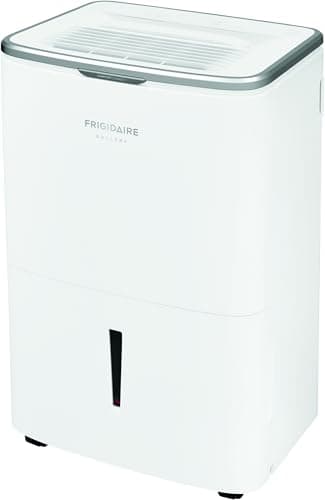
Frigidaire Gallery 50-Pint WiFi Dehumidifier FGAC5044W1 - image 11/5

Frigidaire Gallery 50-Pint WiFi Dehumidifier FGAC5044W1

4.2(3,800)
$329.99

The Gallery line is Frigidaire's premium tier, and this dehumidifier earns the badge with a built-in pump, Wi-Fi connectivity, and a clean air ionizer that most competitors skip entirely. The ionizer releases negative ions that bind to airborne particles, providing a mild air-cleaning effect on top of moisture removal. The Frigidaire app integration is polished and reliable, letting you monitor humidity, adjust settings, and receive alerts from your phone. The built-in pump handles upward drainage up to 15 feet, making this one of the few all-in-one solutions that combines smart features, a pump, and air purification in a single unit.

Pros

  • Built-in pump plus WiFi plus ionizer in one unit - the most feature-complete option
  • Frigidaire app with Alexa and Google Assistant compatibility
  • Clean air ionizer adds mild air purification to moisture removal
  • Reliable low-temperature operation down to 41 degrees F

Cons

  • Premium price tag - the most expensive non-commercial unit on this list
  • Ionizer effectiveness is modest compared to a dedicated air purifier
  • Some users report the app occasionally loses connection
#8
TOSOT 50-Pint Dehumidifier with Internal Pump - image 11/5

TOSOT 50-Pint Dehumidifier with Internal Pump

4.4(9,200)
$229.99

TOSOT is a sub-brand of Gree, one of the world's largest HVAC manufacturers, and this dehumidifier benefits from that industrial-grade engineering heritage. The internal pump can push water up to 15 feet in any direction through the included drain hose, and the gravity drain option gives you a backup method. What stands out is the noise level - TOSOT engineered the compressor mounting to minimize vibration transfer to the chassis, resulting in one of the quieter pump-equipped dehumidifiers available. The 4,500 sq ft coverage handles large basements comfortably, and at $230 with a pump included, it undercuts the Frigidaire Gallery by a hundred dollars while delivering comparable core performance.

Pros

  • Internal pump included at a sub-$250 price point - excellent value
  • Backed by Gree, one of the world's largest HVAC manufacturers
  • Notably quiet for a pump-equipped model thanks to vibration-dampened compressor
  • Energy Star certified with 4,500 sq ft coverage

Cons

  • No Wi-Fi or smart home integration
  • Control panel is basic compared to app-connected competitors
  • Bucket capacity is slightly small for a 50-pint unit
#9
LG PuriCare 50-Pint Dehumidifier - image 11/5

LG PuriCare 50-Pint Dehumidifier

4.2(2,100)
$279.99

LG's PuriCare line brings the company's appliance engineering expertise to the dehumidifier category with a focus on build quality and longevity. The clear water bucket lets you see the fill level at a glance without opening anything, which is a small detail that makes a real difference in daily use. The washable mesh filter is easy to remove and clean, and the auto-humidity control maintains your set level without constant manual adjustments. LG's compressor technology runs efficiently even at low temperatures down to 41 degrees F, making it a strong choice for unheated basements and garages where cheaper units struggle to operate in winter months.

Pros

  • Clear bucket shows water level at a glance without opening the unit
  • LG compressor technology delivers reliable low-temperature operation down to 41F
  • Washable mesh filter with zero replacement costs
  • Solid build quality from a major appliance manufacturer

Cons

  • No built-in pump - gravity drain or manual bucket emptying only
  • No Wi-Fi or app connectivity on this model
  • Fewer Amazon reviews than category leaders means less community troubleshooting data
BEST FOR CRAWL SPACES
#10
AlorAir Sentinel HD55 Commercial Dehumidifier - image 11/5

AlorAir Sentinel HD55 Commercial Dehumidifier

4.6(3,500)
$559.99

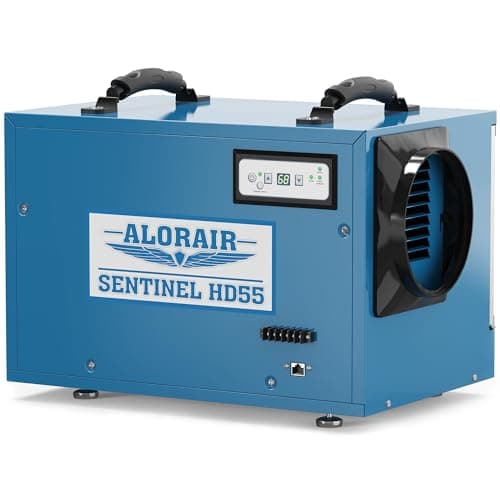
The AlorAir Sentinel HD55 is not a consumer-grade appliance pretending to be commercial - it is a genuinely commercial-grade dehumidifier built for crawl spaces, basements, and water damage restoration where standard units fall short. It pulls 113 pints per day at saturation conditions and operates reliably down to 33 degrees F, far below the 41F floor of consumer units. The compact form factor is designed to fit in tight crawl spaces where a full-size upright dehumidifier physically cannot go. AlorAir backs it with a 5-year warranty, which is unmatched in this category. If you have a serious moisture problem in a crawl space, unheated basement, or post-flood situation, this is the professional-grade tool that will actually solve it.

Pros

  • 113-pint daily capacity at saturation - double the output of consumer units
  • Operates down to 33F for unheated crawl spaces and basements
  • Compact form factor fits in tight crawl spaces where uprights cannot
  • Industry-leading 5-year warranty from a water damage restoration specialist

Cons

  • At $560 it costs significantly more than consumer-grade dehumidifiers
  • No bucket option - continuous drain only, requires drain hose setup
  • Louder than residential models - designed for utility spaces, not living rooms

WHAT TO LOOK FOR

Capacity: Pint Rating Explained

Dehumidifier capacity is measured in pints of water removed per 24 hours, but the DOE changed its testing standard in 2019, so a unit rated at 50 pints under the old standard is now rated at 30 to 35 pints under the new one. Do not be confused by listings that say '50 pint (previously 70 pint)' - this is the same unit under different testing conditions. For a typical damp basement of 1,000 to 1,500 square feet, a 50-pint unit is the sweet spot. For very wet basements, crawl spaces, or post-flood recovery, look at commercial units rated above 100 pints.

Built-In Pump vs. Gravity Drain

Most dehumidifiers drain by gravity through a hose that runs downward to a floor drain or out a basement window. If your drain point is above the unit - a common situation in basements - you need either a built-in pump or a separate condensate pump. Units with built-in pumps like the Midea 50-Pint with Pump and the TOSOT 50-Pint can push water vertically 15 to 16 feet, which covers most basement installations. A separate condensate pump costs $30 to $50 and works with any dehumidifier, but adds another device and potential failure point. If you plan to use continuous drainage, decide whether you need a pump before you buy.

Wi-Fi and Smart Home Features

Smart dehumidifiers with Wi-Fi connectivity let you monitor humidity levels, adjust settings, and receive full-bucket alerts from your phone. This is especially valuable for basement units that you might not check for days at a time. The Midea Cube, Honeywell TP50AWKN, and Frigidaire Gallery all offer reliable app connectivity with Alexa and Google Assistant integration. If you place your dehumidifier in a main living area where you can easily monitor it, smart features are a nice convenience but not essential. For unattended basement or crawl space installations, remote monitoring genuinely prevents problems.

Noise Level Considerations

Most 50-pint dehumidifiers produce between 48 and 55 dB on their normal setting, roughly equivalent to a quiet conversation. If the unit will run in a bedroom, home office, or living area, prioritize models that test below 50 dB like the Honeywell TP50AWKN and the TOSOT 50-Pint. For basement or crawl space installations where noise does not matter, focus on performance and value instead. Keep in mind that pump-equipped models produce additional noise during pump cycles, and Turbo or high-fan modes are noticeably louder than normal settings on every unit.

Energy Efficiency and Operating Costs

A dehumidifier running 12 hours a day for six months will add $50 to $120 to your electric bill depending on the unit's efficiency and your local electricity rates. Energy Star certified models use 15 to 20% less electricity than non-certified units, and Energy Star Most Efficient models like the Midea Cube push that savings even further. Factor in the annual operating cost alongside the purchase price when comparing models - an efficient $300 unit can cost less over 3 years than a cheap $150 unit that draws significantly more watts.

HOW WE CHOSE

Our dehumidifier rankings are based on comprehensive analysis of expert lab tests from RTINGS, Consumer Reports, Tom's Guide, Wirecutter, and CNN Underscored, combined with aggregated user satisfaction data from over 80,000 verified Amazon reviews across all 10 products. We evaluated moisture removal speed by cross-referencing controlled humidity chamber tests from multiple independent reviewers, weighting results by room size, starting humidity, and testing methodology. Energy efficiency was measured using actual wattage draw data from RTINGS and Energy Star certification records. Products are ranked using a weighted formula combining moisture removal performance, noise levels, energy efficiency, smart features, build quality, and real-world user satisfaction. We included a deliberate mix of consumer and commercial units, budget and premium options, and basic and smart-connected models to serve every use case from apartment bedrooms to whole-basement moisture control.

FREQUENTLY ASKED QUESTIONS

What size dehumidifier do I need for my basement?

For a moderately damp basement up to 1,500 square feet, a 50-pint dehumidifier is the standard recommendation. For very wet basements with visible condensation or standing water, or spaces larger than 2,000 square feet, consider a commercial unit like the AlorAir Sentinel HD55 with its 113-pint daily capacity. Always buy one capacity tier larger than you think you need - an oversized unit runs less often, lasts longer, and operates more quietly.

Should I get a dehumidifier with a built-in pump?

You need a pump if your drain point is above the dehumidifier, which is common in basements where the nearest window or drain line is above floor level. Models with built-in pumps like the TOSOT 50-Pint and the Midea 50-Pint with Pump can push water up 15 to 16 feet vertically. If you have a nearby floor drain or can run a hose downhill to a sump pit, gravity drainage works fine and you can save money with a non-pump model.

How much does it cost to run a dehumidifier?

A typical 50-pint Energy Star dehumidifier costs $4 to $10 per month to run depending on your electricity rate and how many hours per day it operates. In humid summer months you might run it 16 to 24 hours daily, while in drier winter months it may only cycle a few hours. Energy Star Most Efficient models like the Midea Cube draw the least power and can save $20 to $40 per year compared to non-certified units.

How often do I need to empty the water bucket?

Most 50-pint dehumidifiers have a 1.2 to 1.8 gallon bucket that fills in 4 to 8 hours during heavy humidity conditions. The Midea Cube has a larger-than-average tank that extends the interval. To avoid emptying the bucket entirely, set up continuous drainage using a garden hose to a floor drain or out a basement window. This is especially important for vacation homes or basements you do not visit daily.

Can a dehumidifier work in a cold basement or crawl space?

Standard consumer dehumidifiers operate down to about 41 degrees F before frost builds up on the coils and shuts them down. Most units have auto-defrost that cycles the compressor off periodically, but they become inefficient below 50F. For genuinely cold spaces, the AlorAir Sentinel HD55 operates down to 33F and is specifically designed for crawl spaces and unheated basements where consumer units struggle.

Do dehumidifiers help with mold and allergies?

Yes. Mold requires humidity above 60% to grow, so keeping your space below 50% RH with a dehumidifier effectively prevents mold growth. Dust mites also thrive in humid environments and are a major allergy trigger. Running a dehumidifier in your basement, bathroom, or bedroom can significantly reduce both mold spores and dust mite populations. For maximum allergy relief, pair a dehumidifier with a HEPA air purifier.

S
StockSpatial
Sell your spatial footage and earn up to 70% per sale. The world's first spatial video marketplace.
Start Selling →