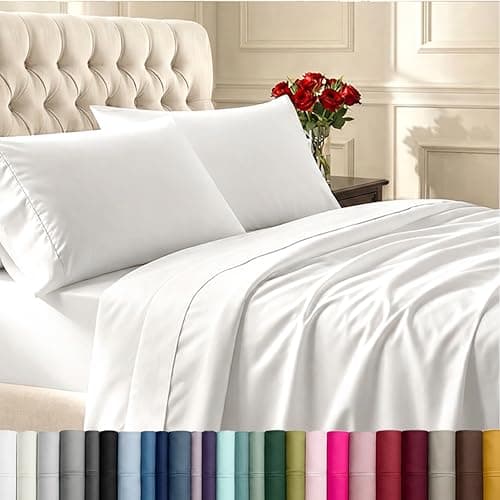
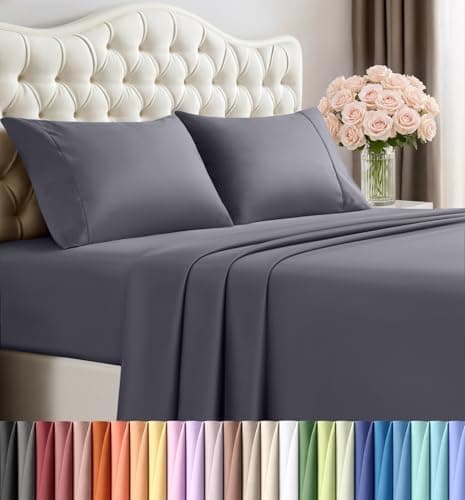
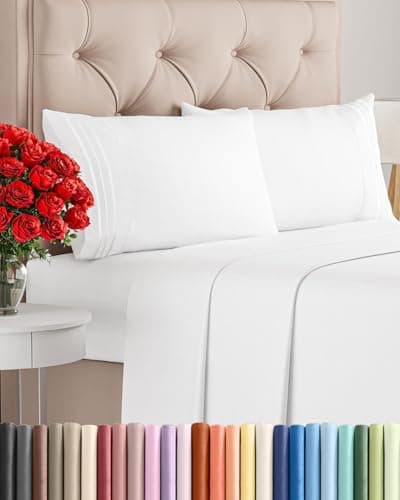
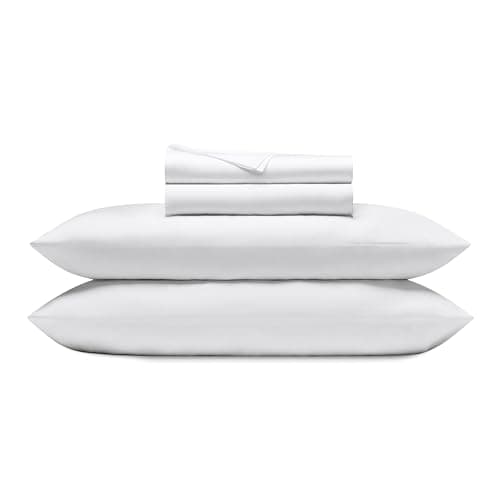
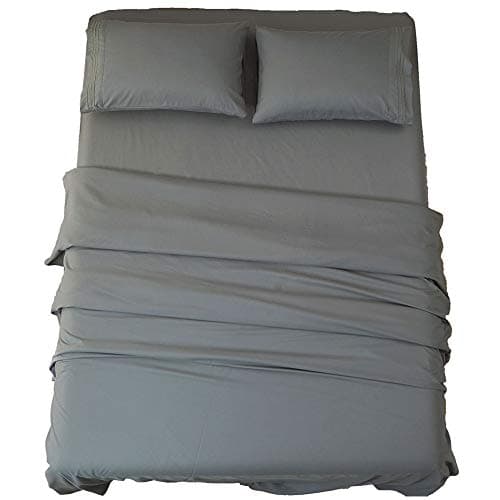
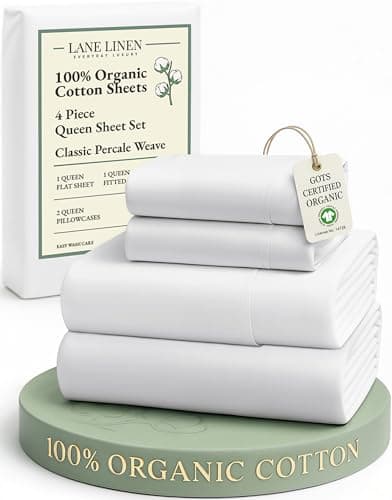
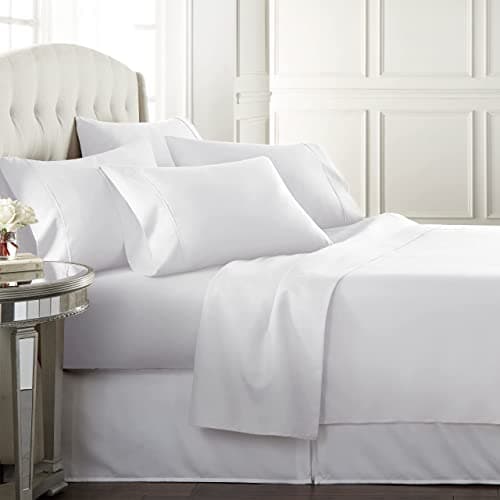
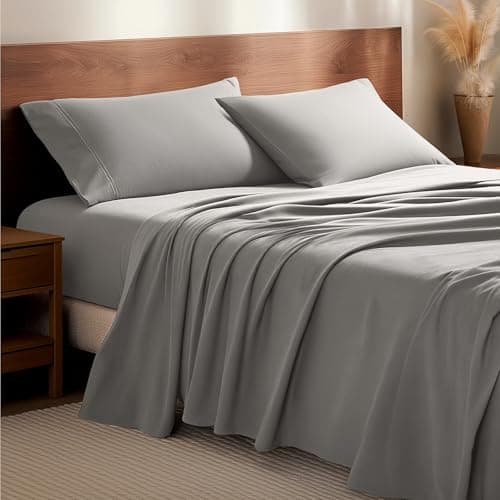
The three main sheet materials are microfiber, cotton, and bamboo, and each has distinct trade-offs. Microfiber sheets (like Mellanni and CGK Unlimited) are the most affordable, resist wrinkles beautifully, and feel soft immediately out of the package, but they trap more heat than natural fibers. Cotton sheets (like California Design Den and Lane Linen) breathe better, get softer with every wash, and feel more luxurious long-term, but they wrinkle more easily and cost more upfront. Bamboo viscose sheets (like Cozy Earth) offer the best temperature regulation and a silky smooth feel, but come at a premium price. Hot sleepers should prioritize cotton or bamboo, while budget-conscious shoppers will get the most value from microfiber.
Thread count measures the number of threads per square inch of fabric, but it is far less important than marketing would have you believe. For cotton sheets, the sweet spot is 300-600 thread count - anything above 600 often uses multi-ply threads that inflate the number without improving quality. Sateen weaves in the 400 range (like our California Design Den pick) feel silky and luxurious. Percale weaves around 300 feel crisp and cool. For microfiber sheets, thread count is essentially meaningless because the fibers are measured differently. Focus on the fabric weight, brushing technique, and customer reviews rather than chasing a high thread count number.
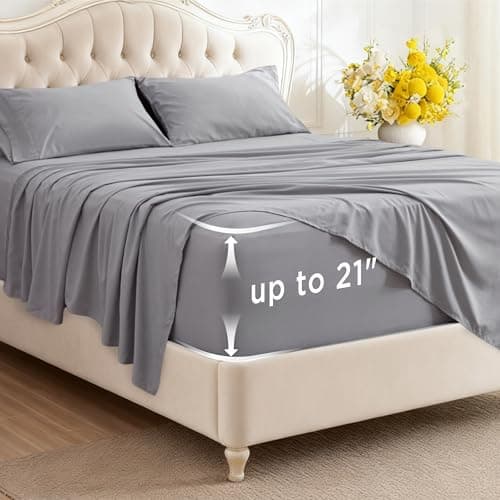
Ill-fitting sheets that pop off corners or bunch up under you are one of the most common bedding frustrations. Measure your mattress depth (height from the bottom edge to the top sleeping surface) and add 2-3 inches for a secure tuck. Standard mattresses are 10-12 inches, pillow tops run 14-16 inches, and thick memory foam mattresses with toppers can exceed 18 inches. If your mattress is over 14 inches, look specifically for deep pocket sheets like the Bedsure set with 21-inch pockets. Also prioritize sheets with all-around elastic on the fitted sheet rather than just corner elastic, which provides a much more secure grip.
It depends entirely on your priorities. A $18 Utopia Bedding set will feel comfortable, wash well, and last a year or two of regular use. A $310 Cozy Earth bamboo set will feel noticeably more luxurious, regulate temperature better, and potentially last five to ten years with proper care. The cost per night calculation often favors quality sheets - a $300 set used for five years costs about 16 cents per night. However, most sleepers will find excellent comfort in the $30-50 range with our cotton and mid-tier microfiber picks. Reserve premium spending for your primary bed and use budget options for guest rooms and seasonal bedding.
Proper care dramatically extends sheet life regardless of price point. Wash sheets every one to two weeks in cold or warm water with a gentle detergent - hot water accelerates fiber breakdown and fading. Tumble dry on low heat and remove promptly to minimize wrinkles. Avoid bleach on colored sheets and fabric softener on microfiber, which coats the fibers and reduces softness over time. For cotton and flannel sheets, expect some initial shrinkage of 3-5% after the first wash. Never mix sheets with items that have zippers or Velcro, as these cause pilling and snagging. Having two sets in rotation allows each set to rest between uses, significantly extending their lifespan.
If you consistently overheat at night, your sheet material matters more than almost any other bedding choice. Cotton percale weaves (like our Lane Linen pick) are the gold standard for breathability - the crisp, matte texture allows air circulation that keeps skin dry. Bamboo viscose (like Cozy Earth) excels at moisture wicking and feels cool to the touch. Avoid high thread count sateen and standard microfiber, which tend to trap heat against your body. Flannel is obviously off the table for warm sleepers. Look for sheets marketed as cooling and check that they use genuinely breathable materials rather than just adding a chemical cooling treatment to heat-trapping synthetic fabric.

 1/5
1/5