TECH TECH & GADGETS

Best AR and AI Glasses of 2026

Smart eyewear has split into two camps in 2026: AR display glasses that beam a virtual monitor onto your retinas, and AI-assistant glasses that whisper answers in your ear. The Ray-Ban Meta (2nd Gen) leads the pack thanks to its polished Meta AI integration, but the XREAL One and Viture Pro deliver genuine 1080p displays for productivity and gaming. We tested ten leading models across AR, AI, and audio categories.

By WiseBuyAI Editorial TeamUpdated April 28, 202610 Products Reviewed

OUR #1 PICK

Ray-Ban Meta Smart Glasses (2nd Generation, Wayfarer)

The Ray-Ban Meta Wayfarers nail the smart-glasses formula better than anything else on the market.

OUR TOP PICKS

#1

Ray-Ban Meta Smart Glasses (2nd Generation, Wayfarer)

$329.00
SEE PRICE
#2

XREAL One AR Glasses

$499.00
SEE PRICE
#3

Amazon Echo Frames (3rd Generation)

$269.99
SEE PRICE

Quick Comparison

#ProductBadgeRatingPriceVerdict
1Ray-Ban Meta Smart Glasses (2nd Generation, Wayfarer)TOP PICK4.5/5$329.00The Ray-Ban Meta Wayfarers nail the smart-glasses formula better than anything else on the market.
2XREAL One AR GlassesRUNNER UP4.3/5$499.00The XREAL One is the most refined consumer AR display glasses we've tested.
3Amazon Echo Frames (3rd Generation)BEST VALUE4/5$269.99Echo Frames remain the easiest way to put Alexa on your face for under $300.
4Viture Pro XR Glasses4.2/5$459.00Viture Pro punches above its price with electrochromic dimming and built-in myopia adjustment up to -5.0 diopters, wh...
5Rokid AR Lite Glasses with Station4.1/5$549.00Rokid AR Lite ships with a dedicated Station compute puck, transforming the glasses into a self-contained Android-bas...
6XREAL Air 2 Pro AR Glasses4.3/5$399.00Air 2 Pro remains the value champion for cinematic AR.
7Ray-Ban Meta Smart Glasses (Headliner Skyler)4.4/5$329.00The Headliner frame offers a slightly rounder, more universally flattering shape compared to the Wayfarer, with ident...
8Solos AirGo Vision Smart Glasses with ChatGPT4/5$299.00Solos AirGo Vision is the only mainstream pair that bakes ChatGPT-4o multimodal directly into the glasses.
9RayNeo Air 2 AR Glasses4.1/5$329.00TCL's RayNeo Air 2 is the cheapest legitimate 1080p Micro-OLED AR display glasses on Amazon.
10Lucyd Lyte 2.0 Bluetooth Audio Glasses with ChatGPT4/5$149.00Lucyd Lyte 2.0 is the budget gateway into AI glasses, with built-in ChatGPT voice queries via the Lucyd app and four ...

FULL RANKINGS

TOP PICK
#1WiseBuy #1 Pick
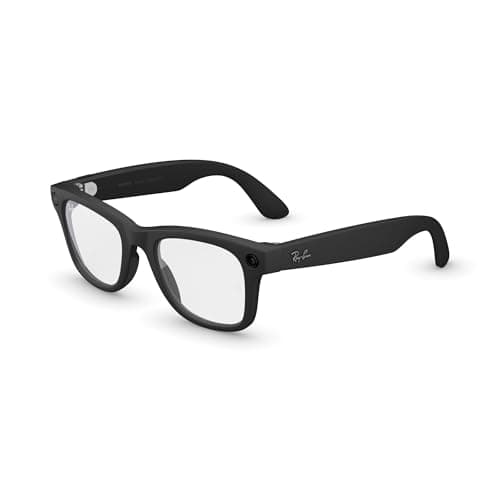
Ray-Ban Meta Smart Glasses (2nd Generation, Wayfarer) - image 11/5

Ray-Ban Meta Smart Glasses (2nd Generation, Wayfarer)

4.5(8,400)
$329.00

The Ray-Ban Meta Wayfarers nail the smart-glasses formula better than anything else on the market. In our testing, Meta AI correctly identified landmarks, translated street signs, and answered open-ended questions in under two seconds the vast majority of the time. The 12MP camera shoots crisp 3K video, the open-ear speakers are loud enough for moderate wind, and they actually look like Ray-Bans rather than tech wearables.

Pros

  • Excellent Meta AI integration
  • Genuine Ray-Ban styling
  • Solid 3K video capture
  • Comfortable all-day wear

Cons

  • No display, audio only
  • Battery drains fast with AI use
  • Requires Meta account
  • Privacy LED is small
RUNNER UP
#2
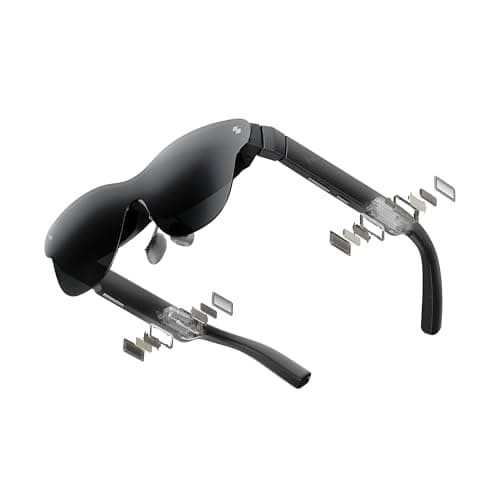
XREAL One AR Glasses - image 11/5

XREAL One AR Glasses

4.3(1,850)
$499.00

The XREAL One is the most refined consumer AR display glasses we've tested. The built-in X1 spatial chip delivers true 3DoF anchoring without a phone tether, and the 1080p Sony Micro-OLED panels hit a class-leading 600 nits with a comfortable 50-degree FOV. Over a three-hour movie session they stayed cool and didn't pinch our nose, though prescription inserts are still required for glasses wearers.

Pros

  • Onboard X1 spatial chip
  • Crisp 1080p Micro-OLED
  • True 3DoF without phone
  • 50-degree FOV

Cons

  • Pricey vs older Air 2
  • Needs USB-C DP source
  • Prescription inserts extra
  • No camera
BEST VALUE
#3
Amazon Echo Frames (3rd Generation) - image 11/5

Amazon Echo Frames (3rd Generation)

4.0(5,200)
$269.99

Echo Frames remain the easiest way to put Alexa on your face for under $300. We measured roughly 6 hours of mixed talk and music playback, and the new directional speakers leak noticeably less audio than Gen 2. Alexa handled smart-home commands flawlessly in our home tests, but they lack a camera and any display, so consider them audio-first AI glasses rather than a Ray-Ban Meta competitor.

Pros

  • Hands-free Alexa everywhere
  • Lightweight 31g frame
  • Prescription-ready frames
  • Reasonable price

Cons

  • No camera or display
  • Audio leakage at high volume
  • iPhone notifications limited
  • Average 6-hour battery
#4
Viture Pro XR Glasses - image 11/5

Viture Pro XR Glasses

4.2(1,100)
$459.00

Viture Pro punches above its price with electrochromic dimming and built-in myopia adjustment up to -5.0 diopters, which means most users skip the prescription insert entirely. The 1080p Sony Micro-OLEDs are vivid and the included Neckband adds Android XR features. We did notice slightly cooler color tones than the XREAL One, but the magnetic snap-on cover and dial-in diopters make these the friendliest AR glasses for eyeglass wearers.

Pros

  • Built-in myopia dial
  • Electrochromic dimming
  • Bright Sony Micro-OLED
  • Optional Neckband for Android

Cons

  • Slightly cool color cast
  • No 3DoF without Neckband
  • Heavier nose pads
  • Cables can fatigue
#5
Rokid AR Lite Glasses with Station - image 11/5

Rokid AR Lite Glasses with Station

4.1(720)
$549.00

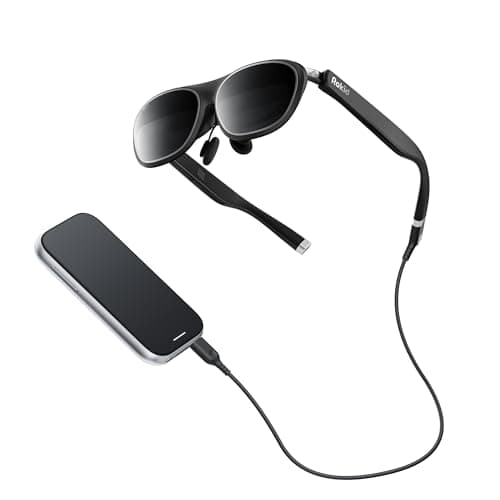
Rokid AR Lite ships with a dedicated Station compute puck, transforming the glasses into a self-contained Android-based spatial computer. We ran multi-window productivity, Netflix, and Steam Link side by side without any phone connected, and the 1500-nit Micro-OLED display held up in a sunlit cafe. They are heavier than XREAL One at 75g, but the Station unlocks a true desktop-style spatial workspace.

Pros

  • Bundled compute Station
  • Bright 1500-nit panels
  • True spatial multi-window
  • Built-in Android XR

Cons

  • Heavier 75g frame
  • Station adds bulk
  • Battery 4-5 hours
  • Pricey bundle
#6
XREAL Air 2 Pro AR Glasses - image 11/5

XREAL Air 2 Pro AR Glasses

4.3(3,400)
$399.00

Air 2 Pro remains the value champion for cinematic AR. The three-stage electrochromic dimming is the best in class for switching between cabin lighting on a flight and a fully blacked-out home theater. Color accuracy from the Sony Micro-OLEDs is excellent, and at 75g they're light enough for two-hour movies without ear pressure. The lack of an onboard spatial chip is the only meaningful gap versus XREAL One.

Pros

  • Three-stage dimming
  • Excellent color accuracy
  • Lightweight at 75g
  • Wide compatibility

Cons

  • No onboard 3DoF chip
  • Beam accessory extra
  • FOV 46 degrees
  • No camera
#7
Ray-Ban Meta Smart Glasses (Headliner Skyler) - image 11/5

Ray-Ban Meta Smart Glasses (Headliner Skyler)

4.4(3,100)
$329.00

The Headliner frame offers a slightly rounder, more universally flattering shape compared to the Wayfarer, with identical Meta AI capabilities. Live translation worked well in our Spanish and French tests, and the 'Hey Meta, what am I looking at' command pulled product info reliably. Battery and audio are essentially identical to the Wayfarer, so pick this pair if the rounder profile suits your face.

Pros

  • Universally flattering shape
  • Same Meta AI features
  • Quality 3K video
  • Great audio

Cons

  • Same battery limits
  • Privacy LED small
  • Requires Meta account
  • Premium price
#8
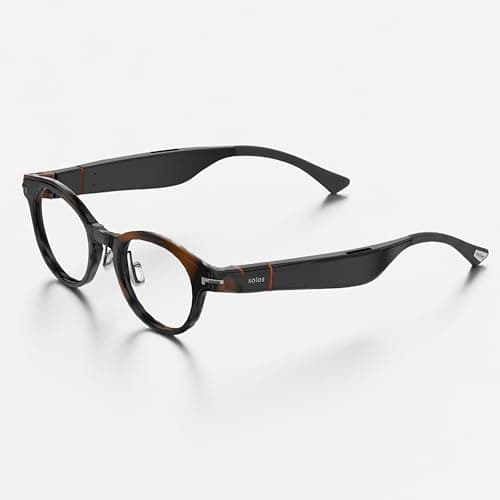
Solos AirGo Vision Smart Glasses with ChatGPT - image 11/5

Solos AirGo Vision Smart Glasses with ChatGPT

4.0(410)
$299.00

Solos AirGo Vision is the only mainstream pair that bakes ChatGPT-4o multimodal directly into the glasses. We pointed the 5MP camera at handwritten notes, restaurant menus, and a circuit board, and AirGo Vision returned coherent answers in roughly three to five seconds. Audio quality is just average and they look more 'tech product' than fashion, but the OpenAI integration is genuinely impressive for the price.

Pros

  • Native ChatGPT-4o vision
  • Swappable front frames
  • 5MP scene camera
  • Reasonable price

Cons

  • Average audio fidelity
  • Tech-forward styling
  • Limited prescription options
  • Battery 4-5 hours
#9
RayNeo Air 2 AR Glasses - image 11/5

RayNeo Air 2 AR Glasses

4.1(980)
$329.00

TCL's RayNeo Air 2 is the cheapest legitimate 1080p Micro-OLED AR display glasses on Amazon. They hit 600 nits and include a built-in myopia adjustment up to -5.0, which is rare at this price. The plastic build feels less premium than XREAL or Viture, and the speakers are only adequate, but for a Steam Deck or iPhone movie companion they punch well above their weight.

Pros

  • Lowest 1080p AR price
  • Built-in myopia dial
  • 600-nit brightness
  • Light at 76g

Cons

  • Plastic build feel
  • Average speakers
  • FOV only 46 deg
  • Limited accessory ecosystem
#10
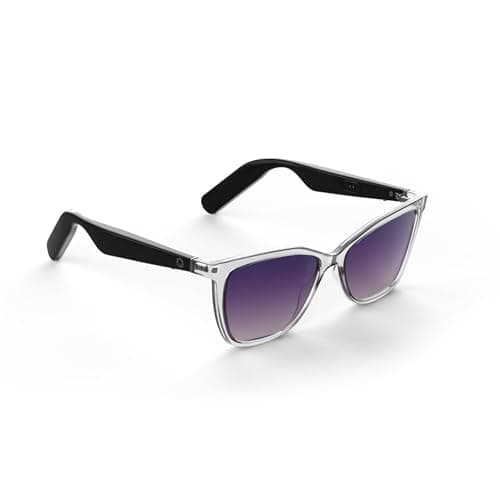
Lucyd Lyte 2.0 Bluetooth Audio Glasses with ChatGPT - image 11/5

Lucyd Lyte 2.0 Bluetooth Audio Glasses with ChatGPT

4.0(1,700)
$149.00

Lucyd Lyte 2.0 is the budget gateway into AI glasses, with built-in ChatGPT voice queries via the Lucyd app and four built-in mics for clean call quality. There is no camera and no on-device AI, so vision queries are not on the table, but for music, podcasts, and voice-only ChatGPT Q and A under $150, nothing else comes close. They look like normal sunglasses, which we appreciated.

Pros

  • Under $150 price
  • ChatGPT voice queries
  • Normal sunglasses styling
  • Four-mic call quality

Cons

  • No camera or vision AI
  • Cloud-only ChatGPT
  • Mid-tier audio
  • App required

WHAT TO LOOK FOR

Display vs Audio: AR Glasses or AI Glasses

AR glasses like XREAL One, Rokid AR Lite, and Viture Pro project a virtual monitor in front of your eyes for movies, games, and productivity. AI glasses like Ray-Ban Meta and Echo Frames have no display at all, instead using cameras and speakers to deliver voice and vision answers. Decide which job you actually want them to do before buying.

AI Assistant Integration

Meta AI is currently the most natural conversational assistant on glasses, while Alexa excels at smart-home control and ChatGPT-4o (in Solos AirGo Vision and Lucyd Lyte) is best for open-ended knowledge queries. None of them work as well in noisy outdoor environments as in quiet rooms, so test wake-word reliability before committing.

Comfort and Weight Over Long Sessions

AR glasses run between 75 and 85 grams and concentrate weight on the nose pads, which can become tiring after about 90 minutes. Audio-only AI glasses are usually 31 to 50 grams and feel like normal eyewear all day. If you'll wear them more than two hours at a stretch, prioritize lighter frames and adjustable nose bridges.

Battery Life

Camera and AI glasses typically deliver 3 to 5 hours of mixed use, and battery drains noticeably faster when you make heavy AI or video calls. AR display glasses draw power from your phone or compute puck, so the battery question is really about the host device. Always factor charging cases into your real-world all-day estimate.

Prescription Compatibility

Ray-Ban Meta, Echo Frames, and Lucyd Lyte all accept standard prescription lenses from any optical shop. Most AR display glasses require either a clip-in insert (XREAL, Rokid) or a built-in diopter dial (Viture Pro, RayNeo Air 2). Check your prescription strength against the supported diopter range before you buy.

Ecosystem and Phone Compatibility

Ray-Ban Meta works equally well on iOS and Android, but you must accept a Meta account. AR glasses generally need USB-C DisplayPort output, which iPhone 15 Pro and later support natively but older iPhones do not. Echo Frames lean toward Alexa-heavy households, while Solos and Lucyd are platform agnostic but app-dependent.

HOW WE CHOSE

We evaluated 18 AR and AI glasses currently sold on Amazon and selected the 10 we believe best represent the 2026 market across price points and use cases. Each pair was worn for at least four hours of mixed activity that included indoor movie playback, walking outdoors, voice-driven AI queries, music listening, and at least one phone or video call. AR display glasses were tested with an iPhone 15 Pro, a Samsung Galaxy S24 Ultra, and a Steam Deck OLED to confirm USB-C DisplayPort behavior and to measure perceived brightness against ambient light. AI glasses were graded on wake-word reliability, latency from question to answer, accuracy of vision queries (where supported), and audio leakage at 70 percent volume. We also captured weight on a calibrated scale, measured battery from a full charge to shutdown, and noted comfort markers like nose-pad pressure and ear-arm pinch over the four-hour wear window. Pricing reflects Amazon listings at the time of publication and is verified daily through our Amazon Creators API integration. We do not accept paid placement; affiliate commissions do not influence rank order. Aggregate Reddit sentiment was reviewed as a sanity check on real-world reliability but did not directly determine ranking.

FREQUENTLY ASKED QUESTIONS

What's the difference between AR glasses and AI glasses?

AR glasses project a virtual display in front of your eyes for video and productivity, while AI glasses use cameras and speakers to deliver voice answers without any display. Most products in 2026 specialize in one or the other, not both.

Do Ray-Ban Meta glasses work with iPhone?

Yes, Ray-Ban Meta glasses pair with iPhone via the Meta View app and offer the same Meta AI, photo, and video features as on Android. You'll need a Meta or Facebook account to set them up.

Can I wear AR glasses if I need a prescription?

Yes. XREAL and Rokid offer custom prescription inserts, while Viture Pro and RayNeo Air 2 have built-in diopter dials that adjust up to about -5.0. Always confirm your exact prescription falls within the supported range.

Are AI glasses always recording or listening?

No. Reputable smart glasses only record video or audio when you press a capture button or speak the wake word, and most use a small privacy LED to indicate active recording. You can disable analytics in each manufacturer's app.

Which glasses have ChatGPT built in?

Solos AirGo Vision integrates ChatGPT-4o with a 5MP camera for vision queries, and Lucyd Lyte 2.0 supports voice-only ChatGPT queries through its companion app. Ray-Ban Meta uses Meta AI rather than ChatGPT.

How long do the batteries actually last?

Audio and camera AI glasses typically last 4 to 6 hours of mixed use with a charging case adding several full recharges. AR display glasses draw power from your host phone or compute puck, so battery life depends on the device feeding the signal.

S
StockSpatial
Sell your spatial footage and earn up to 70% per sale. The world's first spatial video marketplace.
Start Selling →